
Online-Lehre ist anders: Die direkten Kontakte fehlen, manches ist mühsamer – doch es gibt auch Vorteile. Erfahrungen aus einem Germanistik-Seminar.
Mit einer Vorstellungsrunde im Chat oder Webmeeting, alternativ auch mit einem Begrüßungsvideo begannen in den ersten Wochen des aktuellen Online-Semesters viele Lehrveranstaltungen. Für das Seminar „Zweifelsfälle des Deutschen“ hatte sich Dozent Niklas Reinken etwas anderes überlegt: Es startet mit einem Youtube-Video des Autors und Entertainers Bastian Sick. Reinken, Doktorand in der Arbeitsgruppe Deutsche Sprachwissenschaft von Prof. Dr. Nanna Fuhrhop am Institut für Germanistik, will mit seinen Studierenden im aktuellen Semester sprachliche Streitfragen untersuchen, etwa, ob es der, die oder das Nutella heißt, wie man „König“ richtig ausspricht (mit „g“ oder „ch“ am Ende?) oder ob es erlaubt ist, „wegen dem Wetter“ zu sagen. Da bot Bastian Sick, der in seiner bekannten Kolumne „Zwiebelfisch“ jahrelang bei Spiegel online auf unterhaltsame Weise sprachliche Besonderheiten aufs Korn nahm, den idealen Einstieg.
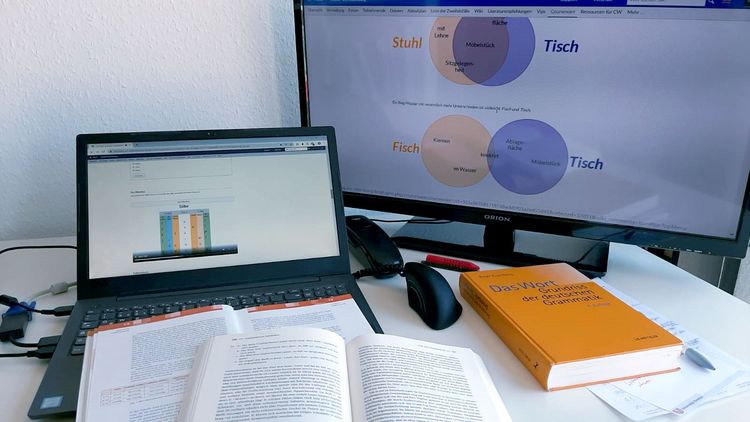
„Ich habe in meine Veranstaltungen schon früher Online-Elemente eingebaut, bislang aber meist für freiwillige Zusatzaufgaben“, berichtet Reinken. Ein ganzes Seminar digital auszuarbeiten war auch für ihn neu. „Ich habe das Programm Courseware genutzt, das über Stud.IP verfügbar ist. Es bietet die Möglichkeit, unterschiedliche Inhalte einzubinden, die Nutzung ist auch für die Studierenden sehr intuitiv“, sagt er.
Abwechlsungsreiche Mischung
Die wöchentlichen Module des aktuellen Seminars bestehen aus Aufgabenpaketen, eingebetteten Fachtexten, Links zu Internetseiten, Videos, Fragebögen, einem Quiz. „Es ist toll, dass so viele verschiedene Medien zum Einsatz kommen“, sagt Seminarteilnehmer Maximilian Grünwald, Germanistik-Student im vierten Semester. Aus seiner Sicht ist es Reinken gut gelungen, das Thema der Lehrveranstaltung digital aufzubereiten. Auch Svenja Bredenförder, die Germanistik und Biologie auf Lehramt studiert, gefällt die abwechslungsreiche Mischung.
Dennoch vermissen beide die Diskussionen und Gespräche, die Seminare sonst lebendig machen „Ein Diskurs mit Argumenten und Gegenrede ist online eher nicht möglich“, sagt Grünwald. „Seminare leben von Präsenz“, ergänzt Bredendörfer.
Auch für Seminarleiter Niklas Reinken ist es ungewohnt, mit den Studierenden nur schriftlich zu kommunizieren. „In einem normalen Seminar erkenne ich an den Reaktionen, ob sie aufmerksam zuhören oder ob das Thema vielleicht schon bekannt ist“, erzählt er. Um auch in der jetzigen Situation Feedback zu bekommen, hat er einen anonymen Briefkasten für Fragen und Rückmeldungen eingerichtet. „Online-Lehre bedeutet für mich auf jeden Fall mehr Arbeit“, resümiert er. Wenn er sonst ein oder zwei mündliche Antworten auf eine Frage erhält, schreiben jetzt alle 40 Teilnehmer zurück – und erwarten eine Antwort.
Einleben im Online-Alltag
Auch aus Sicht der Studierenden gibt es mehr zu tun als sonst. In Reinkens Seminar müssen sie beispielsweise regelmäßig Zusammenfassungen von Texten hochladen, auch Kommentare in einem Forum zählen zu den Aufgaben. Bredendörfer war mit den Aufgaben in der ersten Woche rund acht Stunden beschäftigt. „Man muss wesentlich mehr schreiben als sonst“, berichtet auch Grünwald. Anhand eines farbigen Balkens können die Teilnehmer ihren Lernfortschritt nachvollziehen und überprüfen, ob sie gut in der Zeit liegen.
Die Möglichkeit, dann zu arbeiten, wenn es gerade passt, sei einer der Vorteile der Online-Lehre, insbesondere von asynchronen Veranstaltungen, sagt Bredenförder. „Ich kann hier beispielsweise schon vorarbeiten, wenn in anderen Lehrveranstaltungen gerade noch nicht so viel los ist“, erzählt sie. „Die flexiblen Arbeitszeiten finde ich gut“, sagt auch Grünwald. Beide sind indessen noch dabei, sich im Alltag des Online-Semesters einzuleben. „Bei mir dauert es etwas länger als sonst, nach den Semesterferien wieder ins Studium reinzukommen“, sagt Grünwald, der neben Germanistik noch Politik und Wirtschaft studiert. Svenja Bredenförder kämpft unter anderem mit unzuverlässigem WLAN und der Schwierigkeit, sich zu Hause zu konzentrieren. „Normalerweise lerne ich häufig in der Bib“, berichtet sie.
Gemeinsam mit ihrem Dozenten hoffen sie, dass die Lehre im Wintersemester wieder in Präsenzform stattfinden kann. Dennoch waren alle mit dem Start ins Online-Semester im Großen und Ganzen zufrieden. „Ich war durchaus positiv überrascht“, sagt Grünwald. „Man sieht, dass sich die Lehrenden viele Gedanken gemacht haben.“