
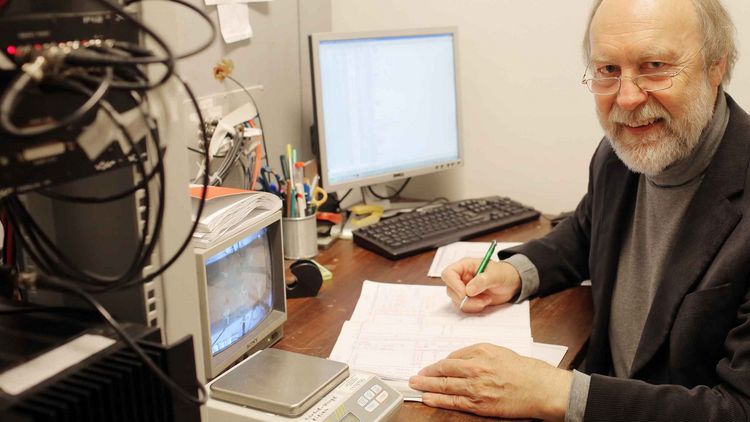
Die DFG hat für die dritte Förderphase des Sonderforschungsbereichs „Das aktive Gehör“ neun Millionen Euro bewilligt. Was sind die Ziele der Wissenschaftler und wie lassen sich ihre Ergebnisse konkret anwenden? Der Leiter des Forschungsprojekts Georg Martin Klump im Interview.
FRAGE: Herr Klump, was untersuchen Sie gemeinsam mit Magdeburger Wissenschaftlern in dem Sonderforschungsbereich?
KLUMP: Um es kurz zu sagen: Wie das Gehör in der Analyse akustischer Szenen den Schall aus verschiedenen Quellen trennt. Nur zum Teil ist das ein automatischer Prozess, der auf den verschiedenen Stufen der Hörbahn angetrieben durch den Reiz abläuft. Wesentlich sind auch Prozesse, die im Nervensystem ablaufen – beim aktiven Zuhören und der Konzentration auf einzelne Schallquellen. Dabei nutzen wir nicht nur die akustische Information, sondern auch das, was wir sehen.
FRAGE: Können Sie dazu ein Beispiel nennen?
KLUMP: Nehmen wir eine typische Gesprächssituation beim Mittagessen in der Cafeteria. Am Tisch sitzen mehrere Personen. Sie selbst konzentrieren sich beim Zuhören auf Ihren Gesprächspartner gegenüber am Tisch. Ihr Gehör analysiert die Worte erst einmal automatisch in der aufsteigenden Hörbahn nach akustischen Eigenschaften.
FRAGE: Was stellt es dabei fest?
KLUMP: Zum Beispiel stellt es auf Grundlage des Vergleichs des Schalls an Ihren beiden Ohren fest, wo sich die verschiedenen Sprecher befinden. Zudem analysiert das Gehör aufgrund der Stimme, ob es sich um ein Kind, eine Frau oder einen Mann handelt. Und an dem akustischen Muster identifiziert es, welches Wort gerade gesprochen wird. Gleichzeitig erhalten höhere Stufen in der Hörbahn Informationen über die von Ihnen beobachtete Lippenbewegung des Gesprächspartners. Das hilft, das Gesprochene zu verstehen. All diese Informationen werden nach automatisch ablaufenden Regeln kombiniert und ausgewertet.
FRAGE: Aufmerksamkeit erfordert das von mir also noch nicht?
KLUMP: Genau. Gleichzeitig laufen jedoch noch andere Prozesses ab. Diese haben mit Ihrer Aufmerksamkeit für die Person gegenüber am Tisch zu tun. Sie haben die Schallquellen automatisch durch die akustische Analyse getrennt. Ihr Hörsystem weiß also jetzt: Ihnen gegenüber spricht ein Kind. Jetzt können Sie – gesteuert durch Aufmerksamkeit – noch einmal all das in der Wahrnehmung hervorheben, was dieses Kind Ihnen zum Beispiel von seinem vergangenen Schulausflug erzählt. Dabei ergänzt das Gehirn in seiner Wahrnehmung auch die Teile der Sprache, die durch den Lärm um Sie herum nicht wahrnehmbar waren.
FRAGE: Die dritte Förderung eines Sonderforschungsbereichs zu bekommen ist keine Selbstverständlichkeit. Welche Fragen wollen Sie in den kommenden vier Jahren klären?
KLUMP: Das eben genannte Beispiel von der Gesprächssituation bringt es auf den Punkt: Wir wollen verstehen, wie Hören und Denken bei der Analyse komplexer akustischer Szenarien zusammenwirken. Dass wir die Deutsche Forschungsgemeinschaft überzeugen konnten, den Transregio Sonderforschungsbereich mit dieser dritten Förderperiode über die ursprünglich geplante Dauer von insgesamt zwölf Jahren zu fördern, das hat uns sehr gefreut. In den ersten zwei Förderperioden haben wir uns vorrangig mit den automatisch bei der Analyse weniger Reizeigenschaften ablaufenden Prozessen beschäftigt. Nun, in der dritten und letzten Förderperiode, richten wir die Aufmerksamkeit darauf, wie das Gehör die wichtigen von den unwichtigen Reizeigenschaften trennt. Welche Rolle spielt dabei die Kombination verschiedener Reizeigenschaften, auch aus verschiedenen Sinnesmodalitäten? Und wie steuert die Aufmerksamkeit die Verarbeitung? Mit unserem gemeinsamen Forschungsansatz können wir Methoden der Neurobiologie, Neuropsychologie, Psychophysik und eines medizinisch-physikalischen Modellansatzes kombinieren – und so zu einem detaillierten Verständnis der Prozesse beim aktiven Zuhören kommen.
FRAGE: Inwiefern fließen Ihre Forschungen in praktische Anwendungen?
KLUMP: In Situationen, in denen ein wichtiges Schallsignal durch andere störende Schallsignale verdeckt wird, funktionieren technische Systeme weit schlechter als der Mensch. Man kann sich mehrere Anwendungen vorstellen, in denen die Erkenntnisse aus unserer Forschung helfen, die Funktion zu verbessern. Um nur ein Beispiel zu nennen: Einem Hörgerät gelingt es noch nicht besonders gut, die Signale aus einer Schallquelle bei gleichzeitiger Unterdrückung anderer Störquellen zu verstärken. Das Hörsystem schafft das mit Leichtigkeit. Es kommt also darauf an, die Prozesse im Hörsystem in der Programmierung eines Hörgerätes abzubilden. Unsere Grundlagenforschung kann also die Entwickler technischer Systeme unterstützen.
FRAGE: Welche Impulse liefert der Sonderforschungsbereich für die Forschung in der Fakultät für Medizin und Gesundheitswissenschaften?
KLUMP: Die Förderung des Sonderforschungsbereichs zeichnet auch die Arbeit im Forschungsschwerpunkt „Neurosensorik“ aus, der an der neuen Fakultät für Medizin und Gesundheitswissenschaften angesiedelt ist. Der Erfolg ist ein Beleg für die Forschungsleistung der neuen Fakultät bei der Evaluation nach der Probephase. Zudem erlaubt die Arbeit in dem Sonderforschungsbereich, viele Brücken zur klinischen Medizin zu schlagen. So wird sie zum Beispiel dazu beitragen, die Versorgung der Patienten mit technischen Hörhilfen zu verbessern. Hierbei können die HNO-Abteilungen der Oldenburger Kliniken mit den Forschern von „Das aktive Gehör“ zusammenarbeiten. Ebenso ergeben sich Möglichkeiten zur Zusammenarbeit zwischen den Neuropsychologen des Sonderforschungsbereichs und den Neurologen – mit dem Ziel, die Ursache von Wahrnehmungsdefiziten genauer aufzuklären.
FRAGE: Ihre Vision: Was soll am Ende Ihrer Forschungen in „Das aktive Gehör“ stehen?
KLUMP: Wir möchten etwas Grundsätzliches verstanden haben: Wie kann das Gehör durch die Interaktion automatischer Analysen und aktiver Auswahlprozesse gezielt Signale einzelner Quellen verarbeiten, und zwar ohne durch die anderen Signalquellen wesentlich gestört zu werden? Die gewonnenen Erkenntnisse werden uns auch im Exzellenzcluster „Hearing4all“ dabei helfen, bessere technische Hörhilfen zu entwickeln. Diese kommen dem Menschen zu Gute. Und sie machen auch im Alter das Reden miteinander und die Teilhabe in unserer Gesellschaft möglich.