

Im Klinischen Trainingszentrum (KTZ) der Medizinischen Fakultät lernen Studierende, ihr theoretisches Wissen praktisch anzuwenden. Im Frühjahr hat das KTZ seine neuen Räumlichkeiten bezogen, nun wurde es offiziell eröffnet.
„Frau Müller bitte“, schallt es auf dem Flur. Kurz danach betritt eine junge Frau das Zimmer. Ein ebenso junger Mann gibt ihr die Hand, setzt sich hinter den Schreibtisch in der Mitte des Raumes, sie nimmt davor Platz. Neben der Tür steht eine dunkelrote Liege mit Papierauflage, auf dem Bücherregal hinter dem Schreibtisch das Modell eines menschlichen Oberkörpers. „Mein Name ist Gareth Edwards, ich bin Medizinstudent im siebten Semester. Was führt Sie denn heute zu mir?“
Sie habe seit einigen Wochen Anfälle von Atemnot und ein Drücken in der Brust, berichtet Frau Müller. Edwards hört zu, nickt und befragt die Patientin nach Symptomen, ihrer Krankheitsgeschichte und persönlichen Situation. Von der Seite beobachten ein Kommilitone und eine Dozentin das Anamnesegespräch, hören zu, machen sich Notizen. Zwischen ihnen eine Kamera, die die Unterhaltung aufzeichnet.
Im vierten Studienjahr führen die Studierenden erstmals ein vollständiges Patientengespräch - von Anfang bis Ende. Ihnen gegenüber sitzen keine echten Patienten, sondern Schauspieler. Persönlichkeiten, Beschwerden und Verhaltensweisen entstammen einem Skript. Mit den Filmaufnahmen können sich die Studierenden im Nachgang selbst analysieren: Welche Fragen habe ich gestellt? Wie war meine Körpersprache? Bin ich angemessen auf die Sorgen meines Patienten eingegangen?
Früh an die Praxis heranführen
Zu diesem Zeitpunkt spielt das Thema Kommunikation, der Dialog mit den Patienten, eine besonders wichtige Rolle: Vier klinische Praktika stehen den angehenden Ärzten bevor. Um sich auf die dortigen Aufgaben, Behandlungen und den Umgang mit Patienten vorzubereiten, verbringen sie im Vorfeld jedes Praktikums fünf Wochen im KTZ. Die ersten Fertigkeitenlabore oder auch „Skills-Labs“ dieser Art wurden in den 1970er-Jahren in Illinois (USA) und Maastricht (Niederlande) gegründet. Heute gehören sie auch in Deutschland zum Standard an medizinischen Fakultäten.
„Man hat festgestellt, dass Studierende, wenn sie in den Arztberuf eintreten, sehr häufig bemängeln, dass sie sich nicht gut auf den Alltag vorbereitet fühlen. Das KTZ bietet eine geschützte Umgebung, in der die Studierenden Methoden und Fertigkeiten ausprobieren können, bevor sie sie am Patienten anwenden“, erklärt Kirsten Gehlhar, Leiterin des Studiendekanats der Fakultät. Vor zwei Jahren starteten die ersten Veranstaltungen, damals noch im Gebäude V04. Seitdem baut die Fakultät die Ausstattung und das Angebot des Zentrums stetig aus. Im Frühjahr dieses Jahres hat das KTZ seine neuen Räumlichkeiten im V02 bezogen.
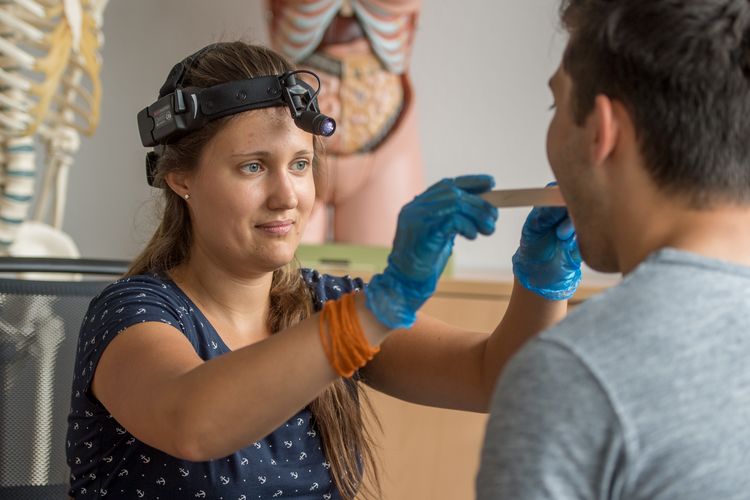
Die Übungseinheiten sind von Anfang an fester Bestandteil des Medizinstudiums in Oldenburg. „Es ist Teil unseres Konzepts, die Studierenden früh an die Praxis heranzuführen, damit sie sehen, wofür sie die Theorie lernen“, so Gehlhar weiter. Vieles probieren die Studierenden an sich selbst und den Kommilitonen aus. Sie sollen die Hemmung verlieren, Patienten zu berühren und ein Gefühl dafür bekommen, was es bedeutet, selbst Patient zu sein und sich von anderen, vermeintlich Fremden, berühren zu lassen.
Zum Ende des ersten Studienjahres sitzt der Ärztenachwuchs dann den ersten Schauspielpatienten gegenüber. Mit ihnen lernen sie, Symptome zu deuten, Untersuchungsmethoden einzusetzen und die richtigen Fragen für die Diagnose zu stellen. Später geht es auch darum, mit schwierigen Fällen umzugehen und komplexere Krankheitsbilder zu diagnostizieren. Hierbei kommen dann auch die Videoaufnahmen zum Einsatz.
Ulf Goerges leitet das Simulationspatientenprogramm. Er koordiniert die Schauspieler, übt mit ihnen die Fälle ein, bietet Schulungen an und unterstützt die Dozenten auf Wunsch bei der Entwicklung der Skripte. Den Studierenden falle es durch die Schauspieler deutlich leichter, einen Fall ernst zu nehmen, als wenn ein Kommilitone in die Rolle des Patienten schlüpfe, erzählt Goerges. „Es ist etwas anderes, wenn du jemanden vor dir sitzen hast, der 60 oder 70 Jahre alt ist. Da vergisst man, dass das ein Schauspieler ist und hat einen anderen Respekt.“
Goerges kann auf eine große Gruppe von Schauspielpatienten sämtlicher Altersstufen zurückgreifen. Viele von ihnen sind Laienschauspieler und über seine Kontakte – Goerges ist selbst Schauspieler – oder Aufrufe innerhalb der Universität in das Programm gekommen. Die Rolle als Patient ist dabei schauspielerisch besonders herausfordernd, denn jede Konsultation verläuft anders. Die Schauspieler müssen ihre Rolle verinnerlichen und flexibel auf ihre Gegenüber reagieren. Gleichzeitig müssen sie ihre eigene Situation reflektieren: Guckt der Arzt mich an? Verstehe ich, was er tut? Geht er auf meine Sorgen ein? Das anschließende Feedback ist für die Studierenden besonders wertvoll.
Mit Schauspielpatienten zu arbeiten, ermöglicht es den Studierenden, sich an komplexere Fälle heranzutasten. „Man kann Dinge tun, die man mit Patienten nicht tun kann. Die man nur mit Schauspielpatienten üben kann; das Überbringen schlechter Nachrichten oder den Umgang mit psychiatrischen Fällen beispielsweise“, erklärt Gehlhar. Der Aufwand, den das Simulationspatientenprogramm mit sich bringt, zahle sich aus: Am Ende des vierten Studienjahrs sehe man einen deutlichen Fortschritt der Studierenden im Umgang mit den Patienten. Und auch das Feedback aus den Kliniken ist positiv.
Im Körper eines 80-Jährigen
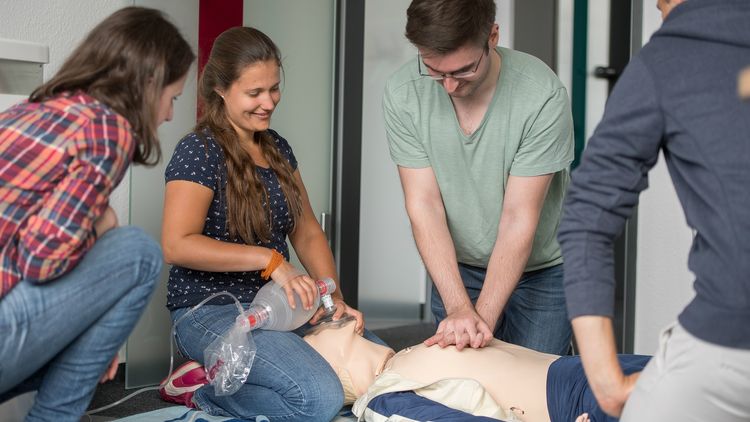
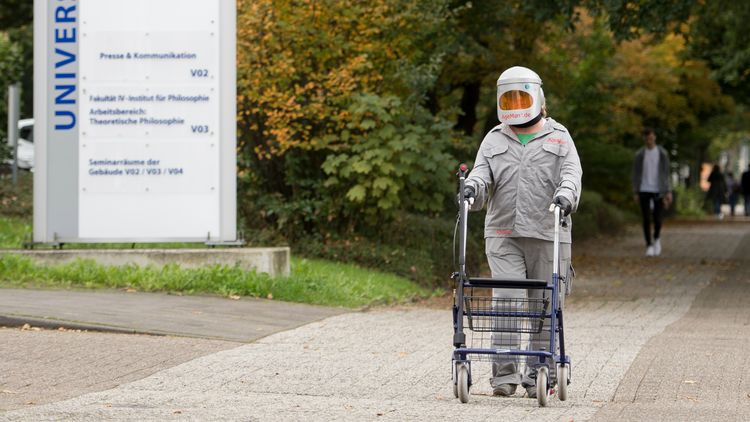
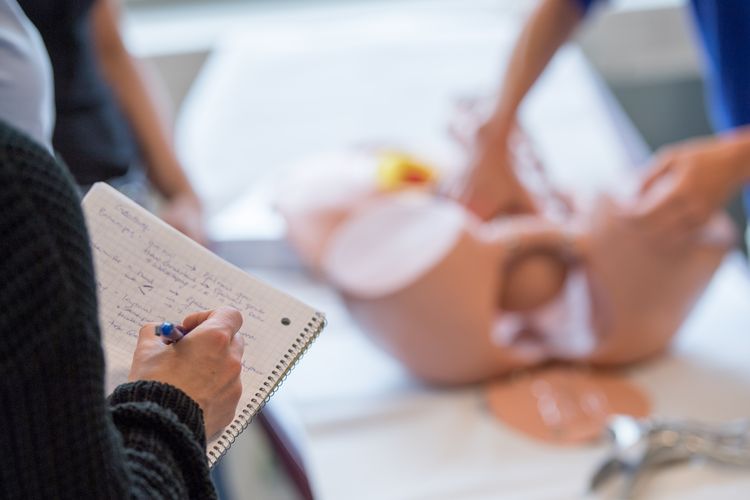
Doch es gibt auch Behandlungen, die die Studierenden nicht an Schauspielpatienten ausprobieren können: Blut abnehmen, einen Katheter legen oder die Geburt eines Babys. Um diese Fertigkeiten zu üben, stehen für jeden Fachbereich Modelle und Materialien zur Verfügung: Von Stethoskop, Hämmerchen und Ohrenspiegel über EKG- und Ultraschall-Gerät bis hin zu Intubationstrainern, einer Reanimationspuppe und Modellen zur Geburtsvorbereitung. Mit Hilfe eines sogenannten "Ageman-Anzugs" können sich Studierende sogar in den Körper eines 80-Jährigen hineinversetzen.
„In den Kursen wird die Fertigkeit einmal vorgemacht, dann gehen die Studierenden in Kleingruppen zusammen und üben mit den Tutoren. Regelmäßig gibt es praktische Prüfungen, die das Gelernte abfragen. Auch dafür gibt es Übungskurse“, erklärt Stephanie Voigt. Sie koordiniert die Lehrveranstaltungen der Jahre vier bis sechs im KTZ. Zukünftig möchte das KTZ noch mehr Übungskurse abseits des Curriculums anbieten, in denen die Studierenden bestimmte Fertigkeiten vertiefen können – zum Beispiel Ultraschalluntersuchungen. Das Ziel: angehende Ärzte noch besser auf die klinische Realität vorbereiten.