
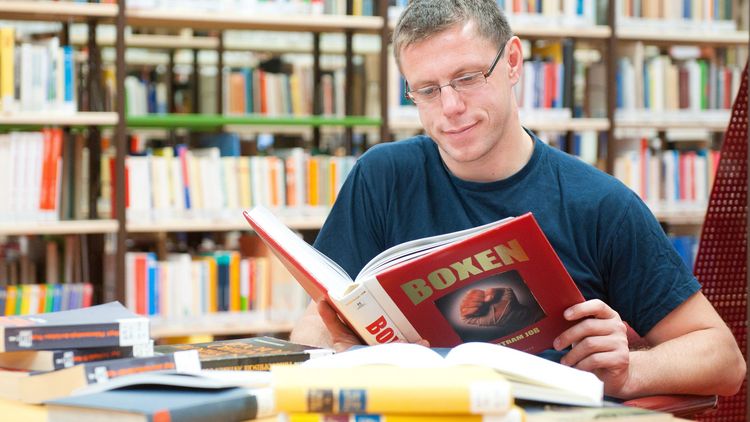

„Wie kann es sein, dass ich mich mit meinen besten Freunden treffe, um ihnen auf die Nase zu hauen?“ Nils Baratella ist Promovend des Graduiertenkollegs "Selbst-Bildungen". Sein Thema: Das Boxen. Ganz anders Ines Weber, die sich mit Bischöfen beschäftigt. Ein Porträt.
Von Mark Brüggemann
Zu seinem Dissertationsthema kam Nils Baratella, als er eines Tages über sein Hobby, das Boxen, nachdachte. Seit zehn Jahren steigt er mehr oder weniger regelmäßig in den Ring. „Wie kann es eigentlich sein, dass ich mich jeden Abend mit meinen besten Freunden treffe, um ihnen auf die Nase zu hauen?“ fragte Baratella sich. Für sich persönlich fand der damalige Philosophiestudent der Freien Universität Berlin rasch eine Antwort: „Ich mag auch gedanklich den Austausch mit Menschen, die mir Angriffsfläche bieten.“ Diese offene Auseinandersetzung bietet Baratella zufolge auch das Boxen: „Es geht ja nicht einfach darum, den anderen umzuhauen. Boxkämpfe sind auch eine Form der körperlichen Auseinandersetzung, in denen man mehr über einen Menschen erfährt als nur über Sprache.“
Kampf als Erzählung der Moderne
Was sagt der Boxsport über das Gewalt- und Körperverständnis moderner Gesellschaften aus – und wie hat sich dieses entwickelt? Diese Forschungsfragen beschäftigen Baratella, seitdem er 2010 als Doktorand in das Graduiertenkolleg „Selbst-Bildungen“ aufgenommen wurde. Wie passt sein Dissertationsprojekt in das übergeordnete Thema der Subjektivierungen? „Es gibt eine philosophische Linie in der Moderne, nach der das Subjekt und sein Dasein als Kampf verstanden werden“, erklärt Baratella und verweist auf die Theorien Hegels, Nietzsches und Foucaults. „Man kann den Kampf gewissermaßen als Erzählung der Moderne begreifen.“ Dazu gehöre auch der Kampf des Subjekts gegen sich selbst – im Ring repräsentiert als Überwindung des eigenen, halbnackt zur Schau gestellten Körpers nach entscheidenden Treffern.
Baratella zufolge ist der Boxring ein sozialer Ausnahmeraum, der Kampf eine Inszenierung, die sich prototypisch für die jeweilige Gesellschaft mit Gewalt auseinandersetzt. „Mit seinem Ethos von Fair Play und Männlichkeit lieferte das Boxen ein gesellschaftliches Ideal dafür, wie in der Moderne Konflikte ausgetragen werden sollten“, sagt er. Das war nicht immer so: In den ersten modernen Boxkämpfen gab es noch keine Begrenzung auf eine Zahl von Runden – die Kontrahenten schlugen sich einfach so lange ins Gesicht, bis einer umfiel. Noch bis in die 1920er Jahre durften Boxer, die zu Boden gegangen waren, nach dem Aufstehen gleich wieder geschlagen werden. „Die zunehmende Reglementierung hat dem Sport seine spezifische Ästhetik gegeben und zugleich das Menschenbild des Boxens verändert“, erklärt Baratella. „Es wurde nicht mehr alles unternommen, um den anderen zu besiegen.“
In den 1920er bis 1970er Jahren war das Boxen Baratella zufolge einer der prominenten Räume, in denen sich die Gesellschaft mit Gewalt und Kampf auseinandersetzte. Legendäre Fights wie etwa zwischen Muhammad Ali und dem kürzlich verstorbenen Joe Frazier sind auch Jahrzehnte später noch im kollektiven Gedächtnis präsent. „Heute dagegen spielt Boxen im europäischen und nordamerikanischen Kulturraum keine so zentrale Rolle mehr – anders als etwa in Mexiko und Südamerika“, stellt Baratella fest. In Europa würden zunehmend andere Sportarten wichtig. Als gesellschaftliches Randphänomen sei der Kampfsport allerdings auch in der Hochphase des Boxens angesehen worden – zu Unrecht, wie Baratella mit Foucault argumentiert: „Von den Rändern aus blickend, erfährt man mehr über die Gesellschaft, als wenn man sich im Zentrum befindet.“
Betreuer der Arbeit von Nils Baratella sind der Oldenburger Philosoph Prof. Dr. Johann Kreuzer und Prof. Dr. Gunter Gebauer von der Freien Universität Berlin. Seine Aufenthalte in Berlin nutzt der Doktorand auch weiterhin dazu, in einem Boxclub an der Potsdamer Straße zu trainieren. Der Spaß stehe im Mittelpunkt, sagt Baratella, ab und zu mache er auch Sparring, wenn sich jemand aus dem Boxclub auf einen Wettkampf vorbereite. Vorbilder für seinen eigenen Kampfstil hat Baratella nicht, wohl aber Boxer, die er besonders schätzt: „Eine beeindruckende Persönlichkeit war der Sinto Johann Trollmann.“ 1933 noch Deutscher Meister im Halbschwergewicht geworden, wurde Trollmann von den nationalsozialistisch gleichgeschalteten Medien rassistisch verspottet und 1944 im KZ Neuengamme ermordet. Außer Trollmann imponiert Baratella vor allem die Boxlegende Rocky Marciano: „Ich mag die klassische Geschichte des italienischen Einwanderersohns, der sich hochboxt.“
„No sports“ – zumindest für Bischöfe
Sport spielt auch für Ines Webers Promotionsprojekt zur Subjektivierung eine Rolle – wenn auch eher am Rande. „Bald überlegen, bald unterlegen“ sei er gewesen, heißt es in einer mittelalterlichen Chronik über den Trierer Erzbischof Balduin von Luxemburg, der das Amt von 1307 bis 1354 bekleidete. Er war angeblich „der heiterste Gefährte beim Sprung, leichtfüßig beim Lauf; er warf den Stein weiter als die übrigen und übertraf sie an Körperkräften“. Ist von einem rüstigen älteren Herrn beim Ablegen des Sportabzeichens die Rede? Keineswegs. Die zitierte Passage aus den Gestis Baldewini („Taten Balduins“) gibt Einblick in den Beginn der Amtszeit Balduins, der bereits mit 21 Jahren zum Erzbischof ernannt wurde. Ganz mit dem Kirchenamt schien Balduins Begeisterung für „Sport“ nicht vereinbar zu sein. So schickte der Erzbischof dem Chronisten zufolge einer derartigen Vergnügung die Formel „Hängen wir die bischöfliche Würde an die Wand!“ vorweg.
Das Zitat aus den Gestis Baldewini fand Ines Weber so interessant, dass sie aus dieser Inspiration heraus mit dem Historiker Prof. Dr. Rudolf Holbach ein Promotionsprojekt für das Graduiertenkolleg entwickelte. „(Selbst)Bildung spätmittelalterlicher Bischöfe im Heiligen Römischen Reich im Vergleich“ ist der Arbeitstitel ihrer Dissertation. „Außer Balduin will ich mir noch mehrere andere Bischöfe aus dem Zeitraum von etwa 1250 bis 1550 anschauen“, sagt Weber, die dem neuen Jahrgang des Kollegs angehört. „Wie hat sich die jeweilige Person in ihr Amt ,hineingebildet‘ und dieses dann verkörpert?“ ist die zentrale Forschungsfrage der 26-Jährigen, die in Oldenburg ihr Masterstudium in Europäischer Geschichte abgeschlossen hat. Zur „Selbst-Bildung“ spätmittelalterlicher Bischöfe gehören Weber zufolge ganz unterschiedliche Aspekte: Bildung und religiöser Hintergrund, soziale Vernetzung, Kleidungs- und Lebensstil, Interessen und Aktivitäten. Welche Voraussetzungen bringen die Bischöfe mit? Was ist mit der Würde ihres Amtes vereinbar und was nicht? Mit wem werden sie in den Chroniken verglichen? Diese und andere Fragen soll Webers Arbeit beantworten.
Kirchliches Oberhaupt und weltlicher Landesherr
Einen besonderen Reiz ihres Dissertationsthemas sieht Ines Weber darin, strukturelle Unterschiede in den Bistümern des Heiligen Römischen Reiches herauszuarbeiten: „Es gab Bistümer, in denen der lokale Adel eine starke Stellung hatte, aber auch solche, in denen die freien Städter die entscheidende Rolle spielten.“ Daher wurden an das Amt des Bischofs ganz unterschiedliche Erwartungen gestellt, auf die es zu reagieren galt. Die Bischöfe agierten zudem in einem ganz besonderen „Spannungsfeld“, da sie sowohl das kirchliche Oberhaupt des Bistums als auch weltliche Landesherren waren. Nicht immer stimmten die Erwartungen der „Gesellschaft“ und die des Bischofs selbst an sein Amt überein: Der Hamburger Kaufmannssohn Hinrich Biscop (1315-1381) etwa strebte rücksichtslos und hartnäckig nach der Bischofswürde, bis sie ihm 1370 schließlich gewährt wurde. Betrug und Korruption gehörten ebenso zu seinem Amtsverständnis wie ein prunkvolles Leben auf Kosten des Bistums – sehr zum Missfallen seiner Umgebung.
Schon während ihres Studiums spezialisierte sich Weber auf die Geschichte des Mittelalters, Thema ihrer Masterarbeit waren Ordenshäuser im mittelalterlichen Friesland. Dr. Antje Sander, Leiterin des Schlossmuseums Jever, fand die Arbeit so fundiert, dass sie Weber die Konzeption einer Dauerausstellung zur mittelalterlichen Johanniterkapelle Bokelesch (Gemeinde Saterland) übertrug. Mit dem dreijährigen Graduiertenstipendium geht es für die Ostfriesin aus Wiesmoor nun von der Ausstellungspraxis in die Wissenschaft zurück. „Das Programm des Kollegs ist wirklich vielversprechend: Man nimmt einerseits an fächerspezifischen Kolloquien teil, wird aber auch bei den interdisziplinären Fragen nicht allein gelassen“, freut sich Weber auf den Austausch mit den KollegiatInnen und wissenschaftlichen BetreuerInnen.