
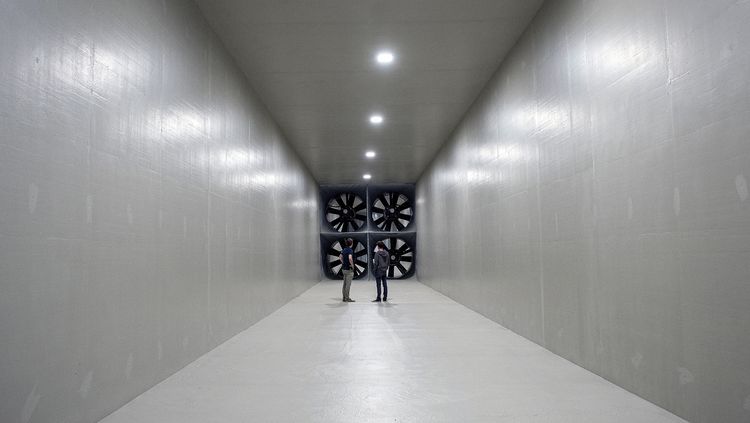

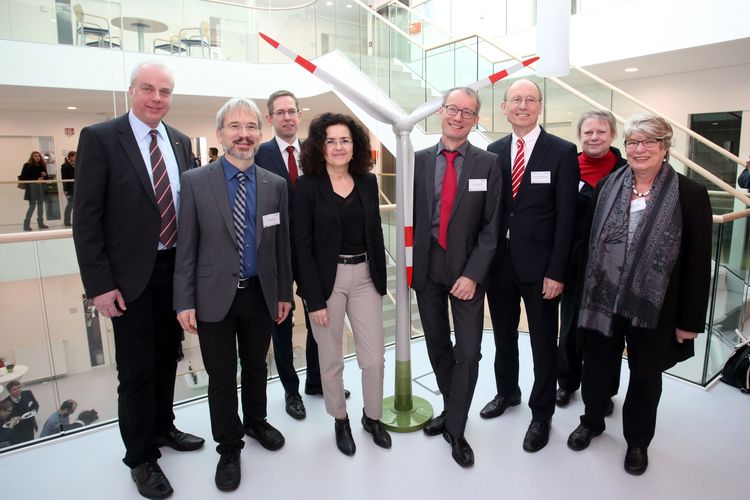
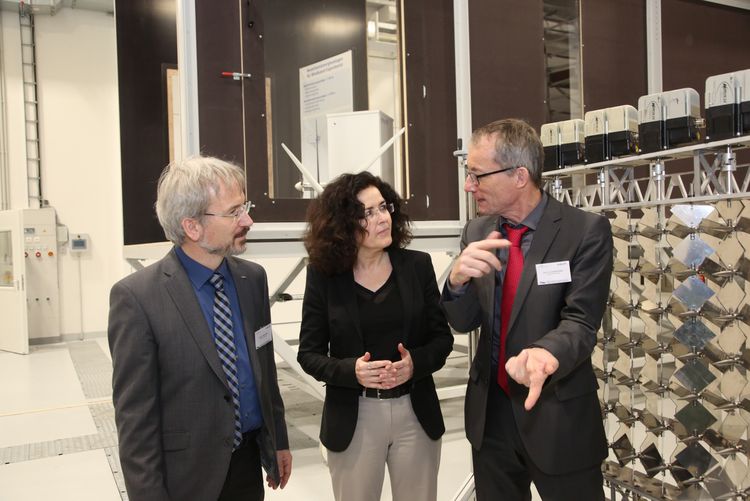

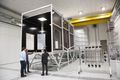


Platz für über 130 Wissenschaftler, eine 30 Meter lange Messstrecke und Windgeschwindigkeiten von bis zu 150 Kilometern pro Stunde: Das Forschungslabor für Turbulenz und Windenergiesysteme (WindLab) der Universität Oldenburg ist heute in Anwesenheit der Niedersächsischen Ministerin für Wissenschaft und Kultur, Gabriele Heinen-Kljajić, eingeweiht worden.
„Die nachhaltige Energieversorgung aus erneuerbaren Energien ist eine zentrale Herausforderung unserer Zeit“, erklärte die Ministerin. „An der Universität Oldenburg werden erneuerbare Energien seit vielen Jahren erfolgreich erforscht. Mit dem WindLab sind hervorragende Bedingungen geschaffen worden, um die Forschung im Bereich Windenergie weiter zu stärken.“
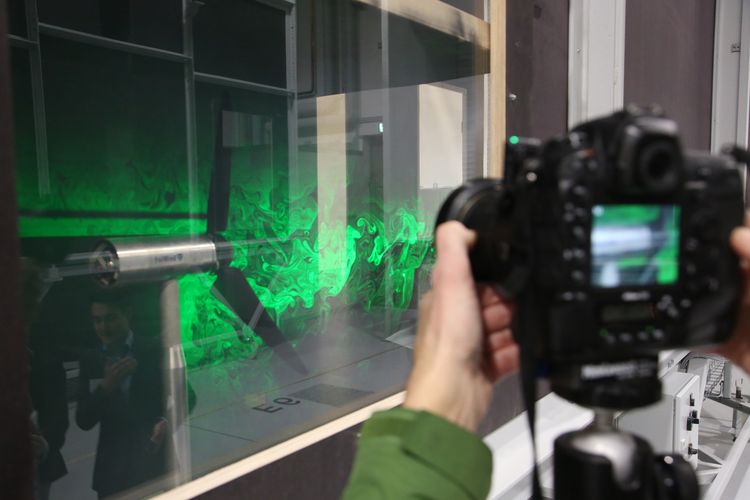
Herzstück des Neubaus mit 2.300 Quadratmetern Nutzfläche ist ein turbulenter Windkanal, mit dessen Hilfe das Zusammenspiel von atmosphärischen Strömungen mit Windparks, Windenergieanlagen und ihren Komponenten untersucht werden soll. Ziel sind exakte Daten über das Betriebsverhalten von Windenergieanlagen und großen Offshore-Windparks. Die Gesamtkosten von rund 20 Millionen Euro tragen je zur Hälfte der Bund und das Land Niedersachsen.
„Mit dem WindLab und dem dazugehörigen Turbulenzwindkanal verfügen wir über eine einmalige Forschungsinfrastruktur für Windenergie“, betonte Universitätspräsident Prof. Dr. Dr. Hans Michael Piper anlässlich der Eröffnung. Sowohl die technische Ausstattung als auch die Synergien, die sich aus der Zusammenarbeit des interdisziplinären Expertenteams ergeben, seien herausragend.
Das vierstöckige WindLab bietet Platz für Physiker, Meteorologen, Ozeanographen und Ingenieurswissenschaftler. Nutzen werden den neuartigen Windkanal Forscherinnen und Forscher der Universitäten Oldenburg und Hannover, der Jade Hochschule, des Fraunhofer Instituts für Windenergie und Energiesystemtechnik (Bremerhaven) sowie des Max-Planck-Instituts für Dynamik und Selbstorganisation (Göttingen). Für die Inhalte des Antrags zum Forschungsneubau verantwortlich zeichneten Oldenburger Wissenschaftler unter der Leitung des Windenergieexperten Prof. Dr. Martin Kühn, des Turbulenzforschers Prof. Dr. Joachim Peinke und des Energiemeteorologen Dr. Detlev Heinemann.
Im Vergleich zu Windkanälen, wie sie beispielsweise in der Luftfahrt genutzt werden, lassen sich in dem turbulenten Oldenburger Windkanal Windfelder simulieren, wie sie in der Natur vorkommen. Die Untersuchungen sollen dazu beitragen, die Effizienz von Windparks zu steigern und technische wie finanzielle Risiken zu vermeiden. „Unsere große Vision ist es, eine neue Qualität in der Windenergieforschung durch das Zusammenspiel von Messungen im Freifeld, numerischer Simulationen auf Großrechnern und den neuen experimentellen Möglichkeiten im turbulenten Windkanal zu erzielen“, erklärte Peinke.
Entworfen wurde das WindLab vom Stuttgarter Architektenbüro HammesKrauseArchitekten.