
Changing perspective
Changing perspective
Changing perspective
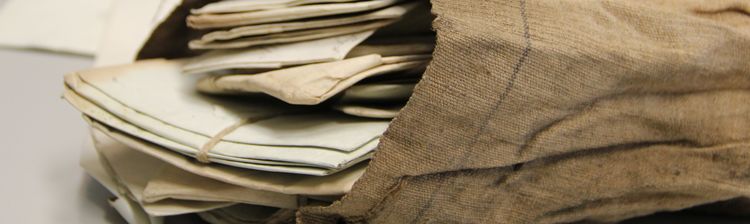
The prize papers depict the great upheavals of European expansion, such as colonialism or poverty migration, from an – often unknown – everyday perspective. An opportunity for a different view on history, says Dagmar Freist, head of the academy project.
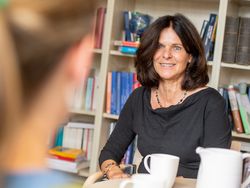
„Thus our knowledge is not necessarily called into question, but the past appears far more complex and contingent", says Freist, who considers the Prize Papers a „treasure trove”. Since 2004 she has been researching and teaching as professor at the University of Oldenburg, focusing on the early modern period. Spanning 400 years from around 1450 to 1850, this period was marked by dramatic upheavals, including the invention of printing, European expansion and colonialism, the Reformation and the formation of nation states.
Freist is fascinated by the way the Prize Papers, as an "accidental" archive, provide ever new historical constellations and insights into experiences of migration, disease or slavery in the 17th, 18th and early 19th centuries, depending on the context, time, location, and persons involved. Their diversity, she explains, offers points of departure for historical research in all kinds of areas, including medicine, climate, communication, law, religious plurality, cartography, shipbuilding, and the history of the 19 languages identified in the documents to date.
Whether it's a plea for help from a woman to her husband who has emigrated to America leaving her and their children behind; the letter book of a Jewish merchant driven from the Iberian Peninsula to North Africa, entertaining a huge trade network which his correspondence uncovers, at the same time giving intimate insights into Jewish life 400 years ago; or the reports of Moravian missionaries who had been sent from the German-Danish border region to Suriname – the Prize Papers "demonstrate clearly that this era cannot be understood solely from the national historical perspective that still prevails in research on the European expansion and colonialism", says Freist.
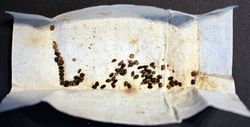
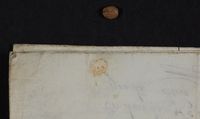
Many of the approximately 160,000 undelivered letters preserved in the Prize Papers collection remain folded or even sealed, some of them shedding centuries-old seeds or the letter sand sprinkled onto the ink to make it dry. As the only means of communicating across large distances, letters played a vital role in helping people to stay in touch. They were often accompanied by a small gift – something familiar sent from home, or something exotic sent home from abroad. In the case of important business documents, several copies were often sent on different ships, Freist adds, in the knowledge that if the vessel was captured, they might not reach their intended recipient. In a letter dated February 27, 1795, Catharina Borck, a 33-year-old Moravian Church missionary born in Flensburg and stationed in Paramaribo, Suriname, wrote to another member of her church:
Now I hope that (...) all my letters will reach you safely (...), only recently a ship that was on its way here was captured by privateers. They unloaded its cargo and let it sail on without it. They brought one sack of letters, but left the other behind.“
Despite the vast distances and the sometimes uncertain, often months-long delivery times, the authors often adopted a chatty tone in their missives. Borck, who ran a small bakery with her husband in the Moravian Church mission in Paramaribo, also treated her correspondence as a "conversation". In a letter dated March 1, 1795, she wrote:
It is with great pleasure that I once again take up the the quill to converse a little with my dear parents in these few lines.“
Nonetheless, the carefree tone of her letters contrasts starkly with their content at times – at least from today's perspective. A letter that raised many questions for historian Freist was also penned by the young Catharina and addressed to Peter, a member of the Moravian Church in Christiansfeld, Denmark. Catharina describes her introduction to plantation society in Suriname, which at the time was a Dutch colony where the use of slaves was commonplace – tens of thousands of enslaved people had been brought there from the west coast of Africa. Three of them worked in Borck's bakery. In her letter to Peter, Catharina describes a visit to a plantation and how its manager had his enslaved workers led into the courtyard to crush coffee beans for the entertainment of his guests:
It almost looked like soldiers in a drill, except that they were all black. There were probably almost a hundred of them.“
For Freist, the missionary's description of the scene is "disconcerting from today's perspective because she seems to have no understanding of the blatant oppression and slave labour being presented to onlookers like a stage production". Instead, she compares the rhythmic movements of coffee-bean crushing with a military drill. Yet as Christians, the Moravian Church missionaries had an ambivalent stance on slavery, Freist explains.
Regardless of the distance, the sometimes uncertain and usually months-long delivery, the writers often adopted a chatty tone. Borck, who ran a small bakery with her husband in the Moravian mission in Paramaribo, also regarded and organised her correspondence as a "conversation". The then 33-year-old wrote on 1 March 1795:
'It is with much pleasure that I now once again take up the pen to entertain myself a little with my dear parents through these few lines.'
In contrast to the carefree impression of her lines - at least from today's perspective - is sometimes their content. One letter, the reading of which provoked many questions from historian Freist, was addressed to one of Borck's religious brothers in Christiansfeld, Denmark, Peter, and ended up as part of the same packet of letters in the caper stock. In it, the young Catharina describes how she is introduced to the plantation society of the Dutch colony at the time, in which the use of enslaved people was commonplace. Tens of thousands of them had been deported there from the west coast of Africa; three of them also worked in Borck's bakery. To Peter, Borck described one of their first visits to a plantation, whose manager took great care of them and had the enslaved people "coffee-stamped" in the evenings to entertain the guests:
It looked as if the slaves were exiles, except that they were all black. There were about 100 of them."
For Freist, the missionary described this scene "so irritating from today's perspective because she did not seem to grasp the unmistakable oppression and slave labour that was being presented to onlookers as if on a theatre stage". Instead, she compared the rhythmic movements of crushing coffee beans with the drill of soldiers in Europe. As Christian missionaries, the Moravians had an ambivalent relationship with slavery.
"This example shows how challenging it is to contextualize this kind of account and compare it with others in order to understand how slavery was perceived and practiced by Europeans from many different backgrounds and levels of education." There is still a lot of catching up to do when it comes to research on slavery, Freist notes, adding that the most important thing now is to integrate the perspectives of those who were enslaved, and for research to be conducted in collaboration with scholars from the places of origin.
The aforementioned letter is also an example of the unadorned and uncensored insights that the Prize Papers offer. "The content of mail bags became accidental archives," TNA archivists Dr Amanda Bevan and Dr Randolph Cock, who work in the project for TNA sorting, write in an article. "A unique survival of mail in transit, in bulk, unmediated by being scattered in delivery, or familial censorship, or the ravages of time." The unique state of preservation of many records, having survived in their original material condition from the past, is another distinctive feature of the Prize Papers. Furthermore, Catharina Borck's letters are a good example of how the Prize Papers can render global microhistories visible, of how such sources can offer intimate perspectives on global circumstances.
This text is a revised excerpt from the article "Snapshots of the Past", first published in the 2021/22 issue of the research magazine EINBLICKE. Author: Deike Stolz