
Night of Hearing
Wednesday, 22 May 2024
4 – 10 pm
Free admission
Locations:
- University of Oldenburg – Campus Wechloy | Kick-off at 4 pm
- House of Hearing | Start at 5 pm
- Jade University of Applied Sciences | Start at 5 pm
With contributions by: Carl von Ossietzky University Oldenburg | Evangelisches Krankenhaus Oldenburg | Fraunhofer Branch for Hearing, Speech and Audio Technology HSA | Hörzentrum Oldenburg gGmbH | Jade University of Applied Sciences | KIZMO GmbH
Night of Hearing
-

Key visual - Midjourney / ideendirektoren -
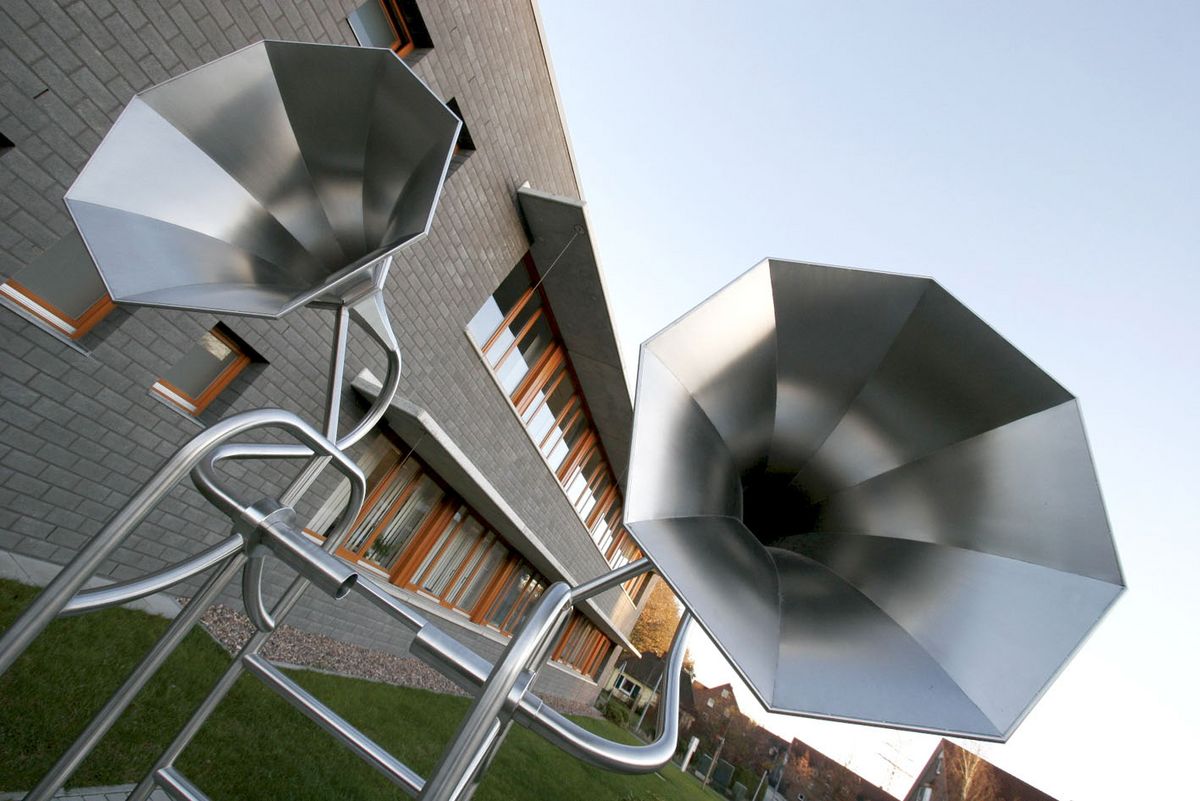
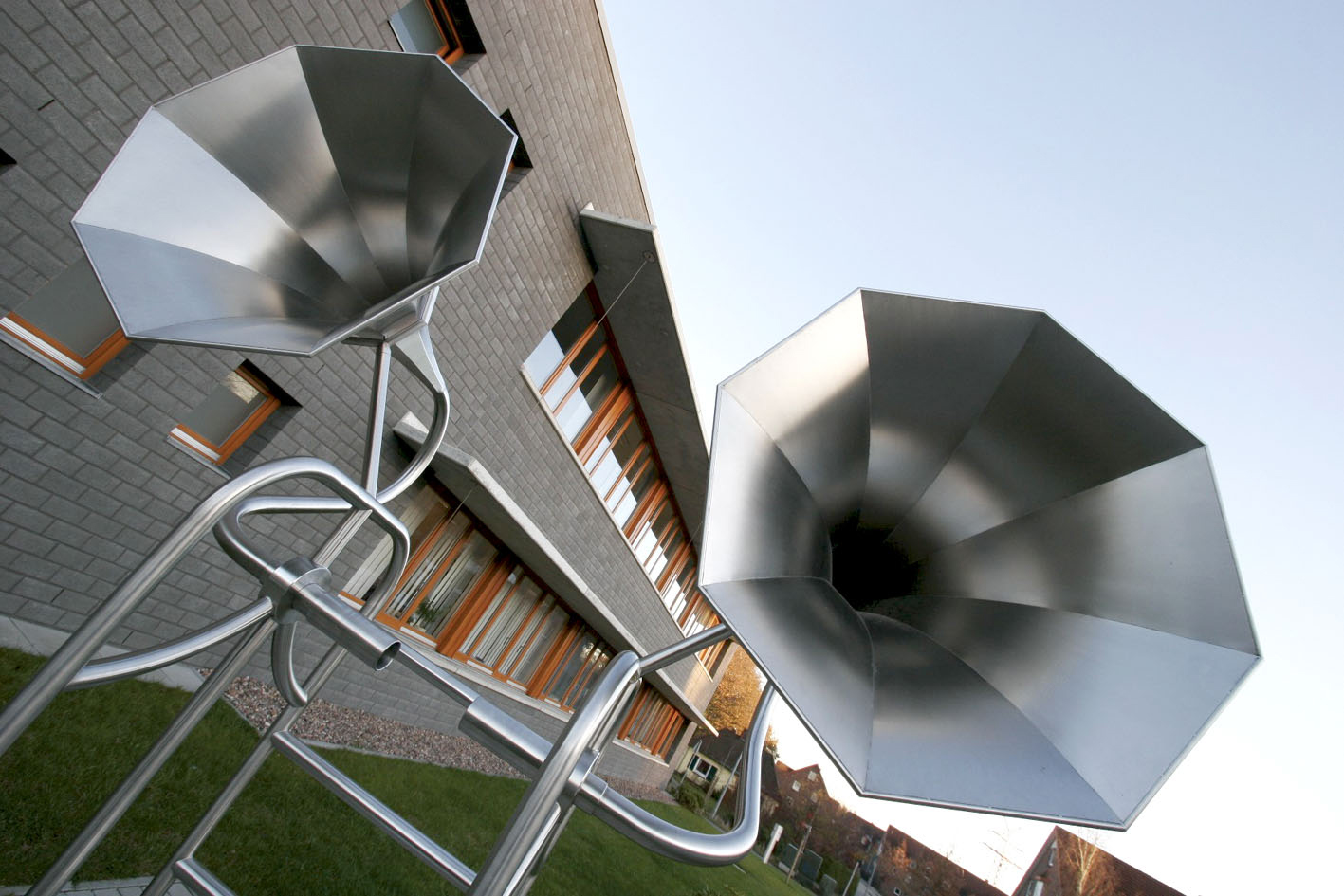
The "Hearing Throne", a sound-amplifying exhibit in the Hearing Garden at the House of Hearing. Photo: Hörzentrum Oldenburg gGmbH -
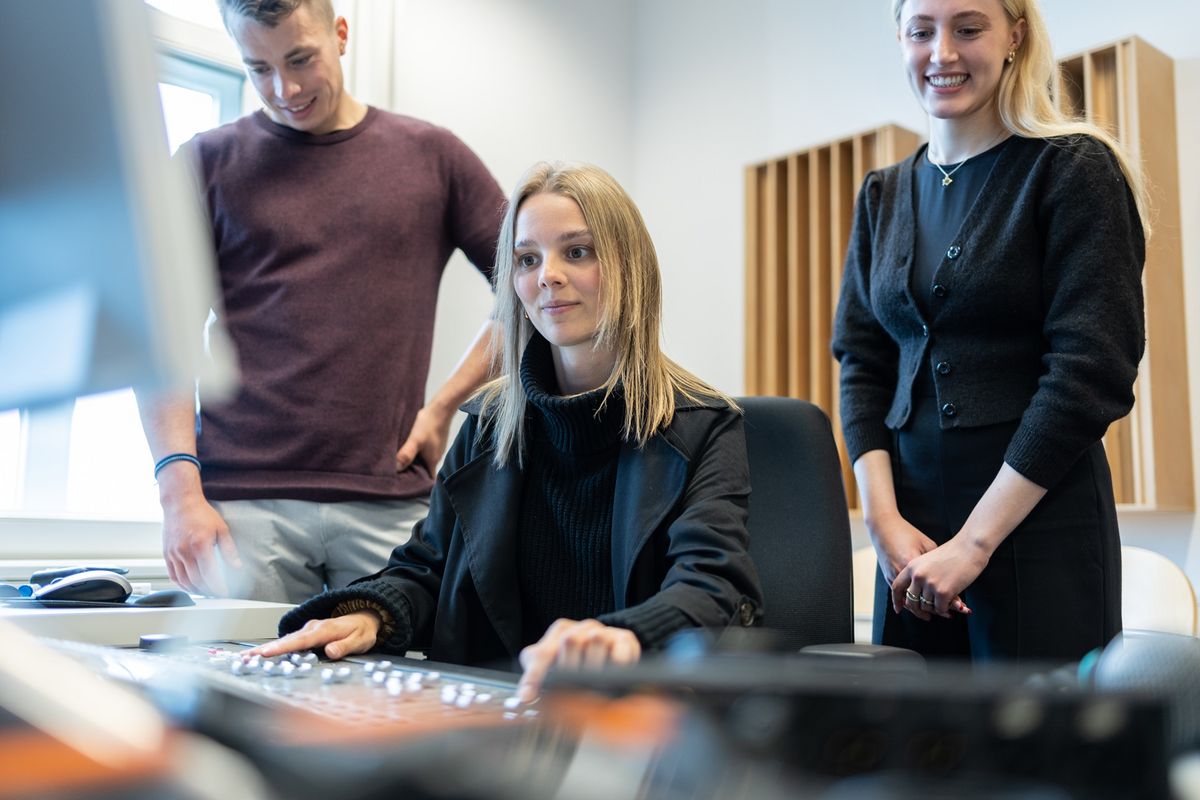
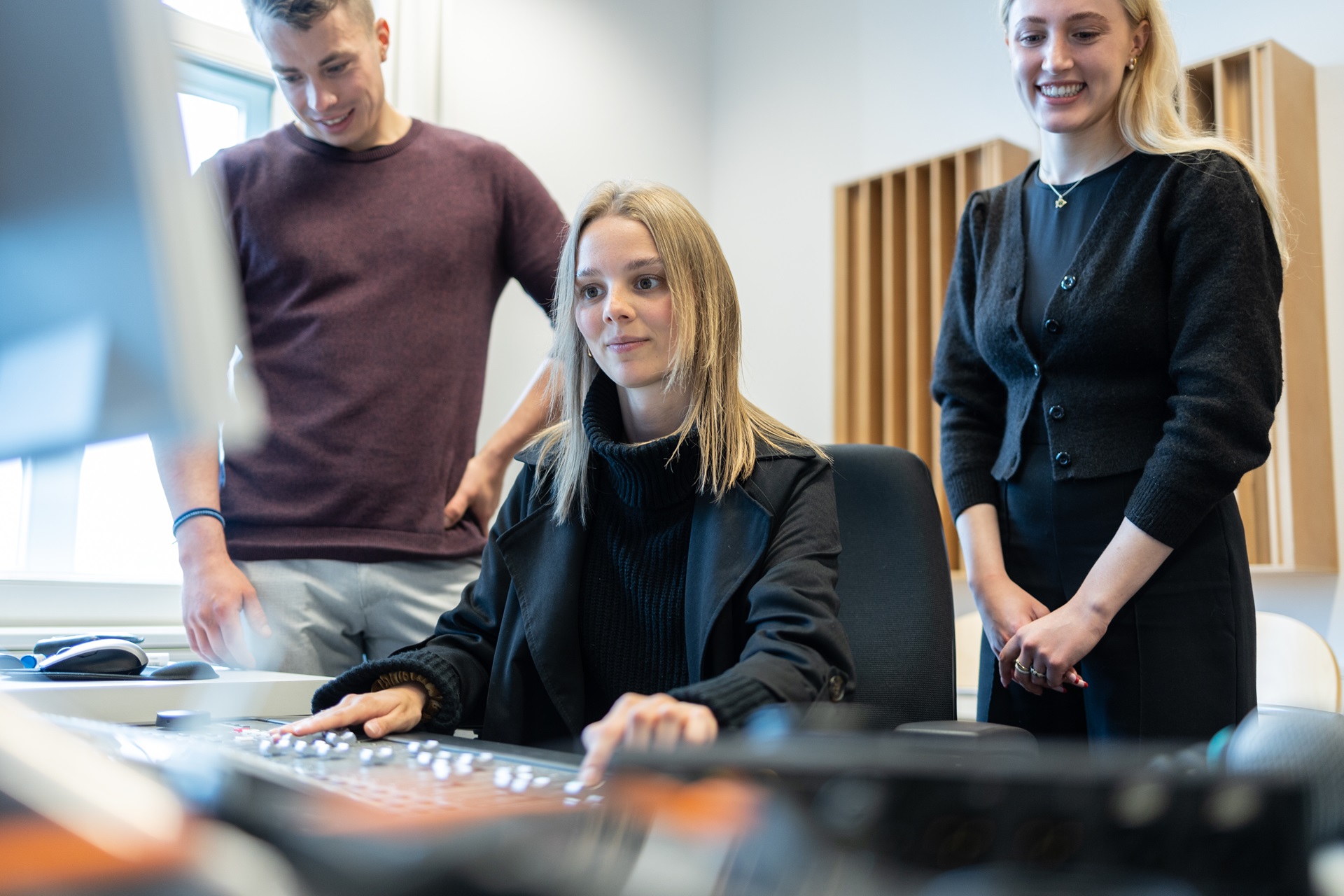
In the recording studio at Jade University of Applied Sciences, students learn how to professionally record and produce a song. Photo: Jade University of Applied Sciences / Bonnie Bartusch -
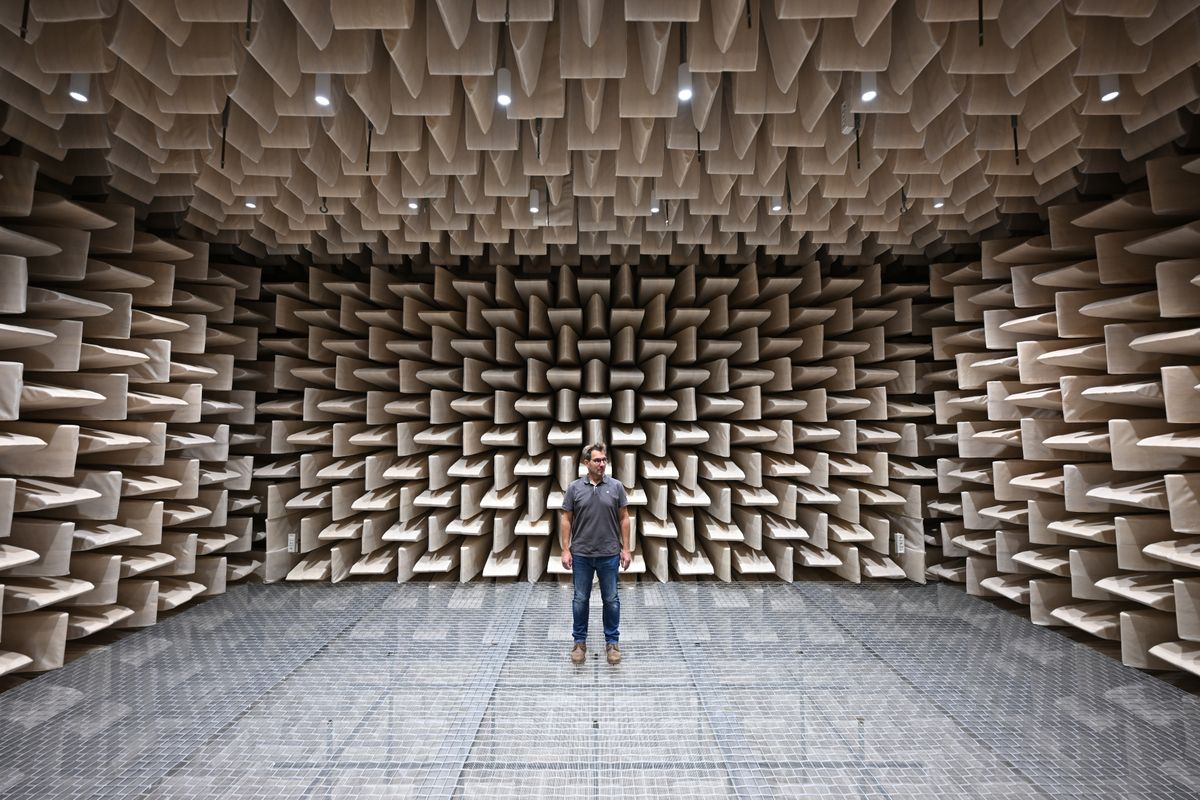
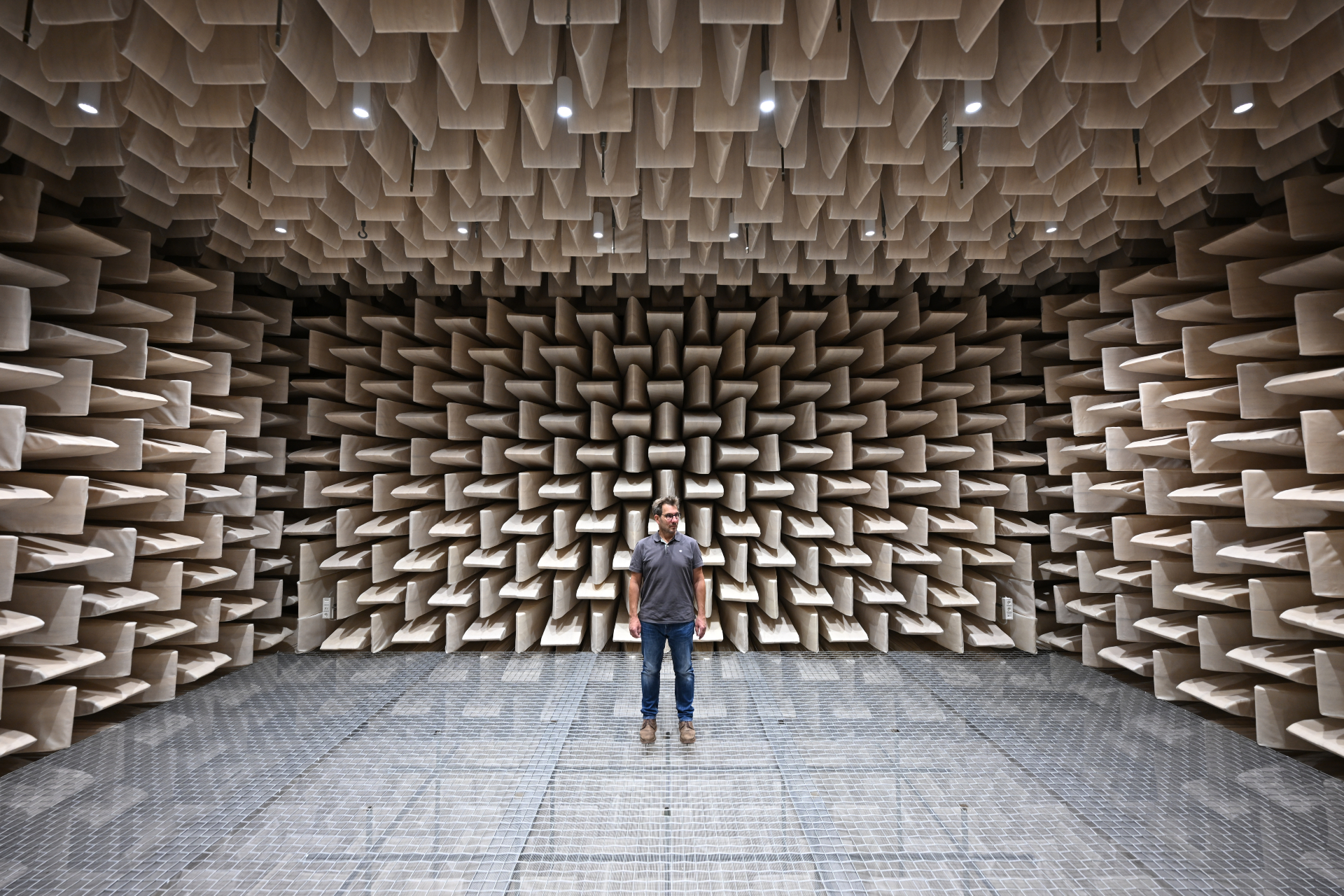
The "Anechoic Chamber", an acoustics laboratory on the Wechloy campus. This is where hearing experiments are carried out with test persons, in particular on spatial perception. Photo: University of Oldenburg / Mohssen Assanimoghaddam -
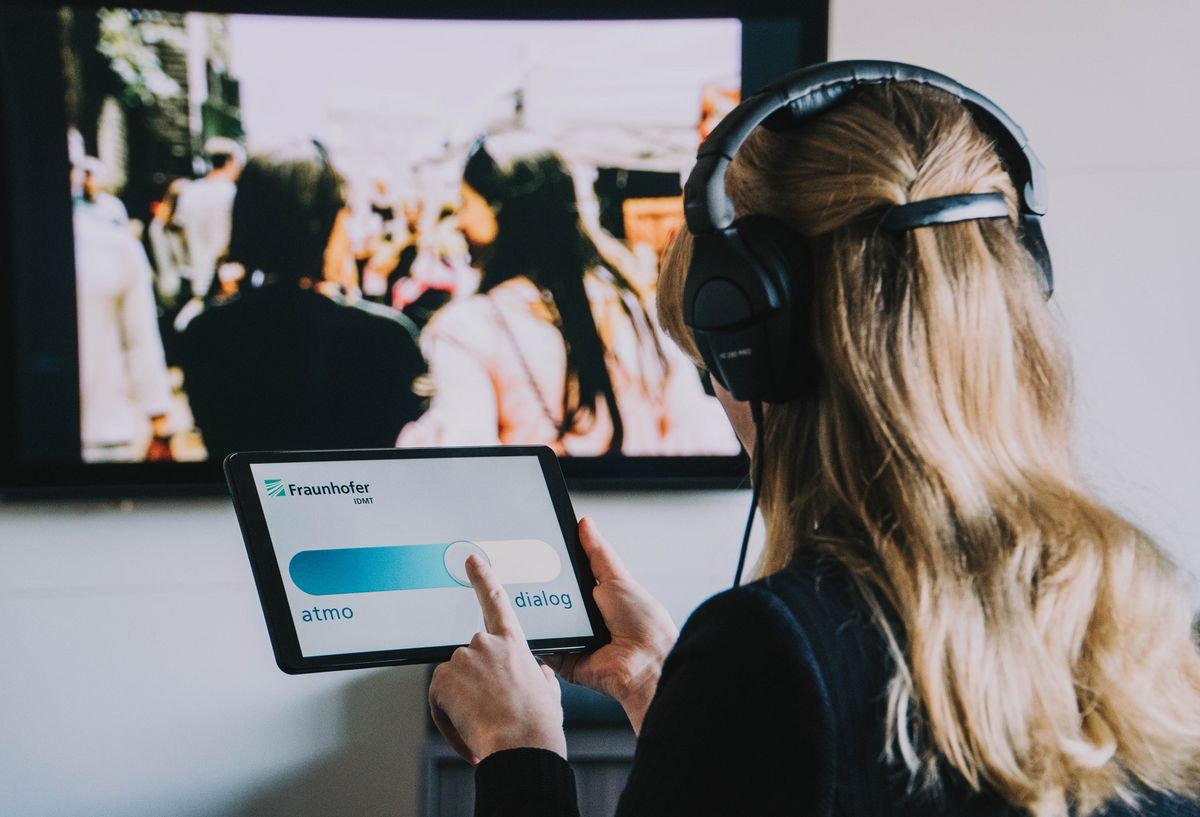
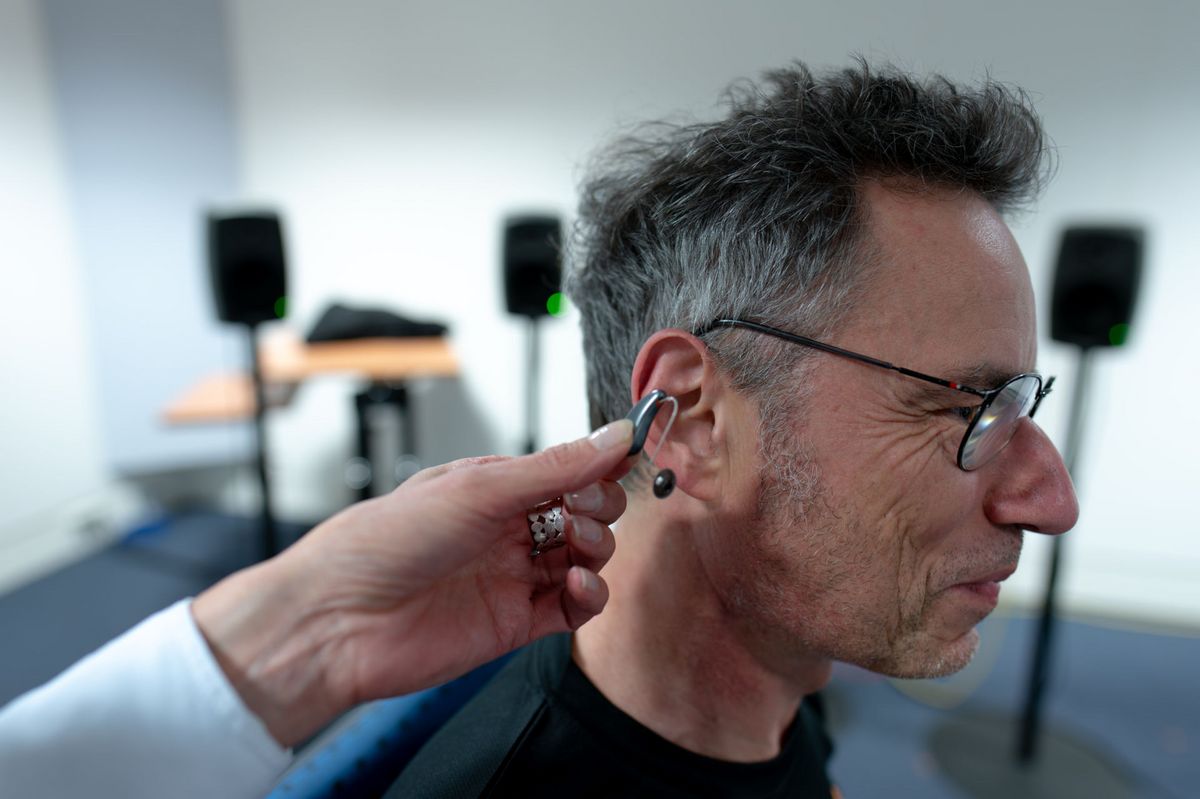
The Oldenburg Branch for Hearing, Speech and Audio Technology HSA of the Fraunhofer IDMT has developed adaptive algorithms and intuitive methods for customising personal sound. Photo: Fraunhofer IDMT / Anika Bödecker -
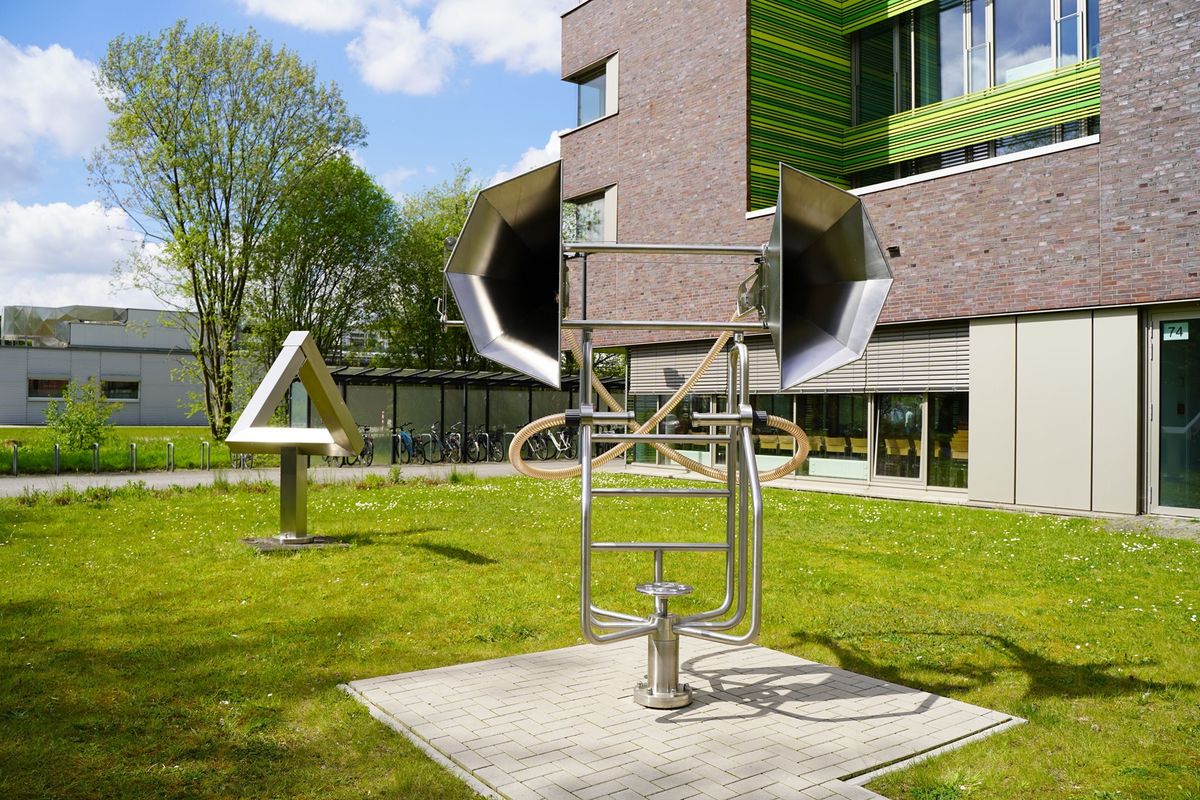
The "Inverse Hearing Throne", a new exhibit in front of the NeSSy building. More information on www.uol.de/mediphysik-akustik/inverser-hoerthron (in German). Photo: University of Oldenburg


Night of Hearing
How does hearing work? What role does the brain play? How do you teach computers to hear? And do animals actually hear differently? The Night of Hearing offers answers to these questions and much more!
In the anniversary year of the University of Oldenburg, there are special occasions to experience science and research – such as the Night of Hearing. Hearing research is a central focus not only at the university. In Oldenburg, a unique network of high-profile partners is exploring the sense of hearing and developing the hearing systems of the future. The Night of Hearing provides special insights. Six institutions will be presenting a varied programme at three locations: the University with the Cluster of Excellence Hearing4all and the Collaborative Research Centre Hearing Acoustics, Evangelisches Krankenhaus Oldenburg, Fraunhofer IDMT-HSA, Hörzentrum Oldenburg, Jade Hochschule and KIZMO.
In addition to short lectures, there will be many opportunities to join in - for example, you can test your hearing abilities, be amazed by acoustic illusions or take part in live demonstrations of a "hearing car". There will be exciting insights into highly specialised laboratories such as MEG, wave field synthesis lab or anechoic chambers. You will also find out how you can be part of cutting-edge research as a test person. Anyone interested in studying will receive information on the content and prospects of the study programmes "Hearing Technology and Audiology" and " Physics, Engineering and Medicine“. You can conclude the evening with a concert, open stage with creative contributions or a drink in the Hörgarten.
Night of Hearing 2024 photo documentation
-

Photo: University of Oldenburg/Izabela Mittwollen -

Photo: University of Oldenburg/Izabela Mittwollen -

Hörzentrum Oldenburg | Photo: University of Oldenburg/Izabela Mittwollen -
Hörzentrum Oldenburg | Photo: University of Oldenburg/Izabela Mittwollen -

Photo: Jade University of Applied Sciences/Ralph Nolte-Holube -
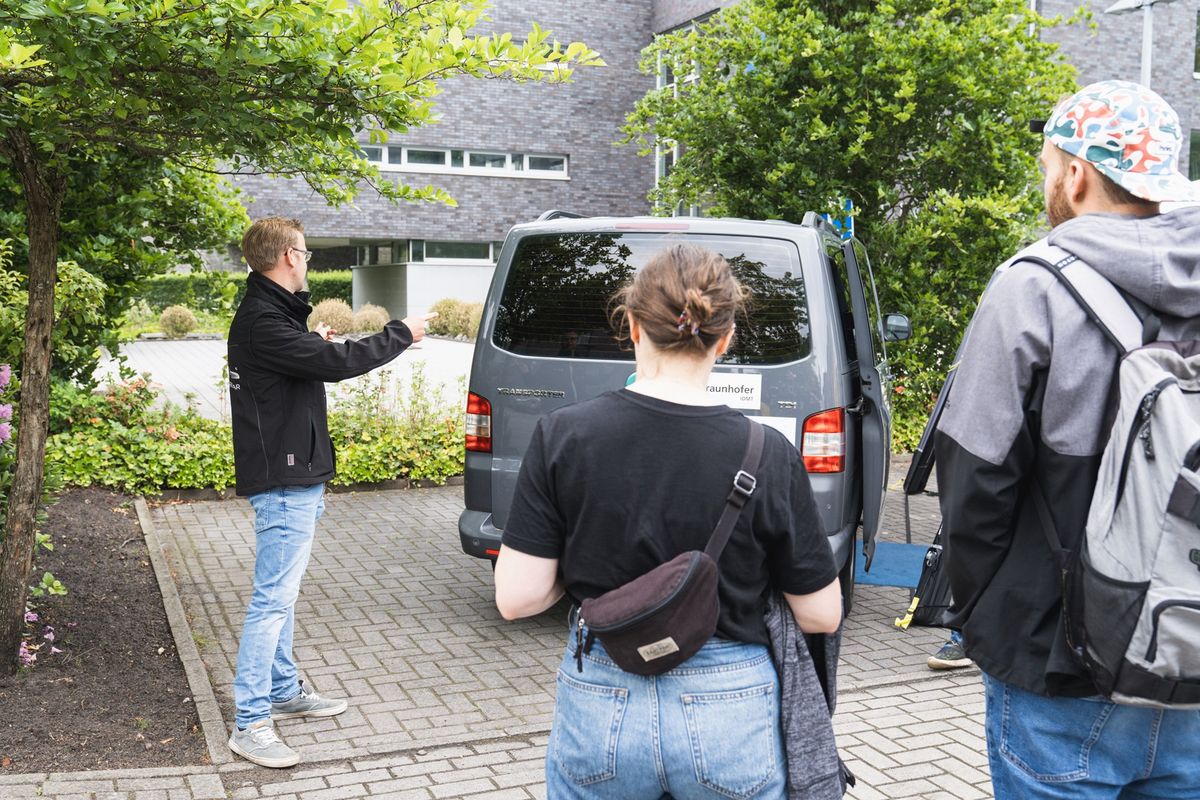
Photo: Fraunhofer IDMT/Leona Hofmann -
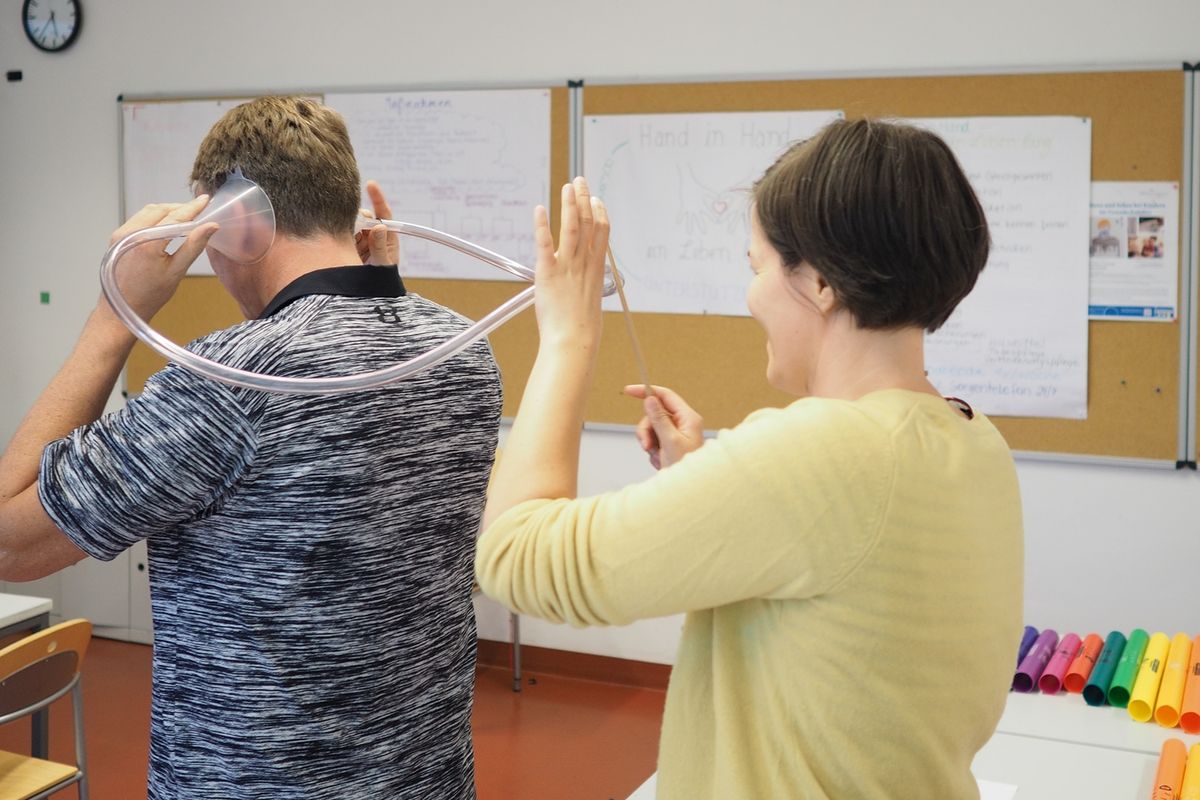
Photo: Jade University of Applied Sciences/Ralph Nolte-Holube -
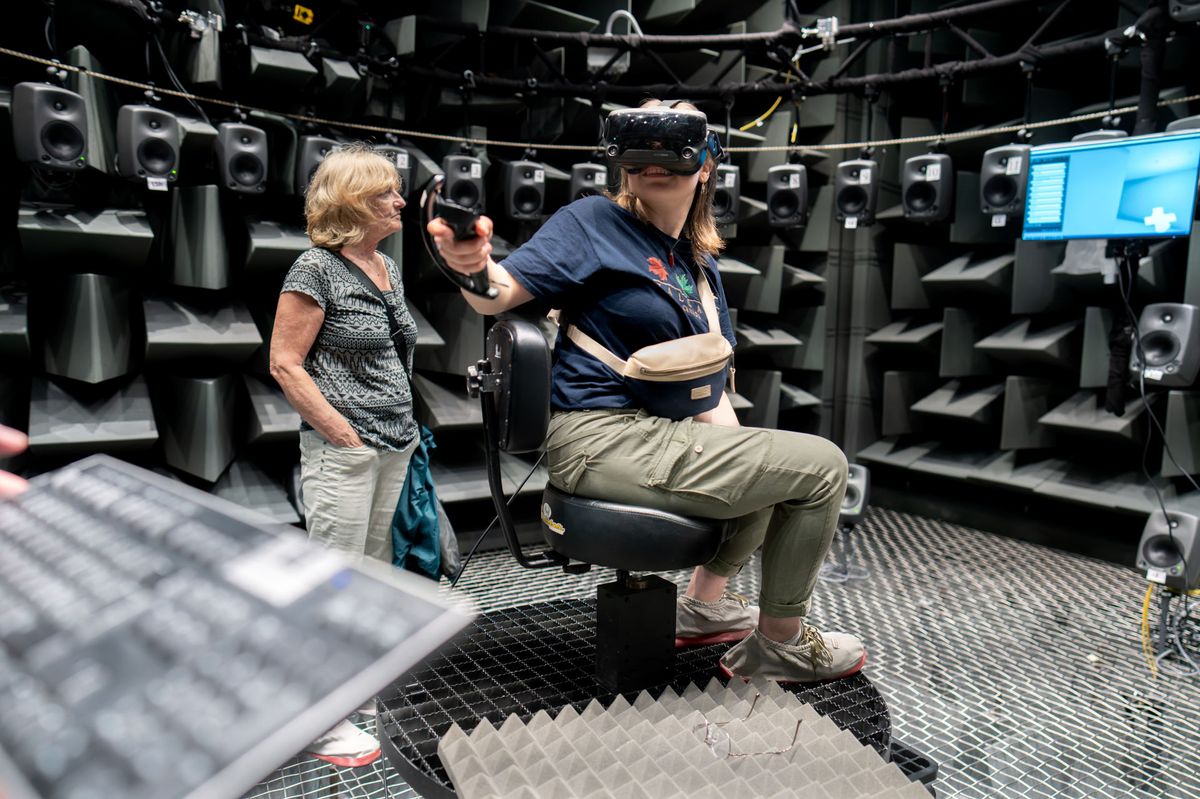
Photo: University of Oldenburg/Izabela Mittwollen -
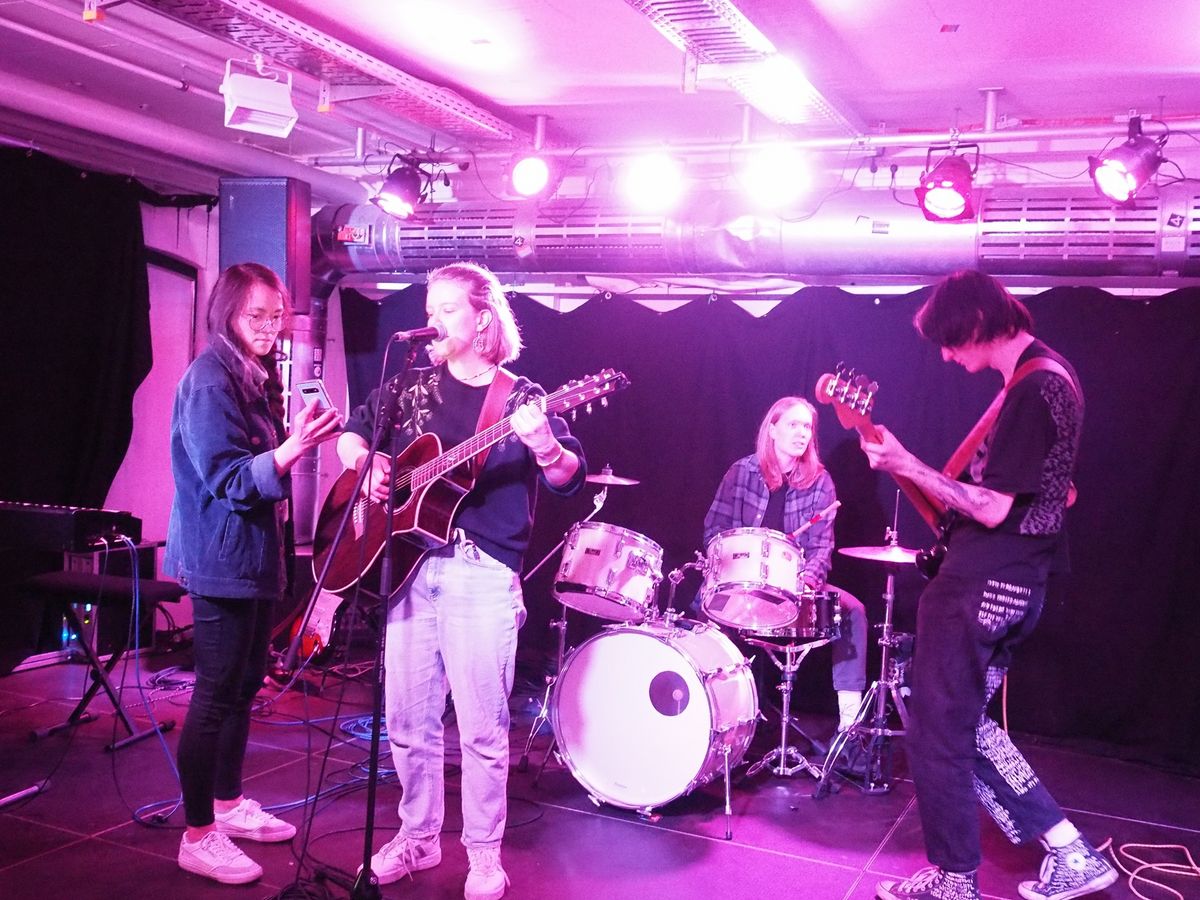
Photo: Jade University of Applied Sciences/Ralph Nolte-Holube -
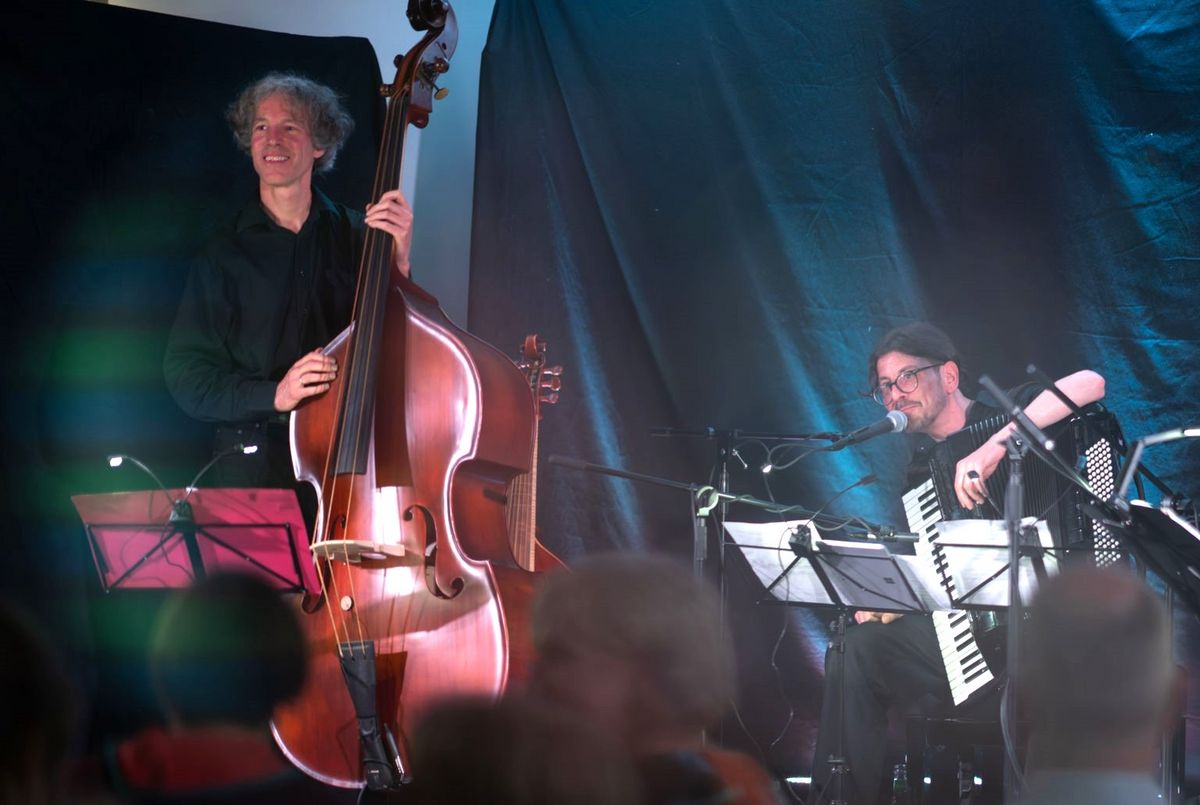
Photo: University of Oldenburg/Izabela Mittwollen


Building W32 - Experimental lecture theatre | Küpkersweg 48
Kick-off and lectures
Experimental lecture theatre
16:00 - 16:45
Opening event
with words of welcome, music by the string quartet Northern Lights, inauguration of the inverse listening throne and a tribute to the hearing researcher Prof. Dr Dr Ulrich Eysholdt.
17:00 - 17:45
The brain hears with
Learn how hearing is processed in the brain, how hearing and understanding can be analysed using modern imaging methods and what effect hearing loss in old age can have on the brain.
Prof Dr Christiane Thiel, Department of Psychology and Cluster of Excellence Hearing4all, University of Oldenburg
18:00 - 18:45
Do animals hear differently?
What does a mouse actually hear? Or a chicken? Do animals become hard of hearing in old age just like humans? Let us surprise you with what science knows about this and why it is important for our research in the Cluster of Excellence.
Prof Dr Christine Köppl, Department for Neuroscience and Cluster of Excellence Hearing4all, University of Oldenburg
19:00 - 19:45
How do innovations in medical technology come about?
Medical technology is an important economic factor for Germany. The ability to innovate is essential for this. Find out how science and business can work together and which medical technology innovations are created in Oldenburg.
Dr Michael Buschermöhle, Managing Director of KIZMO GmbH - Clinical Innovation Centre for Medical Technology Oldenburg
20:00 - 20:45
From hearables and hearing aids to the health centre at the ear
Modern sensor technology, artificial intelligence and findings from hearing research are opening up completely new possibilities for hearing systems. What are the potentials and challenges for further research and development?
Prof Dr Dr Birger Kollmeier, Department of Medical Physics and Acoustics and Cluster of Excellence Hearing4all, University of Oldenburg
Information stands and demonstrators
Foyer
16:00 - 20:45
Infopoint
Programme information - orientation
Hearing research at the University of Oldenburg
The Cluster of Excellence Hearing4all and the Collaborative Research Centre Hearing Acoustics present themselves. Together they are organising the Long Night of Hearing in co-operation with other hearing research institutions in Oldenburg.
The way out of silence - with high-tech in the ear
The cochlear implant (CI) offers the possibility of technically overcoming deafness. Find out how this system works and who it can help at the Hearing4all stand with colleagues from Hannover Medical School.
Study hearing:
The degree programmes "Hearing Technology and Audiology", "Physics, Technology and Medicine" and "Engineering Physics"
STEM subjects with a future: Anyone interested in bachelor's and master's degree programmes related to hearing at the University of Oldenburg and Jade University of Applied Sciences and Arts
can find information about the content, course and career prospects here.
17:00 - 19:00, Demonstrator KIZMO GmbH
Possibilities of facial analysis with smartphones and tablets for diagnostics and therapy
In facial analysis, position and rotation data of the head, movements of individual parts of the face and the direction of gaze can be recorded. Let us show you what mobile applications are available and how facial analysis can be used in ENT medicine, for example.
Building W30 - NeSSy | Küpkersweg 74
Lectures
Room 33/34 - Large seminar room
17:00 - 17:45
Tinnitus: causes and strategies for coping
Many people are affected by tinnitus. In addition to explaining the background to ringing in the ears, strategies will be shown on how those affected can reduce the burden of persistent tinnitus.
Prof Dr Andreas Radeloff, Director of the University Clinic for Ear, Nose and Throat Medicine, Evangelical Hospital Oldenburg
18:00 - 18:45
What hearing disorders have to do with dementia - and how to prevent dementia with hearing aids
Scientific studies show that there is a significant link between untreated hearing loss and an increased risk of dementia. Find out more about this problem and how it can be counteracted
Prof Dr Pascale Sandmann, Head of Audiology, University Clinic for Ear, Nose and Throat Medicine, Evangelical Hospital Oldenburg
19:00 - 19:45
We can see if your baby can hear
Newborn hearing screening is used for the early detection of congenital hearing disorders. Find out more about the importance of early diagnosis and optimised treatment of hearing disorders for children's speech and general development.
Dr Sabine Kramer, Head of the Department of Phoniatrics and Paediatric Audiology, University Clinic for Ear, Nose and Throat Medicine, Evangelical Hospital Oldenburg
Information stands and demonstrators
Foyer
17:00 - 20:45
Infopoint
Programme information - orientation - start of the lab tours
Speech intelligibility and listening effort in a real-time model
We present a model that can calculate speech intelligibility and listening effort in real time - without knowledge of the listening conditions or target language. This model can be used in hearing aids, for example, to control speech amplification algorithms.
Test your hearing yourself!
Digital, mobile, self-determined: With the Virtual Hearing Clinic, it will be possible in future to test your own hearing abilities and preferences in a differentiated way. We introduce you to various functional areas of this application.
How glasses can help with spatial hearing
Tiny sensors on a pair of glasses combined with specially developed software make it possible to understand a single person more clearly in the babble of voices in a crowded room. Experience the hearing aid simulation live and in real time!
Binaural Confusion - Acoustic Labyrinth
Does the sound come from the right, left, front or back? The acoustic labyrinth is all about the importance of hearing for spatial perception. Here you can playfully test your own directional hearing.
Poster exhibition
Changing mindsets
The exhibition presents personal stories of hearing-impaired people from all over the world. They raise awareness of the importance of early diagnosis and treatment of hearing impairments. A project of the World Health Organisation and the World Hearing Forum.
Laboratory tours
Various laboratories - times variable
17:00 - 20:45
Start at the info point in the foyer, limited number of people
Gesture Lab & Dark Lab
Ongoing 17:00 - 20:00
In our audiovisual installation you have the unique opportunity to interact with avatars. Explore communication behaviour and help us improve hearing aids by having conversations and sharing your experiences.
Lab with variable acoustics
17:00 | 18:00 | 19:00 | 20:00
How can algorithms and artificial intelligence optimise speech processing in hearing aids? We will show you examples with and without noise or reverberation cancellation. Hear the difference!
Neuroimaging Unit (MRI & MEG)
17:00 | 18:00
How can hearing be visualised? Find out during a visit to MRI and MEG - partly in a short lecture, partly directly in the lab. We explain the possibilities that imaging techniques offer for hearing research.
Virtual Reality (VR) Lab
17:00 | 18:00 | 19:00 | 20:00
An underground railway in Oldenburg? The cocktail party effect? Find out what it's all about in this acoustics lab. We will explain the special properties of the room and show you how virtual sound environments can be created using special loudspeakers. VR glasses complement the system.
Concert: Trio Oberlechner
Room 33/34 - Large seminar room
21:00
Chamber music meets a multi-faceted folk sound, early music meets an unconstrained performance of Oberlechner's own compositions, thrilling electronic sounds meet intricate rhythms. Let the Long Night of Listening come to an end with us!
Trio Oberlechner: Florian Oberlechner (accordion), Júlia Vető (viola da gamba, violin) and Giso Grimm (viola da gamba, double bass, electronics). Sound direction: David Grimm
Main building - wing W02 | Carl-von-Ossietzky-Straße 9-11
Information stands and hands-on experiments
17:00 - 20:45
Foyer at the main entrance
Infopoint
Programme information - orientation - start of the lab tours
From all over the world to Oldenburg: the international degree programmes in Neurosensory Science
The students and coordinators of the international Master's degree programmes in Neuroscience, Neurocognitive Psychology, Biology and Molecular Biomedicine are looking forward to talking to you!
Guess my language!
Do you know what "Good evening" sounds like in Turkish or Chinese? Listen and guess, talk and laugh with students from all over the world.
Level 1 / Ring level
Canned telephone
Do you know the principle of the canned telephone? Here you can test it and playfully
learn how sound transmission works.
Room W02 1-148
How the brain tricks the ears - acoustic illusions
In the case of auditory illusions, our perception does not match the sound stimulus. The phenomenon is not only astounding, but also sheds light on how our brain works. Try it out for yourself!
Demonstrators
Level 0, Room 067 - Start at the info point in the foyer
17:00-17:45 | 18:00-18:45 | 19:00-19:45 | 20:00-20:45
3 presentations in a row:
Voice Communication Now and Next
Did you know how often voice technology is used in everyday life? We will present some examples and demonstrate the importance of noise and echo filtering in a teleconference call.
Interactive demonstration: Measuring eye movements
You are invited to take part in an interactive demonstration. In it, we will show you how we measure the eye movements of study participants using an eye tracker to analyse speech processing, for example.
Alexa, test my hearing!
We will show you how you can use the digital assistant "Alexa" or a free app to carry out a hearing test in our lab or at home in your living room, and how speech recognition devices work.
Laboratory tours
Various laboratories - times variable
17:00-20:45
Start at the info point in the foyer, limited number of people
Low-reverberation room
Level 1, Room 172
17:00 | 18:00 | 19:00 | 20:00
The low-reverberation room is one of the quietest rooms in Oldenburg and has no audible reverberation. It is used for acoustic measurements and listening experiments. Experience the special properties of this laboratory with your own ears!
Vibration laboratory
Level 0, Room 062
18:00 | 19:00
The perception of vibrations is investigated in the vibration laboratory. In this lab tour, you can feel whole-body vibrations on an aeroplane seat and listen to music as well as feel it with your body.
Living Room Lab
Level 0, Room 074a
17:30 | 18:30 | 19:30 | 20:30
Do you know what the typical German living room looks like? Take a look at it and find out what special possibilities this room offers for carrying out hearing tests.
The Haus des Hörens programme
Oldenburg Hearing Centre & Fraunhofer Institute for Hearing, Speech and Audio Technology HSA in Oldenburg
Marie-Curie-Strasse 2
Lectures
Oldenburg Hearing Centre
Room: Communication Acoustic Simulator (KAS)
17:00 - 17:45
Hearing loss from a medical perspective
How does hearing work? What are the causes of hearing loss? How is hearing loss diagnosed What treatment options are there? This lecture provides answers to many questions about the sense of hearing, hearing loss and its treatment.
Dr Rüdiger Schönfeld, Medical Director of the Oldenburg Hearing Centre and former Chief Physician of the Clinic for Phoniatrics and Paediatric Audiology at the ENT University Clinic of the Protestant Hospital Oldenburg
18:00 - 18:45
Become part of Oldenburg Hearing Research
Oldenburg Hearing Research is only possible thanks to the unique support of our test listeners. Find out how you can get involved by taking part in hearing tests, scientific studies and product tests.
Dr Kirsten Wagener, Head of Audiological Services and Clinical Studies, Oldenburg Hearing Centre
19:00 - 19:45
Hearing aid too loud? It doesn't have to be
Many people perceive their hearing aid as too loud and until now it was unclear why. The latest research results from Oldenburg offer an explanation. The hearing aid fitting procedure based on this - "trueLOUDNESS" - can normalise the perception of loudness.
Björn Oehne, Account Manager and Audiologist, Oldenburg Hearing Centre
20:00 - 20:45
Small high-tech computers: what hearing aids can do today
Various hearing aids have been available for people with hearing loss for almost 200 years. Today, hearing aids are discreet high-tech computers with impressive performance. Find out what possibilities they offer in this presentation.
Dr Michael Schulte, Project Leader Audiology, Hörzentrum Oldenburg
Demonstrators
Fraunhofer IDMT, Hearing, Speech and Audio Technology HSA
17:30 | 18:30 | 19:30 | 20:30
Car park
The Hearing Car - "Hearing for the car"
Acoustic sensors are a central component in the development of autonomous vehicles. In combination with optical sensors, the car's sense of hearing ensures greater safety and reliability in road traffic. Live demonstrations on test vehicles will give you an insight into the technologies.
17:00-21:00
Foyer
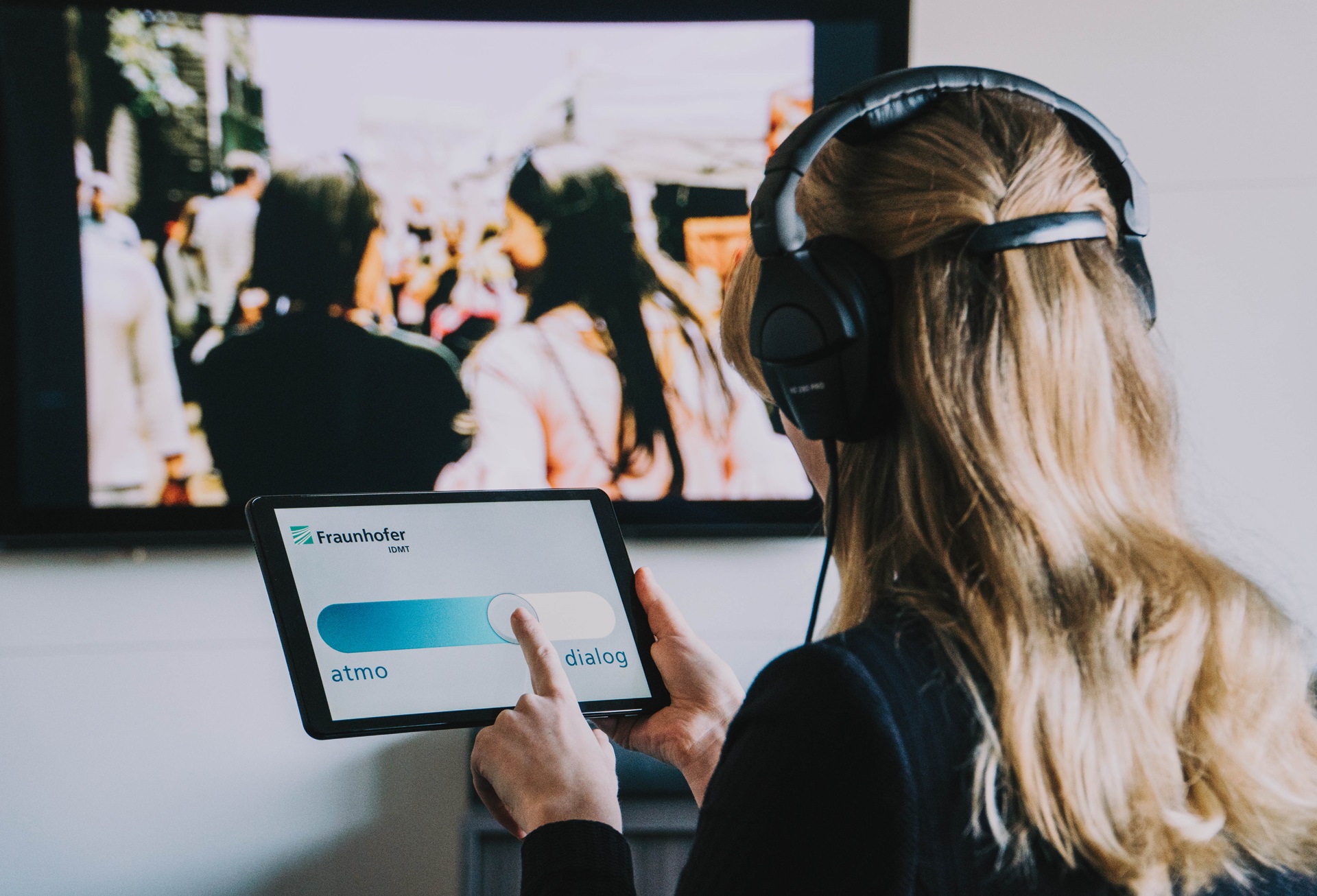
Understand better: Customised sound settings for better speech intelligibility on television
Fraunhofer IDMT develops signal processing methods that ensure better speech intelligibility and less listening effort. This allows media productions to be optimised and the speech intelligibility of dialogue in films and television to be individualised in the living room at home. Find out how this works in this live demonstration.
Oldenburg Hearing Centre
17:00-21:00
Freifeldraum 3
CCOLSA: bringing difficult listening situations from everyday life into the laboratory
Difficult communication situations in everyday life, such as group conversations, could not previously be adequately reflected in measurements of the complex processes of hearing in the laboratory. The Concurrent Matrix Test (also known as CCOLSA) developed at the hearing centre now offers a solution to this problem.
Floatroom
AVATAR: Audiological virtual acoustic technologies for fitting rooms
The aim of hearing care professionals is to provide their customers with the best possible individualised hearing care. However, when fitting in a measurement booth, the conditions are different to those in the everyday environment. Hearing aid wearers do not know how satisfied they will be with the devices in their everyday lives. The AVATAR project has developed a concept that helps to solve this problem.
Freifeldraum 2
ACALES - making listening effort measurable
A sociable evening in a restaurant, a large family celebration or a trip to a city festival: conversations in noisy environments are perceived as more strenuous than in a quiet environment. The ACALES method developed at the hearing centre makes hearing effort measurable and shows which hearing aids actually reduce it.
Open-air room 1
Child-friendly hearing tests
Hearing is essential for children's development. If the hearing impairment is recognised early, modern hearing system technology and early support can make the child's start in life much easier. We show hearing tests that have been specially developed for children.
Offers
17:00 - 21:00
Measuring booths
Free hearing tests
Our audiologists offer free hearing tests from 17:00 to 21:00. Registration on site, appointments limited
18:00 - 20:00
ENT diagnostics room
Audiological office hours
Dr Rüdiger Schönfeld, Medical Director of the Oldenburg Hearing Centre and former Head Physician at the Clinic for Phoniatrics and Paediatric Audiology at the ENT University Clinic of the Evangelical Hospital Oldenburg, offers 10-minute appointments as part of an audiological office hours. Registration on site, appointments limited
17:00 | 17:30 | 18:00 | 18:30 | 19:00 | 19:30
Hörgarten
Guided tours of the Hörgarten
The Hörgarten offers a sensory approach to the topic of hearing with numerous hands-on exhibits. Experience on a guided tour how hearing can literally be "grasped"!
Event building V / TGM - Zeughausstraße 73a
Jade University of Applied Sciences information stand
17:00 - 20:30
Entrance V-Building
Visitors can obtain information about the event programme, the hearing technology and audiology degree programme and general information about hearing technology and audiology.
Lectures and demonstration
17:00-17:30
TGM Room 113
Hearing at primary school age
This lecture focuses on the hearing of children of primary school age. The lecture is primarily aimed at parents and educators, but all listeners are of course welcome.
18:00-18:45
Meeting point: Information stand entrance V building
Demonstration: Virtual acoustics in the wave field synthesis laboratory
The wave field synthesis shown here makes it possible to create natural sound and artificial soundscapes. With over 400 loudspeakers, virtual sound sources can be generated at any location, even sources directly at the ear or in the head. This allows music enjoyment and research of a special kind.
19:00-19:45
TGM Room 113
Highlights from hearing technology and audiology
The lecture will present some interesting effects from the fields of hearing technology and audiology, such as the "cappuccino effect", manipulation of one's own voice, generation of differential tones in one's own ear, a hearing loss simulation and acoustic illusions.
Demonstrators and hands-on experiments
17:00 - 19:30
TGM recording studio (2nd floor)
Open Studio
Under professional guidance, you can try out your skills as a musician or producer in the recording studio and build your own trap track.
17:00 - 20:00
TGM Reflection-free room (RAR)
Can ears talk to each other?
Background noise and other distracting signals often make it difficult to understand speech. In our hands-on experiment, you will discover the differences that occur when understanding in noisy environments with one ear or both ears. In which situation do you hear best and why? Find out here!
TGM Room 101
Hands-on demonstration of a laryngograph
We explain how the human voice is produced and how vowels differ from consonants, for example. We measure and analyse the vibrations of your vocal folds and experimentally try to produce artificial sounds with the recorded signals.
TGM Room 112
Speaking backwards
Understanding your own language? Most people take it for granted. But what about when the spoken word is disturbed or changed - can you still understand your own words? Try it out and listen to your own words backwards or under special conditions such as extreme reverberation, echo or background noise.
TGM Room 112
Exploring the sense of hearing
Sound, ear structure, hearing processing in the brain and hearing impairment - models and experiments allow you to playfully explore the sense of hearing.
TGM Room 111
Videos on acoustic effects
The videos present acoustic effects such as flutter echo catastrophe, dancing hair cells or Tacoma Bridge resonance.
from 20:00
KuBar (basement)
Open Stage
Open Stage! Anyone can take to the stage with lyrics and/or music. Whether alone or in a group. We celebrate together in the KuBar.