
With the highest precision
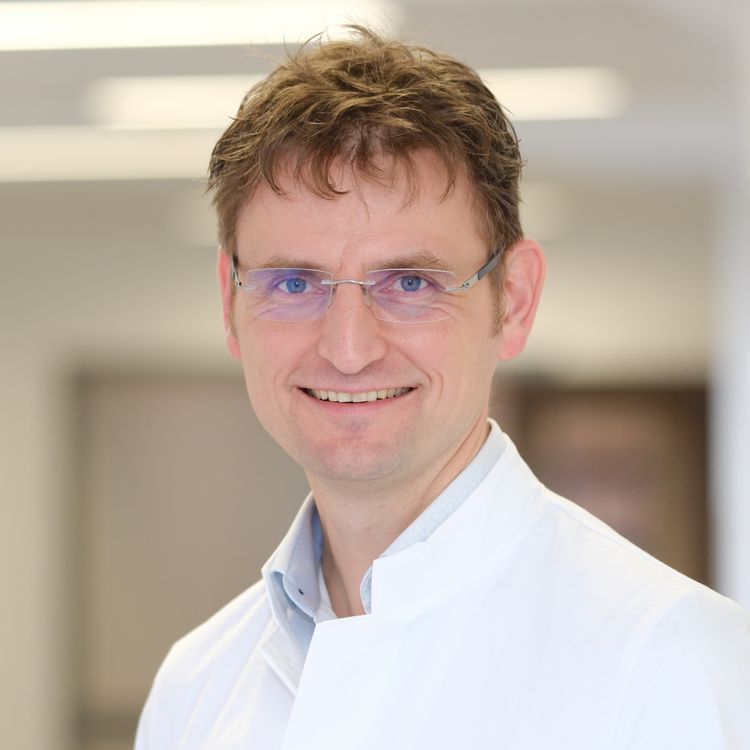
Prof Dr Andreas Martens has been appointed to the professorship of Cardiac Surgery at the Department for Human Medicine. He is also the new Director of the University Clinic for Cardiac Surgery at Oldenburg Hospital.
Welcome to the University of Oldenburg! What brought you here?
I have known the Oldenburg Cardiac Surgery Centre for many years as a renowned clinic with a wide range of cardiac surgery services that is constantly developing - and has been a university hospital for several years now. It is particularly appealing to be involved in shaping the clinic's path towards a university future. I was able to convince several medical colleagues and a basic science team to also move to Oldenburg. Together with a great core team from Oldenburg, we are very much looking forward to actively supporting and further developing cardiac medicine in Oldenburg.
What are you researching?
My clinical research focus is on surgical procedures on the thoracic aorta, the aortic valve and the coronary arteries. I am also involved in the surgical training of junior doctors.
We also recently launched a healthcare research project that utilises a smartphone app. It enables close contact between those providing treatment and those being treated, from preoperative preparation to surgery and the completion of rehabilitation. This constant exchange was previously very difficult in the German healthcare system, where the hospital and rehabilitation sectors are separate.
What is so great about your subject?
Cardiac surgery involves many procedures, including microsurgical techniques and minimally invasive approaches. It requires special psychomotor skills and a lot of training because the work is carried out under time pressure - after all, the heart has to resume its function immediately after an operation. I therefore like to compare surgical training in cardiac surgery with the training of top athletes, who also have to perform with pinpoint accuracy and under high pressure to succeed. At the same time, cardiac surgery is a highly technical subject that offers a wide range of opportunities for further development and research.
What are your plans for your first few months at our university?
I would like to continue and expand my research projects in the field of cardiovascular medicine in Oldenburg. I am very lucky to be able to bring Prof Dr Ina Gruh from Hannover Medical School and her team with me here as Head of Experimental Cardiac Surgery. Together with our colleagues here, we want to develop artificial tissue models that we can use to analyse and improve the individual function of cells from patient samples. This is important, for example, in the case of genetic connective tissue diseases that cause aortic aneurysms.
In teaching, I would like to continue our projects on surgical training and analysing image data. We want to teach the next generation complex surgical techniques at an early stage. We also want to establish courses that focus on effectively utilising image data - for example from computer tomography - for surgical planning.
Who or what had a particular influence on you during your studies?
In a pre-clinical semester, I had the opportunity to watch a surgical team at work in a domed theatre at Hannover Medical School. Its head, Prof Dr Axel Haverich, later became my boss. At scientific meetings, I also got to know Prof Dr Hans-Georg Borst, one of the pioneers of German cardiac surgery. I then specifically chose a topic from the field of cardiac surgery for my doctoral thesis. Since then, I have been fascinated by heart and aortic surgery.
Your tip for surviving on campus?
You perform exceptionally well in things that fascinate you and that you are happy to do. I always give everyone the advice not to look for the easy path, but the one that fascinates you the most. This special motivation should be combined with targeted training of psychomotor skills. This is how top performance is achieved. Follow your heart!