
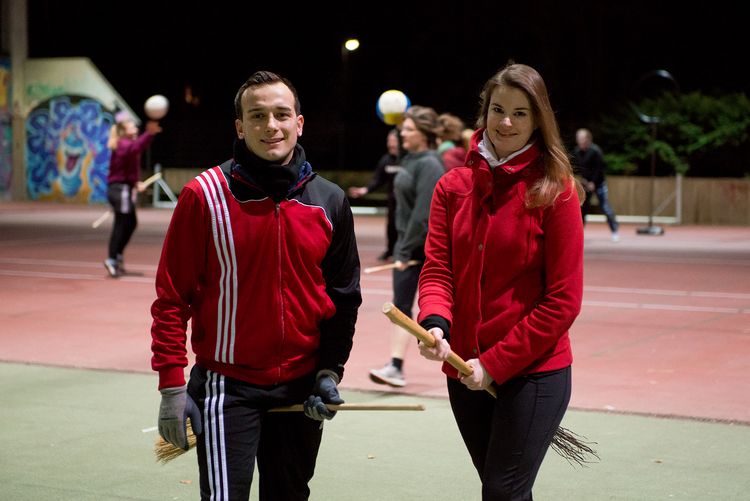

Die Universität hat eine eigene Quidditch-Mannschaft. Genau – die Sportart, die aus der magischen Harry-Potter-Welt bekannt ist und in luftiger Höhe auf fliegenden Besen gespielt wird. Die Uni-Sportler bleiben aber auf dem Boden.
Abends in der Dunkelheit, draußen sind es nur acht Grad Celsius. Mit dem Besen zwischen den Beinen joggen 15 Spielerinnen und Spieler von einem zum anderen Ende der Freilufthalle, mal im Seitschritt, mal im Kreuzlauf. Sie wärmen sich für ihre heutige Quidditch-Trainingseinheit auf. Worum geht es? Laut Deutschem Quidditchbund handelt es sich um einen Kontaktsport, „der in gemischtgeschlechtlichen Teams gespielt wird und Elemente aus Handball, Rugby und Dodgeball miteinander vereint.“ 2005 haben ihn Studierende in Middlebury (USA) erfunden – sie gaben der Harry-Potter-Sportart die nötige Bodenhaftung und übertrugen sie so in die reale Welt.
Heute zählt Quidditch zu den am schnellsten wachsenden Sportarten: Weltweit wird das Spiel schon in über 500 Teams professionell betrieben. Auch in Deutschland gibt es bereits rund 30 offiziell registrierte Mannschaften mit illustren Namen wie die „Bielefelder Basilisken“, „Augsburg Owls“ oder „Portkeys Bremen“. Weitere befinden sich gerade im Aufbau, darunter die „Dobby Klatscher“ aus Oldenburg.
Die Idee, Quidditch an die Uni zu holen, hatten Verena Hopp und Marlon Raabe. Sie ließen sich von der Komödie „Prakti.com“, in der sich zwei Praktikanten unter anderem im firmeneigenen Quidditch-Team beweisen müssen, inspirieren. Den Hochschulsport für ihre Idee zu begeistern, fiel ihnen nicht schwer. Marlon hatte schnell die nötigen sechs Tore zusammengezimmert. Um die beiden Initiatoren hat sich mittlerweile eine ganze Mannschaft formiert, darunter auch eingefleischte Harry-Potter-Fans. Zusammen erschließen sie sich nach und nach Quidditch, das mit einem 260 Seiten starke Regelwerk alles andere als trivial ist.
Die Kurzfassung geht in etwa so: Auf dem Spielfeld stehen je Mannschaft drei Jäger, zwei Treiber, ein Hüter und ein Sucher. Die Jäger müssen den „Quaffel“, einen Volleyball, durch einen der drei Ringe in der Größe von Hula-Hoop-Reifen werfen und so Tore erzielen. Die Torringe werden vom Hüter verteidigt. Die Treiber haben es dagegen mit den „Klatschern“, hier Softbälle, auf die Jäger des gegnerischen Teams abgesehen. Der Sucher muss den in der magischen Harry-Potter-Welt eigentlich geflügelten goldenen „Schnatz“ fangen – das bringt dem eigenen Team dann 30 Extra-Punkte ein. In der Wirklichkeit ist der Schnatz weniger spektakulär, nämlich ein am Hosenbund eines unparteiischen Spielers befestigter Tennisball in einer Socke. Was Joanne K. Rowling, Autorin und Erfinderin der phantastischen Zauberwelt, erfreuen dürfte: Während des gesamten Spiels müssen die Sportlerinnen und Sportler einen Besen zwischen den Beinen halten. So trainiert Quidditch vor allem Geschicklichkeit und Ausdauer.
Das Oldenburger Team ist derzeit noch mit den Grundtechniken beschäftigt, wie die rennende Quaffelübergabe, das Abwerfen mit Klatschern und das Werfen von Toren. Am Ende einer Trainingseinheit steht dann noch ein längeres freies Spiel an: Jeder kann jede Position ausprobieren. In der Quidditch-Welt von Harry Potter ist der Verlauf eines „Match“ mitunter dramatisch: das Spiel dauert einen ganzen Tag, Spieler gehen verloren oder werden durch einen Klatscher getötet. Die Wirklichkeit ist deutlich harmloser: „Natürlich kann es bei den Meisterschaftsspielen schon einmal ruppig zugehen, da sich die Spieler gerne mal ‚tackeln‘. Beim Training in der Uni gehen wir aber vorsichtig miteinander um“, versichert Marlon. Sobald das Team ausreichend trainiert hat, möchte es vielleicht an der Deutschen Quidditch-Meisterschaft teilnehmen. „So weit sind wir aber noch nicht. Erst einmal müssen die Basics sitzen“, meint Verena. Generell sei das Training offen für alle.