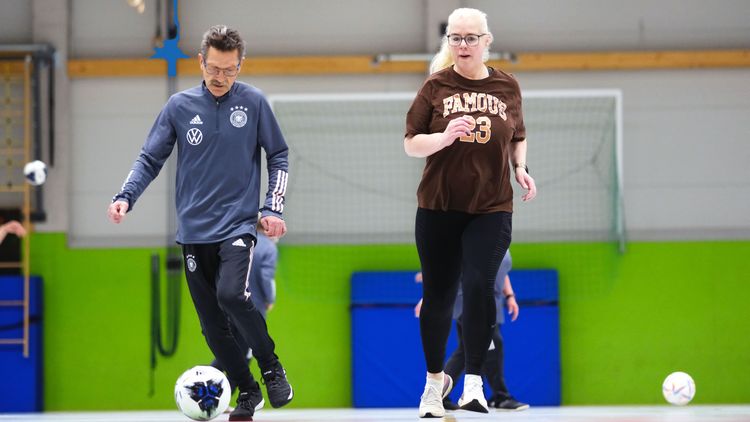




Montagabend, Sporthalle des TuS Eversten: Männer und Frauen laufen kreuz und quer durcheinander, kicken sich unter den wachsamen Augen von Gesundheitsfußballtrainer Burkhard Garmann Fußbälle zu und werfen gleichzeitig Tennisbälle hin und her. Eine von ihnen ist Anke Otigbu. Was man der bewegungsfreudigen 53-Jährigen nicht ansieht: Im Mai 2021 bekam sie zwei Stents, um ihre verengten Herzkranzgefäße wieder durchlässig zu machen. Einem Herzinfarkt konnte sie so – im Gegensatz zu den meisten ihrer Mitspielerinnen und Mitspieler – knapp entgehen.
Als Herzpatientin bekam sie im vergangenen Jahr trotzdem einen Brief aus der Universitätsklinik für Kardiologie am Klinikum Oldenburg. Darin: eine Einladung zum Gesundheitsfußballtraining. „Ich habe sofort gedacht: Das macht bestimmt Spaß, schon allein, weil man im Team Sport treibt“, erzählt sie. Mit dieser Begeisterung wurde Anke Otigbu nicht nur Fußballerin, sondern auch Teilnehmerin der „MY-3F-Studie: Fit und Fun mit Fußball nach Myokardioinfarkt oder koronarer Herzerkrankung“ der Universitätsmedizin Oldenburg. „In der Studie untersuchen wir, wie sich diese spezielle Form des Trainings auf Personen mit ernsten Herzvorerkrankungen auswirkt“, erklärt Dr. Bastian Schrader. Der angehende Facharzt für Kardiologie und Wissenschaftliche Mitarbeiter am Department für Humanmedizin leitet die vom Niedersächsischen Wissenschaftsministerium und der Deutschen Herzstiftung geförderte Studie.
Vom regulären Fußball unterscheidet sich Gesundheitsfußball deutlich: Zwei Mannschaften spielen auf vier Tore – das macht das Spiel breiter und soll kollisionsbedingte Verletzungen vermeiden. Hohe Bälle und Kopfbälle sind verboten, Zweikämpfe ebenso – auch das soll den Sport möglichst risikoarm machen. Trainer Garmann: „Es ist außerdem wichtig, dass sich die Teilnehmenden sicher in der Bewegung fühlen, deshalb machen wir viele koordinative Übungen.“
Der Sportlehrer und Fußballtrainer gehörte mit zum Team, das das Konzept Gesundheitsfußball bereits im Rahmen einer vorangegangenen Studie entwickelt hat. Damals standen Menschen mit Bluthochdruck im Fokus. 2021 konnte das Forschungsteam, zu dem auch Prof. Dr. Albrecht Elsässer, Klinikdirektor der Universitätsklinik für Innere Medizin – Kardiologie am Klinikum Oldenburg, gehört, bereits nachweisen, dass die regelmäßige Teilnahme am Gesundheitsfußballtraining zu messbaren gesundheitlichen Verbesserungen führt. „Der systolische Blutdruckwert der Fußballgruppe ist während eines Jahres im Durchschnitt von 142 auf 130 mmHg gesunken, während der Wert in der Kontrollgruppe sogar leicht gestiegen ist. Das waren spektakuläre Ergebnisse“, erläutert Schrader. 16 der 103 Gesundheitsfußballer*innen kamen nach einem Jahr Training mit weniger Blutdruckmedikamenten aus – in der Kontrollgruppe waren es nur sechs. Und auch Gewicht konnten die Kickerinnen und Kicker reduzieren, während die Teilnehmenden der andere Gruppe zunahmen. Die aktuelle Studie soll jetzt zeigen, ob auch Herzkranke von diesen Effekten profitieren.
Fitnessuhren liefern Forschungsdaten
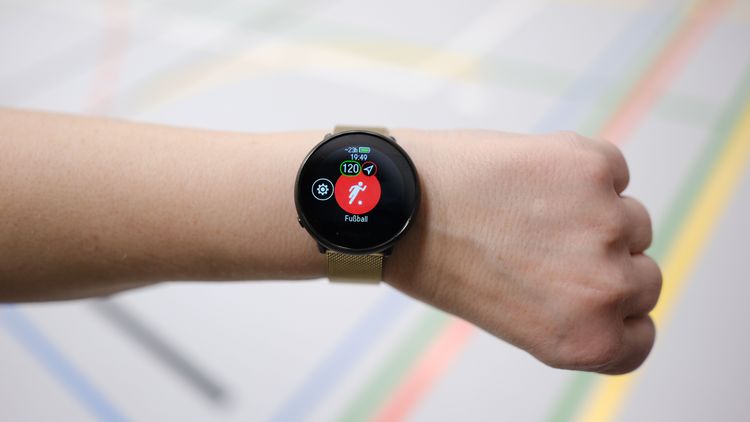
Die Daten, die für die Forschenden relevant sind, generieren sich während des Trainings fast von selbst. An ihren Handgelenken tragen die Männer und Frauen Fitnessuhren, die die Herzfrequenz, verbrauchte Kalorien und gelaufene Schritte aufzeichnen. Per App finden die Daten anonymisiert den Weg zum Forschungsteam. Alle drei Monate erhalten die Studienteilnehmenden außerdem per E-Mail einen Link, der sie zu einer Plattform führt, auf der sie – ebenfalls anonym – aktuelle Gewichts- und Blutdruckdaten eintragen können. Die für die Forschung wichtigen Parameter zu übertragen, lohnt sich für das Team auch aus sportlicher Sicht: Anke Otigbu und ihre rund 20-köpfige Mannschaft beim TuS Eversten sind eines von aktuell 16 Gesundheitsfußballteams mit insgesamt rund 300 Mitgliedern in Nordwestdeutschland. Einige kicken seit der Bluthochdruckstudie, etwa 120 sind Teil der MY-3F-Studie, andere sind völlig unabhängig von den Forschungsprojekten zum Sport gekommen. Im Spätsommer haben sich die Teams zur „Fitkickliga“ zusammengeschlossen und wollen sich künftig zwei Mal im Jahr zu einem Turnier treffen. Neben den bei diesen Gelegenheiten geschossenen Toren bringt auch die Eingabe der Gesundheitsdaten Punkte für die Ligawertung.
„Unser Ziel ist, so viele Menschen wie möglich in Bewegung zu bringen“, sagt Schrader. Es sei zwar bekannt, dass regelmäßiger Sport die Risikofaktoren für einen Herzinfarkt reduziert, aber für Ärztinnen und Ärzte sei es trotzdem in der Praxis schwierig, gefährdete Patientinnen und Patienten zu motivieren. Deshalb hat das Team in der Vorgängerstudie ganz bewusst den Lieblingssport der Deutschen zur Hilfe geholt, ihn leicht modifiziert und Trainerinnen und Trainer speziell geschult.
Welche Wirkung Gesundheitsfußball auf die Herzerkrankten im Detail hat, wertet das Team gerade aus. Ein wichtiges Ergebnis steht aber schon jetzt fest: „Es gab beim Training keine Verletzungen oder Notfälle“, betont Schrader. Das sei ein Indikator dafür, dass Gesundheitsfußball auch für diese Gruppe schonend genug ist. Parallel zur Auswertung arbeitet das Team daran, das Sportangebot zu verstetigen, damit es auch unabhängig von Studien und Forschungsprojekten bestehen bleibt. Die Anbindung an Vereine ist bereits gelungen, auch Sponsoren engagieren sich bereits und übernehmen zum Beispiel die Mitgliedsbeiträge.
Anke Otigbu will auf jeden Fall dabeibleiben: „Von mir aus könnten wir sogar zwei Mal in der Woche trainieren.“