
Mit „Neverhill“ und „vekoop“ gehen zwei neue Projekte an den Markt. Gecoacht hat sie das Gründungs- und Innovationszentrum (GIZ) der Universität. Es sind Projekte, die einst Getrenntes miteinander verbinden: Zeitgemäßes Design und ökologisches Bewusstsein.
Aufeinander treffen können sie nicht. Der Hai, weltenmeererfahren und allseits gefürchtet, und der Goldfisch, bescheidener Bewohner von Glaskästen, auch Aquarien genannt. Doch hier kreuzen sich ihre Wege tatsächlich: „Gesucht: Goldfische mit Gründergeist“, steht auf dem Banner, das derzeit die Fassade des Hörsaalzentrums behängt. Und über dem Hai der Zusatz: „Wir bieten: haifischfreie Zone“. Wir, das ist das Gründungs- und Innovationszentrum (GIZ) der Universität, das Studierende mit neuen Geschäftsideen coacht, so auch die MacherInnen von „vekoop“ und „Neverhill“. Zwei Projekte, die einst Getrenntes miteinander verbinden: Zeitgemäßes Design und ökologisches Bewusstsein.
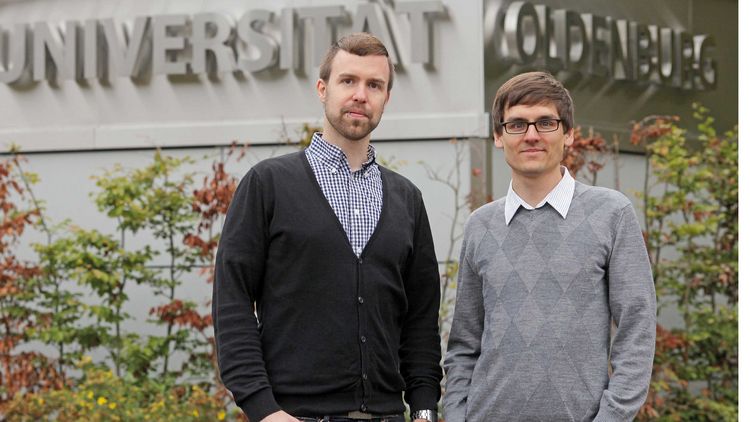
„vekoop“ ist ein Online-Shop für Veganer, Vegetarier, Allergiker und Gesundheitsbewusste. Im Sortiment hat er hochwertige pflanzliche Lebensmittel. „Social Commerce“ ist das Leitprinzip: Die Kunden tauschen sich untereinander aus, bei Interesse arbeiten sie als „Partner“ mit dem Shop zusammen. „Mit unserer Gründungsidee wollen wir ein nachhaltigeres, sozialeres Einkaufserlebnis schaffen“, sagt Timo Schliep, der sich wie sein Partner Sebastian Brandstetter im Integrated Media-Studium mit neuen Medien, Marketing und Kommunikation beschäftigt hat – aber auch mit Fragen des Lebensstils und der Nachhaltigkeit. „Mit vekoop möchten wir zeigen, dass nicht nur billige Produkte im Internet zum Shoppen einladen. Sondern auch und gerade ein kooperatives Einkaufsmodell, das auf Qualität setzt“, so Brandstetter. Für ihre Idee erhielten beide eine Förderung in Höhe von 18.000 Euro durch den GründerCampus Niedersachsen.
Während die vekoop-Macher unter Hochdruck an ihrer Seite arbeiten – geplant ist der Start des Online-Shops im Frühjahr 2013 – ist das Start-up „Neverhill“ schon auf dem Markt. Nachhaltige Mode ist das Thema von Michael Sorkin, Tobias Redlin und Mailin Rohland, die ihr Projekt 2011 in Ingolstadt gründeten. Vor drei Monaten zogen sie nach Oldenburg. „Die Uni hier passt besser zu uns und unserem Unternehmen“, so Sorkin, der wie Redlin inzwischen Wirtschaftswissenschaften in Oldenburg studiert.
Wie bei vekoop verschwimmen auch bei Neverhill die Grenzen zwischen Konsument und Produzent. Die Idee: Junge Menschen gestalten ein T-Shirt, laden es bei Neverhill hoch und nehmen an einem „Design-Contest“ teil. Im besten Fall wird das T-Shirt Teil des Online-Handels von Neverhill, und der Gestalter wird an den Verkaufserlösen beteiligt. Die verwendete Baumwolle ist ökologisch korrekt, und so soll es auch weitergehen. „Wir stehen in Kontakt mit dem WWF und haben bereits damit begonnen, für jedes Like auf unserer Facebook-Seite einen Quadratmeter bedrohtes Waldgebiet im Kaukasus zu schützen“, sagt Redlin.
Die T-Shirts sehen stylisch aus, nicht von ungefähr bezeichnet sich Neverhill selbst als „ökologisches Modelabel“. Das soll eine jüngere Zielgruppe ansprechen, vekoop ist da nicht so festgelegt. Man darf gespannt sein, wie sich die beiden Projekte am Markt entwickeln – und welche neuen Ideen zwischen Business und Nachhaltigkeit am GIZ entstehen.