

Germany wants to become an inclusive society, but progress has been rather slow when it comes to increasing the participation of people with disabilities. In this interview, Teresa Sansour, an expert in the field of special needs education, explains which groups need more attention and how her research can help to boost participation.
Terms such as "inclusion" and "participation" are on everyone's lips nowadays. Yet many people with disabilities still work in sheltered workshops or live in special accommodation. Does this add up?
Facilities such as workshops for people with disabilities deserve our recognition. They're an important achievement, especially compared to the situation in other countries, because we support the people who work there rather than leaving them sitting alone at home. It's more a question of not resting on our laurels but restructuring this system to gear it more towards systematic inclusion. German society has embarked on this path, but progress is slow. There are many individual projects and institutions that are doing wonderful and innovative work and that show that this is possible. But inclusion has yet to become the norm.
What does the word "inclusion" mean to you?
True inclusion means people with and without disabilities living together as a matter of course; people with disabilities being seen as relevant to the community and empowered to contribute rather than just receiving support. In the US, for example, there are more opportunities for people with intellectual disabilities to study at university. That underlines that this group of people are being given the opportunity to continue their academic education in adulthood. I would like to see the same for Germany.
Is inclusion made more difficult by the fact that the group of people with disabilities is so heterogeneous?
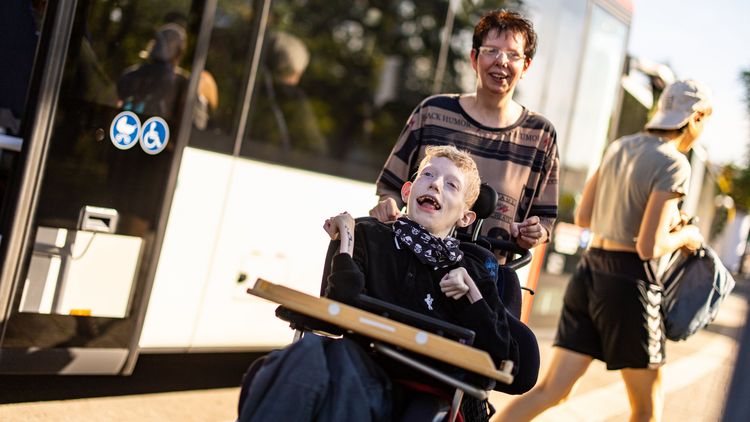
Without doubt. My work focuses on people with intellectual disabilities, and in this area more than any other inclusion is rarely the norm today – particularly in the case of people with profound intellectual and multiple disabilities (PIMD). These people are seldom able to live their daily lives in a way that could be considered inclusive. As a society we still have a lot of work to do here.
A person’s environment also plays a significant role in making a disability "complex", as we say in German.
What falls under the term "profound intellectual and multiple disabilities"?
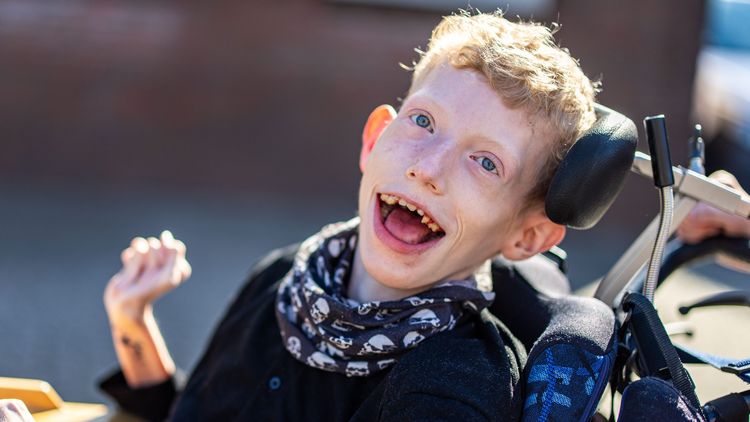
In special needs education, this term refers to a severe intellectual disability associated with other impairments such as motor, verbal or cognitive impairments. A severe intellectual disability rarely occurs in isolation. People with PIMD often have difficulties communicating verbally, or their ability to make intentional movements may be limited. They are therefore deemed unable to perform a "minimum level of economically utilisable work" within the meaning of the German Social Code, which is why they are generally not allowed to work in workshops. However, a person’s environment also plays a significant role in making a disability "complex", as we say in German. Their environment may create additional barriers, for example because other people are not prepared to engage with them. In such cases, those affected often feel excluded and ignored. If, on the other hand, the people around these individuals have been properly sensitised and have learned, for example, to deal with people with limited verbal skills, communication will be easier for everyone involved. In other words, it is above all the opportunities to participate in activities that determine whether a person experiences themselves as disabled.
Why did the participation of this group receive so little attention for so long?
It's a very small group, and our society tends to overlook small groups. Then there's the fact that people with this kind of disability were exempt from compulsory education until the 1970s, which meant that they were unable to build up an educational biography and were excluded from the labour market as they moved into adulthood. You might say that they fell through the cracks. The UN Convention on the Rights of Persons with Disabilities, which Germany ratified in 2009, was a step forward – but more in theory. It sets inclusion and also the right to work as goals, but in practice German governments initially focused on people with less severe disabilities because they're easier to integrate in schools and in the labour market. Only recently have people with PIMD finally started to receive more attention.
Discussions about inclusion generally revolve around schoolchildren. What role does inclusion play in the daily lives of adults?
Adults with PIMD in particular are unlikely to experience much inclusivity in their everyday lives. Inclusive forms of housing, for example, are still quite rare. Relatives of people with disabilities frequently point out that although the journey to inclusion is possible, it demands a great deal of time, knowledge and money. The effort this entails must be reduced for everyone if we want to be an inclusive society.
What motivates your research, and what is your main focus?
With the studies I conduct, I can make a concrete contribution to developing better solutions for an inclusive society. I find this hugely motivating. My research focuses on issues with high practical relevance – both in and outside of schools. One thing I have noticed is a general tendency to underestimate people with intellectual disabilities. For instance, one of my projects deals with literary learning. When it comes to improving reading skills of people with intellectual disabilities, the focus tends to be on pragmatic text types such as shopping lists or cooking recipes, usually written in plain language. However, we have observed that at least the listening comprehension of many people with intellectual disabilities is sufficiently well developed for them to benefit considerably from engaging with literary texts that have not been simplified, and discussing them with others. This demonstrates once again that we must avoid generalisations and instead treat each person as an individual. Another focus of my current research is facilities that have already adopted a highly participation-oriented approach and which can serve as a model for others.
You're referring to the study "Lighthouses of participation for people with PIMD" (Linked), which received funding from the Federal Ministry of Labour and Social Affairs. What was your approach here?
First of all, we had to identify these facilities. In collaboration with Dr Caren Keeley from the University of Cologne, we developed an innovative questionnaire on participation informed by the latest research and distributed it nationwide. Based on the responses we got, we selected four facilities for a larger field study. During visits to these facilities, we then conducted numerous interviews with staff and made our own observations.
Were there any methods that produced particularly interesting results?
Yes, the "shadowing" method really stood out. We “shadowed” people with PIMD, following them around in their daily lives in order to experience their perspective as closely as possible. We also got them to use the photovoice method with their support staff, which involves taking photos and discussing them – and is a way to help them bring about change for themselves or their group. The photos they took were images of successful moments of participation, to which we added audio commentary. At the end of the field studies we showed participants the photos and video and audio recordings in combination with other materials, and – as far as possible – discussed everything with them. This was a very enjoyable experience for both the participants and us researchers.
I prefer to talk about "lighthouse moments", because we're less interested in specific facilities than in individual moments in which people experience participation.
Which "lighthouses " were you able to identify?
I prefer to talk about "lighthouse moments", because we're less interested in specific facilities than in individual moments in which people experience participation. We witnessed such a moment in a facility in Berlin, where people with PIMD and their support staff "rescue" food products that are past their expiry date from supermarkets, reprocess them and then pass them on to a charity for the homeless. For us, this has lighthouse qualities because it allows people with disabilities to experience genuine self-efficacy: to do something for others, to contribute rather than being trapped in the traditional role of receiving help.
What is the role of specialist support staff here?
Their attitude is crucial. They need to facilitate participation at an early stage, for example in the joint preparation of meals, and engage with disabled people's skills, wishes and requirements. At the same time, there should be plenty of flexibility in the implementation of such projects so that staff can react spontaneously to an individual's signals. Participation is an interactive process in which a purely paternalistic attitude is inappropriate. Of course, their help is needed, but they must avoid being overbearing and making all the decisions for those they are assisting, and instead focus on empathy and attentiveness. Ideally, support persons will also create opportunities for peer contact, so that people with PIMD can meet each other as well as people without disabilities within their own social environment on a regular basis.
What is happening with the results of the lighthouse study?
For one thing, they are being incorporated into a guide on an online platform (https://qualitaetsoffensive-teilhabe.de/) for professionals in this field, such as facility managers and staff. The guide explains "lighthouse moments" and offers advice on how to introduce practices that encourage participation, including on a small scale in individual households or residential groups. We want to provide inspiration for ways to enable people with PIMD to live as independently as possible, to pursue their favourite activities and to interact with others.
Interview: Henning Kulbarsch