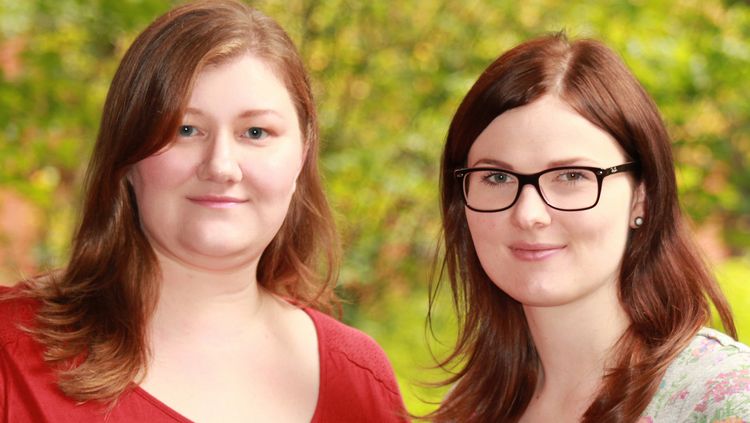

Irina Geibel und Anna Dierks entdeckten eine neue chemische Reaktion – heutzutage eine absolute Seltenheit. Mit ihrer Entdeckung könnten die beiden Chemikerinnen dazu beitragen, neue Medikamente zu entwickeln.
Eine Doktorandin, eine Studentin und chemische Verbindungen – das sind im Fall von Irina Geibel und Anna Dierks die Zutaten für ein Erfolgsrezept. Denn gemeinsam ist es den beiden Oldenburger Nachwuchswissenschaftlerinnen gelungen, einen neuen Weg zu entdecken, Lactone herzustellen. Diese auch natürlich vorkommenden chemischen Verbindungen sind beispielsweise wichtig für die Entwicklung neuer Medikamente. Ihre Ergebnisse veröffentlichten die Chemikerinnen kürzlich in „The Journal of Organic Chemistry“ – einer international renommierten Fachzeitschrift.
Doktorandin Irina Geibel machte die Entdeckung eher zufällig, als sie am Institut für Chemie an einem Cer-Katalysator für die Verknüpfung einzelner chemischer Bausteine zu wertvollen Produkten forschte. Dabei beobachtete sie eine Seitenreaktion, die das Lacton produzierte. „Der Moment, als wir realisierten, dass es wirklich eine neue Reaktion ist, der war besonders – unsere harte Arbeit hat sich gelohnt“, sagt die Doktorandin. Studentin Dierks fügt hinzu: „Dass ich bereits während meines Studiums an so etwas mitarbeiten kann, das hätte ich nie erwartet.“ Das Charakteristische an der Lacton-Herstellung mit diesem Verfahren: „Hier fallen keine größeren Mengen unangenehmen Abfalls an, wie es bei anderen Verfahren der Fall ist“, erklärt Geibel.
Dierks war diejenige, die die Reaktion nach der Entdeckung von Geibel für ihre Bachelorarbeit so optimierte, dass das Lacton als Hauptprodukt entstand. Der Oldenburger Kristallograph Dr. Marc Schmidtmann unterstütze sie dabei, die Struktur der hergestellten Produkte zu ermitteln. Lactone sind eine bedeutende Klasse von chemischen Verbindungen, die als natürlicher Bestandteil in Lebensmitteln vorkommen, beispielsweise verschiedenen Obstsorten ihr Aroma verleihen.
Das Bemerkenswerte der neu entdeckten Reaktion ist, dass neben der Verknüpfung zweier Kohlenstoffatome ein Sauerstoffatom aus der Luft eingebaut wird, so dass ein Lacton als Produkt entsteht. Die neue Reaktion könnte eine große Rolle für die Entwicklung neuer, wirksamerer Medikamente spielen, weshalb die Chemikerinnen nun genau analysieren und herausfinden wollen, wie diese im Detail funktioniert. „Es kann aber noch einige Jahre dauern, bis wir die Reaktion vollständig aufgeklärt haben“, sagt Geibel.
Wie die Entdeckung gemacht wurde, erklärt Anna Dierks mit Hilfe eines anschaulichen Beispiels: „Man kann sich das wie beim Kochen vorstellen. Wir nehmen verschiedene Zutaten, rühren sie unter einer bestimmten Temperatur zusammen und schauen, was herauskommt. Wichtig dabei ist allerdings, dass der Katalysator stimmt, denn ohne diesen findet keine Reaktion statt.“
Der Katalysator ist eine von den Oldenburger Wissenschaftlern neu entwickelte Metallverbindung, die die Reaktion erst ermöglicht. Auch für Geibels und Dierks Betreuer, Prof. Dr. Jens Christoffers, Hochschullehrer für Chemie an der Universität, ist die Entdeckung etwas Besonderes. „Es ist ein sehr seltenes Ereignis, dass heutzutage noch neue chemische Reaktionen entdeckt werden. Es ist der großen Beobachtungsgabe der beiden Mitarbeiterinnen zu verdanken, dass dies im Rahmen einer Doktorarbeit gelungen ist“, so Christoffers.
Ihre Erkenntnisse zu veröffentlichen, war für die beiden Chemikerinnen ein großer – und nicht ganz unkomplizierter – Schritt. Zunächst verfassten die beiden mit Hilfe ihres Betreuers Christoffers ein Manuskript, das sie an ein Fachmagazin sendeten. Die Gutachter forderten allerdings den Reaktionsmechanismus ein, welcher aber noch unbekannt ist. Daraufhin wurde die Veröffentlichung abgelehnt. „Das ist aber nicht so ungewöhnlich“, sagt Geibel. „Wir haben das Manuskript dann überarbeitet und an das noch renommiertere Journal of Organic Chemistry geschickt - und waren erfolgreich.“ Sobald die beiden Nachwuchswissenschaftlerinnen weitere Erkenntnisse über ihre neue Reaktion haben, wollen sie auch diese wieder veröffentlichen.
"Formation of δ-Lactones by Cerium-Catalyzed, Baeyer-Villiger-Type Coupling of β-Oxoesters, Enol Acetates and Dioxygen", Irina Geibel, Anna Dierks, Marc Schmidtmann und Jens Christoffers, J. Org. Chem. 2016, 81, 7790–7798. DOI: 10.1021/acs.joc.6b01441