
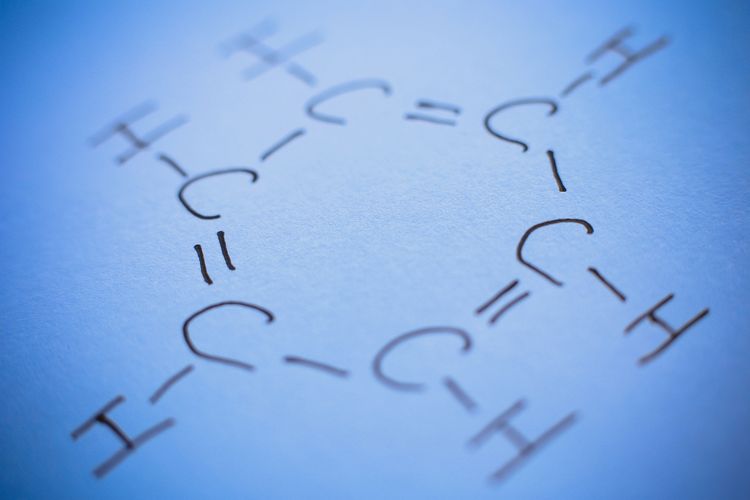
Gemische aus Kohlenwasserstoffen – etwa Erdöl oder Erdgas – sind Grundlage für viele Produkte der chemischen Industrie, von der Schmerztablette bis zu Kunststoffverpackung. Wie lassen sich Kohlenstoff-Wasserstoff-Bindungen gezielt zu direkten Reaktionen bringen, die sonst nur über Umwege gelingen?
Diese Frage steht im Mittelpunkt des neuen Graduiertenkollegs „Aktivierung chemischer Bindungen“ an der Universität, das die Deutsche Forschungsgemeinschaft (DFG) für zunächst viereinhalb Jahre mit circa 3,5 Millionen Euro fördert. Antworten darauf könnten in der chemischen Industrie Material, Energie und Zeit sparen, den Weg zu möglichen neuen Materialien und Medikamenten eröffnen oder Ölkatastrophen besser bekämpfen helfen.
„Ab dem kommenden Herbst können zwölf Doktorandinnen und Doktoranden auf diesem hochgradig zukunftsträchtigen Gebiet forschen“, so der Sprecher des Graduiertenkollegs, Prof. Dr. Sven Doye vom Institut für Chemie. Bis zu zwölf weitere Promovierende der beteiligten Arbeitsgruppen am Institut für Chemie und Institut für Chemie und Biologie des Meeres werden ebenfalls ins Graduiertenkolleg eingebunden.
„Aktivierung chemischer Bindungen – hinter diesem Forschungsgebiet, das für Laien zunächst wenig anschaulich klingen mag, verbirgt sich ein gesellschaftlich, ökonomisch und ökologisch bedeutsames Thema, das in der Chemie weltweit im Fokus steht“, so Universitätspräsident Prof. Dr. Dr. Hans Michael Piper. „Das Oldenburger Institut für Chemie ist hier dank international profilierter Forscherpersönlichkeiten bestens aufgestellt für die Ausbildung der Expertinnen und Experten von morgen.“
Unter der Ägide von mindestens elf Professorinnen und Professoren wird sich der wissenschaftliche Nachwuchs aus unterschiedlichen Blickwinkeln dem Aktivieren der eigentlich reaktionsträgen Kohlenstoff-Wasserstoff-Bindungen nähern können – beispielsweise vor dem Hintergrund bestimmter Katalysatoren oder Erdöl zersetzender Bakterien. Ziel ist es, neue Methoden zu entwickeln und zu analysieren. „Wir wollen auch verstehen: wie geht das, und warum geht das?“, betont Chemiker Doye.
Bei der Grundlagenforschung im Graduiertenkolleg werde auch ein sogenannter atomökonomischer Ansatz eine Rolle spielen: Wenn eine chemische Reaktion so angelegt sei, dass alle oder möglichst viele Atome aus den Startmaterialien auch im erzeugten Produkt enthalten seien, reduziere das die Abfallmenge. Im Labor seien das vielleicht kleine Mengen, so Doye, „aber in der industriellen Produktion ginge es gegebenenfalls um tonnenweise Abfall“. Dass solche chemischen Abfallprodukte teils auch giftig seien, spreche umso mehr für die Atomökonomie: „Sie spart Geld und Energie, minimiert den Abfall und schont so die Umwelt.“
Graduiertenkollegs fördern den wissenschaftlichen Nachwuchs an Hochschulen. Ziel der DFG ist es, Promovierende zu qualifizieren, ihre wissenschaftliche Selbstständigkeit zu unterstützen sowie sie auf den komplexen Arbeitsmarkt „Wissenschaft“ vorzubereiten. „Aktivierung chemischer Bindungen“ ist eines von derzeit insgesamt sieben DFG-Graduiertenkollegs an der Universität Oldenburg.