Prinzenpark
Häufige Fragen (FAQ)
Antworten auf die häufigsten Fragen rund ums Studium findest du hier.
Kontakt zum Institut
Geschäftsstelle
Adresse
Direktorin
Stellvertretende Direktorin
Contact
Prinzenpark


Garden of Silence (Prinzenpark)
The man behind this garden complex, which is almost 50 years old, is the philosopher, anthropologist and artist
Prof. Rudolf Prinz zur Lippe(*1937–2019)
who held the chair of Social Philosophy and Aesthetics at our Institute from 1974 to 2002
During his nearly 30 years of teaching and research at our Institute, Rudolf zur Lippe shaped both the subject and the public perception of the university with regard to philosophy and aesthetics. Prof. zur Lippe was a student of the philosopher and Zen teacher Karlfried von Dürckheim. After studying medieval and modern history in Heidelberg and Paris, he obtained his doctorate in 1965. In 1969, under the supervision of Theodor W. Adorno, he began work on his philosophically oriented ‘History of the Body in Modernity’ at the University of Frankfurt, where he completed his habilitation in 1973. As a painter, theatre director and set designer, Rudolf zur Lippe’s artistic work explored themes such as sustainability, the domination of nature, democracy, a plural economy, human dignity and sensory awareness.In 1982, he founded the ‘Institut für praktische Anthropologie e.V.’ and developed the artistic-scientific exhibition ‘Geometrisierung des Menschen’ (The Geometrisation of Man). This was shown as a travelling exhibition in Germany and internationally. In 1989, zur Lippe initiated the ‘Karl Jaspers Lectures on Contemporary Issues’ at the University of Oldenburg; these have been held annually ever since, featuring international colloquia, public lectures and seminars. Guests and visiting professors have included Jürgen Habermas, Ivan Illich, H.G. Gadamer and Jeanne Hersch.
History of the Garden of Silence (Prinzenpark)
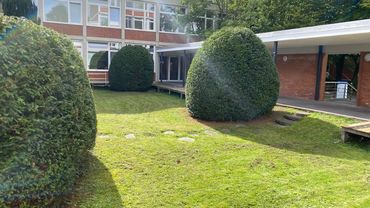
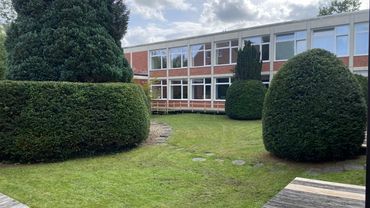
In 1974 , Prof. Dr Rudolf zur Lippe laid out a Zen garden at our Institute , the Garden of Silence ( also known as Prinzenpark) , featuring light-coloured gravel paths, old gravestones set into the grass, a surrounding wooden walkway and a group of trees.
As holder of the chair of ‘Aesthetics’, it was zur Lippe’s idea to put the ‘theory of sensory perception’ into practice in a creative way.
The old, well-tended and contemplative Garden of Silence serves for us both as a reminder of the philosopher and artist Rudolf zur Lippe and as an inspiration for future generations to make use of the space and work with it. It is an important part of our Institute’s historical identity.
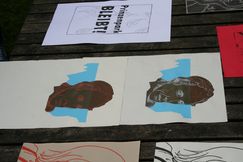
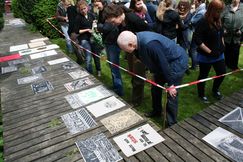
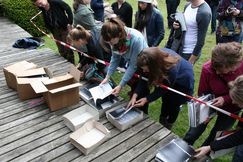
In the early 2010s, the garden was threatened by planned redevelopment works. Staff and students successfully campaigned for its preservation, amongst other things through an artistic poster campaign and with the support of Prof. zur Lippe.
The Garden of Silence today
Today, the walk-through artwork ‘Garden of Silence’ is a central component of university teaching and a place whose influence extends beyond the university’s boundaries. It is a venue used for artistic performances and the Institute’s annual ‘Showtime’ presentation days, whilst also serving as a highly valued meeting place for students and lecturers from the philological and artistic subjects within School III.
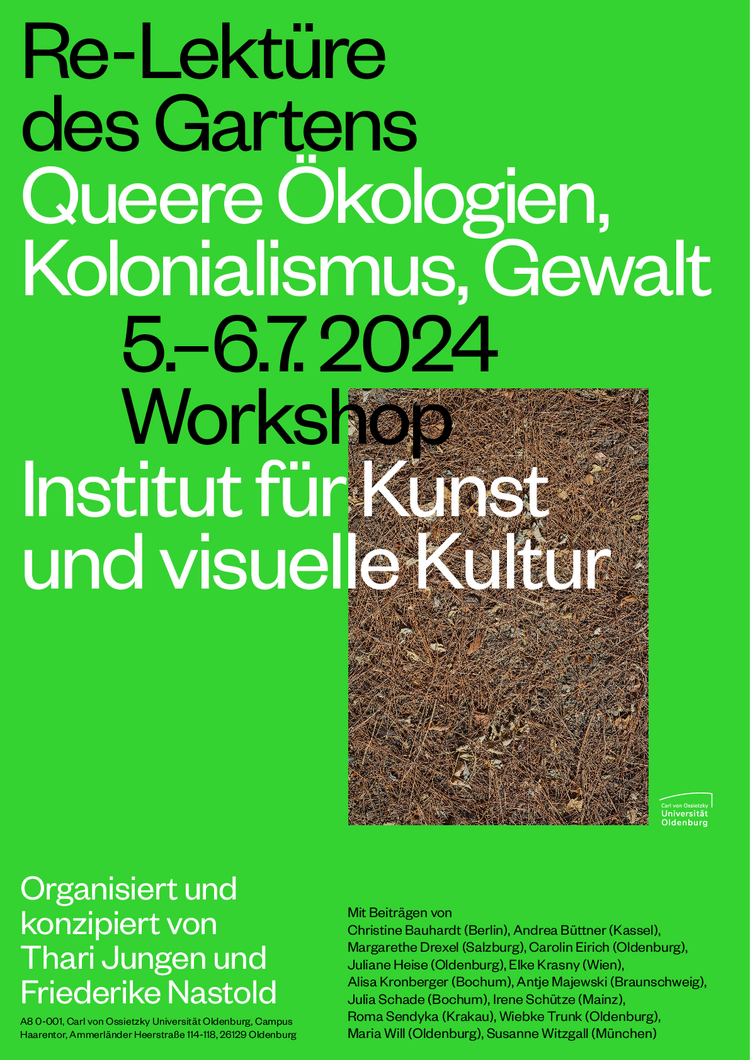
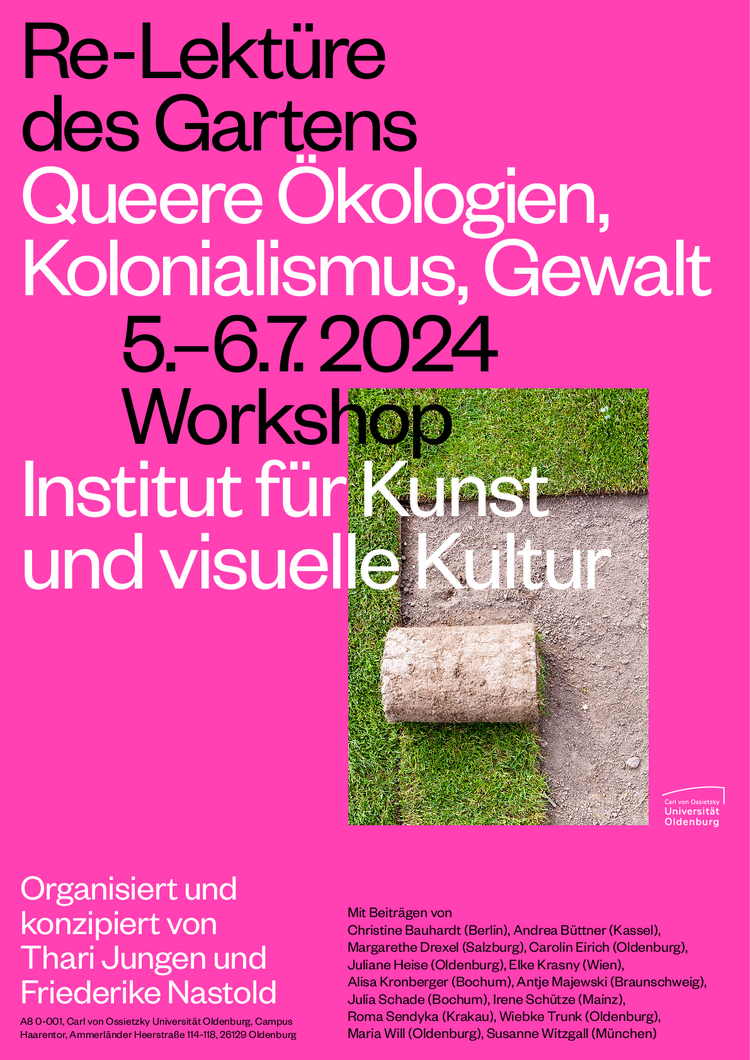
Most recently, the Prinzenpark was the subject and venue of the international workshop ‘Re-reading the Garden: Queer Ecologies, Colonialism, Violence’ (July 2024); see also: (https://uol.de/kunst).