
FLOW - flexibel & offen weiterbilden
FLOW - flexibel & offen weiterbilden


Qualification for the energy and mobility transition & resource-conserving management
The FLOW project is currently developing easy access and flexible training courses on the topics of energy transition, mobility transition and resource-conserving management. From mid-2025 on, we will be offering the opportunity to qualify for the sustainable transformation, to experienced specialists with a vocational background and applicants from business and engineering fields. We are particularly addressing experienced professionals without a school-based university entrance qualification (e.g. A-levels), as well as migrants and refugees with previous professional and/or academic experience from non-EU countries living in Germany.
In our courses, a strong emphasis is put on hydrogen and wind energy topics. Additional learning units on managing sustainable projects and digital skills will gradually supplement the portfolio. The courses will mainly take place online in self-study and in supervised blended learning formats. In doing so, we can enable participants to engage in the courses in a highly flexible manner and thus easily incorporate their studies into their everyday work and life.


Start and duration
Dates are specified for the respective modules
Six to twelve weeks depending on the learning unit


Participation is also possible without a high school diploma. The further education programmes are aimed at:
- Experienced professionals with and especially without a school-leaving qualification for university entrance (without studying)
- Migrants and refugees with previous professional and/or academic experience
Are you unsure whether the further education programme is right for you? Then contact Svenja Beyer for individual counselling.



Our current range of modules
Choose the modules that suit you. Each module is self-contained and can be taken individually - according to your individual plan.
There are both beginner and advanced modules.

Introduction to hydrogen technology
Self-study module | 60 hours - 2 ECTS
You can choose to start the module at any time.
In this module, you will receive an introduction to hydrogen technology, which is considered a key technology for a sustainable energy future.
In this module, you will learn the following core competences:
- The basics of hydrogen production, storage, use and transport.
- The advantages and disadvantages of hydrogen technologies.
- The energy consumption in hydrogen production. 5 - Creating simple models of electrolysis cells and their wear and tear. The energy consumption in hydrogen production.
- Creating sketches of simple models of electrolysis cells and their wear and tear.
- The challenges of switching to green hydrogen and storage.
- You will be able to name important market players and storage technologies.
- Hydrogen transport options and the risks of using them.
- Applications of hydrogen in industry and their advantages.
- The system benefits of hydrogen in the energy supply.
The basics of wind energy:
From the idea to operation
Self-study module | 90 hours - 3 ECTS
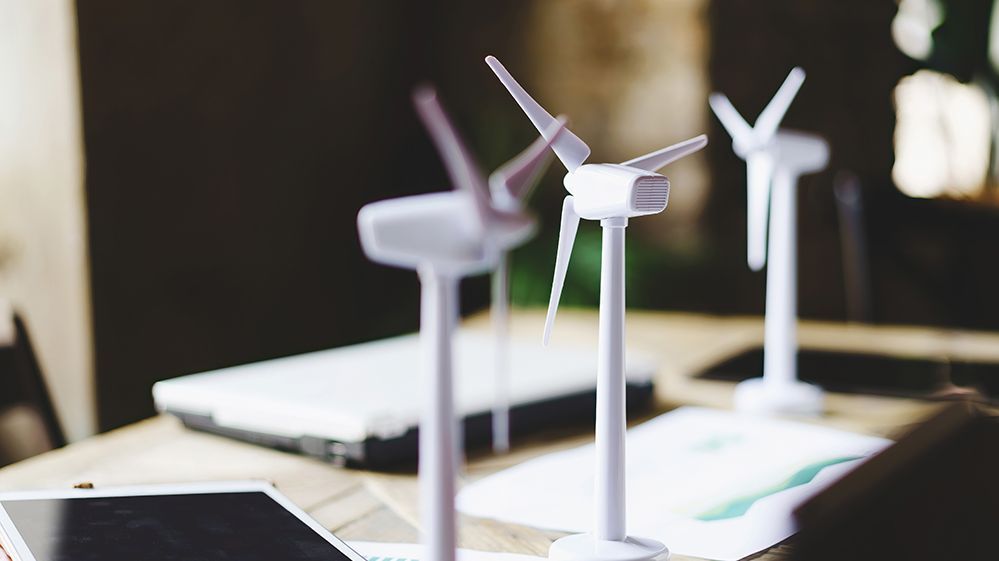
This practice-oriented module provides an introduction to wind energy - a central pillar of the energy transition. The module is particularly aimed at newcomers who want to reorient themselves professionally or create a sound basis for further offers in the field of renewable energies.
The following skills are taught in the module:
You will acquire basic knowledge of wind energy, learn about the structure, function and types of wind turbines and gain insights into the planning, operation and economic aspects of wind farms. In addition, professional fields and future prospects in the industry are presented.
The content of the module was designed by Prof. Dr.-Ing. Iván Herráez, Professor of Renewable Energy Technology specialising in wind power.

Energy industry
Self-study module | 90 hours - 3 ECTS
This module introduces the energy industry and energy policy against the backdrop of Germany's climate neutrality target by 2045. The energy sector is at the centre of change - from renewable energies to CO₂ prices and the hydrogen economy. After completing the module, you will have a better understanding of the energy policy debate and be able to categorise key instruments and challenges.
The module answers questions on:
- The structure and transformation of the energy industry
- Technologies and their advantages and disadvantages
- How the energy market works and pricing
- Challenges posed by the switch to renewable energies
- Concepts such as sector coupling and flexibility options
- The role of the state and social acceptance in the transformation of the energy system
The content of the module was designed by Prof. Dr Ulrich Scheele, Professor of Economics.

Hydrogen as a building block of the energy transition: Possibilities and limits
Self-study module | 90 hours - 3 ECTS
Hydrogen is regarded as a key technology in the energy transition - but how great is its potential really? In this online module, you will gain a sound overview of the technical, economic and political aspects of hydrogen as an energy carrier of the future.
The module is aimed at beginners and those interested in the subject who want to understand where and how hydrogen can be used sensibly - and where its limits lie. You will learn how to realistically assess the end of projects and recognise the key relationships between the electricity market, production, use and promotion of hydrogen.
You will acquire the following skills in the module:
- You will understand how the European electricity market works and what conditions must be met for electricity to be considered "green".
- You will learn to evaluate hydrogen projects technically, economically and ecologically - from planning to amortisation.
- You will analyse political instruments, funding measures and strategies that support the ramp-up of the hydrogen economy at national and European level.
- You will recognise the roles and interactions of different actors along the hydrogen value chain.
The module is completed entirely online via the C3LLO learning platform and enables flexible learning at your own pace - ideal for working people or those interested in further education regardless of time and place.

Sustainable management - perspectives for change
Perspectives for change and responsibility
Self-study module | 30 hours - 1 ECTS
This application-oriented module introduces key issues of sustainable and future-oriented management. It is aimed at those interested in understanding how ecology, economy and social justice are interrelated - and how companies, politics and individuals can contribute to sustainable development.
The module is designed as a purely self-study programme and can be completed completely flexibly and asynchronously online. The total workload is approximately 30 hours. The content and materials are created on the basis of Open Educational Resources (OER) and are freely available in this or a similar form on OER platforms even after the end of project. The module ends with a short multiple-choice test and the award of a certificate.
The module teaches the following skills:
You will acquire basic knowledge of the history and mission statements of sustainable development, learn about central models and dimensions of sustainability and analyse how companies can anchor sustainability in a strategically and economically meaningful way. Using examples of innovative forms of business, social and cultural sustainability, insights into entrepreneurial practice and international challenges (including the European Green Deal, Germany's role), you will reflect on your own options for action and future skills for a sustainable - and at the same time economically viable - professional life.

Digitalisation in academic appointments
further education
Self-study module | 30 hours - 1 ECTS
The module provides an introduction to key digital skills for the future with a special focus on digital literacy, the confident use of digital tools and applications, including artificial intelligence. It is aimed at people who want to orientate themselves in the field of digitalisation and lay the foundation for digital skills in everyday academic appointments.
The focus is on the question of how digital tools and applications can be used sensibly and what role artificial intelligence plays in this. The module helps students to categorise current developments, reduce their fear of contact and develop a conscious approach to digital applications.
The content is based on current skills requirements and takes up the recently updated "Future Skills 2030" framework of the Stifterverband, in particular the category of digital future skills. The aim of the module is to provide initial confidence in using digital tools and to create a sound basis for further learning and qualification programmes.
The module is mainly designed as a self-study course and can be supplemented by short online impulses.
Flexible and practical
In the practical modules, you will learn the content independently or with the support of the lecturers. Events take place online or on site, usually in the afternoons and at weekends.
The modules comprise 1 to 3 credit points, which corresponds to 30 to 90 hours of work. This includes reading and working on texts, learning materials and assignments as well as dialogue with participants and teachers.
Why participants recommend us:

Flexible
You will mainly study online. Some learning units take place in blended learning format, i.e. a combination of face-to-face sessions in Oldenburg and e-learning units.

Personalized
Our lecturers and mentors are trained to provide individual support. This ensures that all our students receive the best possible support during their learning process.




Skilled workers for the region
Our cooperation partner is the Bildungswerk der Niedersächsischen Wirtschaft (BNW); we are also in close contact with Arbeit & Leben Niedersachsen, the Berufsbildenden Schulen Wechloy of the City of Oldenburg, the Ländlichen Erwachsenenbildung in Niedersachsen, the Volkshochschule Oldenburg and the Verein niedersächsischer Bildungsinitiativen. Further partners are welcome! Should you be interested in working with us, please contact us at:
If you seek to train your employees or if you plan to attract additional skilled workers, for example by offering company visits or short internships, please don’t hesitate to contact us!


