
The founders of the University of Oldenburg had already chosen the publicist Carl von Ossietzky as their namesake in 1974, but met with much resistance. The name has now been official for 25 years.
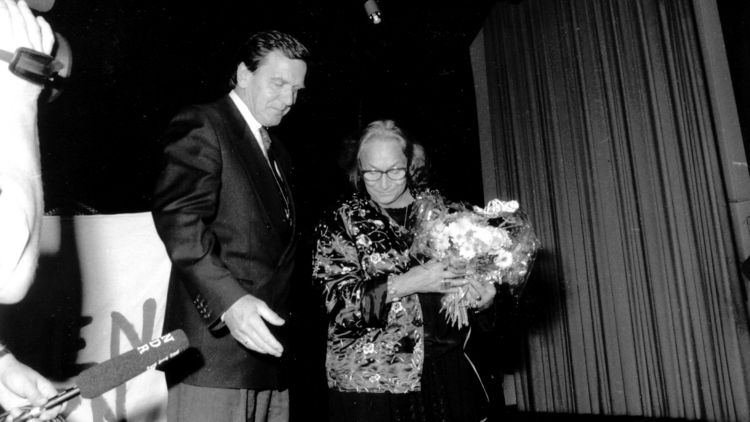
On 3 October 1991, the naming of the University of Oldenburg after Carl von Ossietzky was officially sealed with a ceremony, ending a 19-year dispute with the state government. In his speech, the then Prime Minister and later Chancellor Gerhard Schröder apologised to Ossietzky's daughter, Rosalinde von Ossietzky-Palm, for the government's long-standing refusal to comply with the university's wishes.
On 1 February 1974, the founding committee was the first body to decide to name the university after the publicist and Nazi opponent, who was awarded the Nobel Peace Prize in 1936 for his consistent commitment to democracy. This was intended to emphasise the university's self-image of pursuing its science with social responsibility and placing it at the service of peace and democracy.
A travelling and permanent exhibition on the life and work of Carl von Ossietzky was created in 2014 to mark the university's 40th anniversary. The original certificate and the gold medal for the Nobel Peace Prize from Ossietzky's estate, which is kept in the Oldenburg University Library, are also currently on display in Oslo. The Nobel Peace Center, the "Museum of the Nobel Peace Prize", is showing the exhibition "The Dangerous Prize", which was created in co-operation with the University of Oldenburg, until 26 February 2017.
The permanent exhibition "I do not submit, I demonstrate..." can be seen on level 1 of the university library on the Haarentor campus.