


How can cities prepare their energy systems for the rapid rise of electric vehicles?
EUREC alumnus Babak Ravanbach, researcher at the DLR Institute for Networked Energy Systems, explores this question in a new study on data-driven forecasting for EV charging stations—offering fresh insights for smarter, more sustainable cities.
As electric vehicles become an essential part of urban mobility, accurately predicting the energy demand of charging stations is crucial for maintaining stable and efficient power grids.
EUREC alumnus Babak Ravanbach, now a researcher at the DLR Institute for Networked Energy Systems, co-authored a recent study published in Energy and AI titled “Data-Driven Load Profile Forecasting for EV Charging Stations Leveraging Spatial Dependency Modeling.”
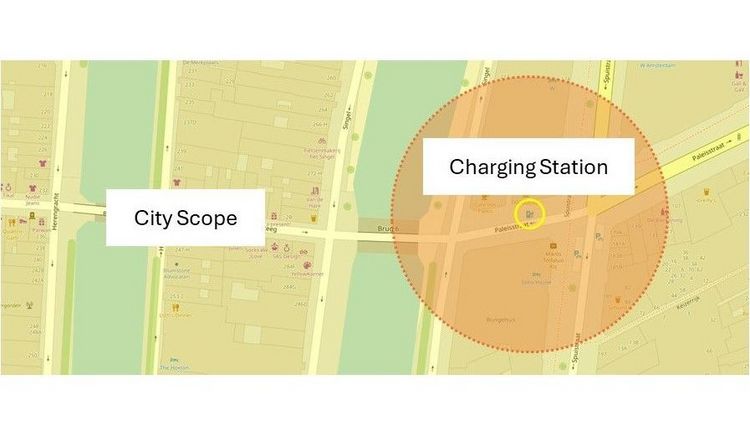
The research presents an innovative data-driven approach that integrates spatial information—such as the proximity and connectivity of charging stations—to improve the accuracy of load forecasting. Using real-world data from Galatina, Italy, the team compared traditional AI models with spatially aware methods like Graph Convolutional LSTM (GCLSTM). The results show that considering spatial dependencies enhances forecasting performance, especially in dense urban areas where multiple stations interact dynamically.
By leveraging spatial data, this work contributes valuable insights toward the planning and operation of smarter, more resilient energy systems, supporting the broader transition toward sustainable mobility and urban development.