
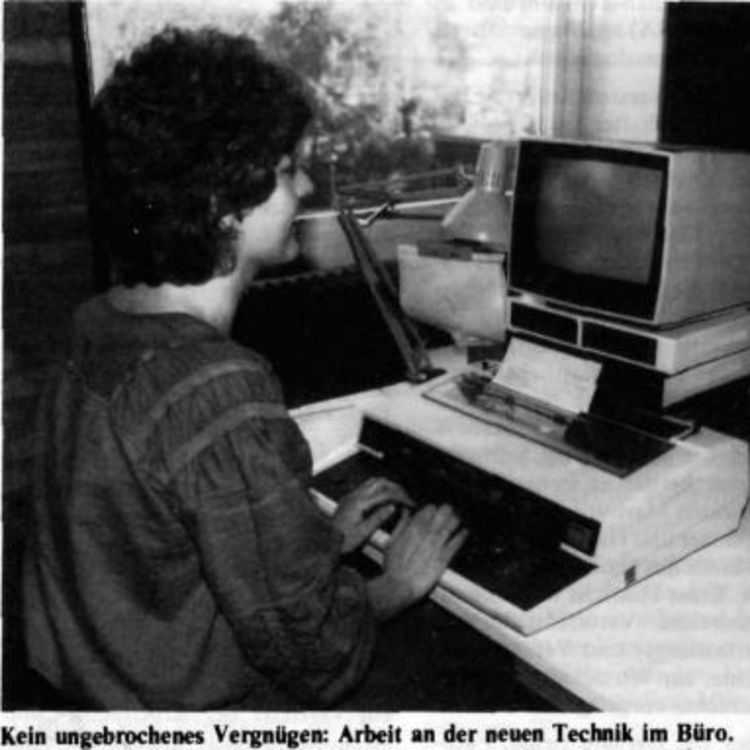

On 5 November 1984, the university newspaper UNI-INFO reported on the first use of "screen typewriters" - early precursors of personal computers - at the university and immediately stated that these could not replace conventional typewriters...
Life without PCs, laptops, tablets, smartphones or wearables is unimaginable for most people today. In the 1980s, however, digitalisation was still in its infancy. Employees and the editorial team at UNI-INFO were correspondingly sceptical about the new devices. According to the article, "modern word processing systems" offered many new possibilities - for example, texts could not only be printed out but also saved for later editing - but the practical benefits were generally hardly any greater than with traditional typewriters. At the university, the devices would therefore not be able to be used for more than 20 per cent of the written material. Nevertheless, the Staff Council feared that the new systems could make employees redundant and lead to job cuts.
What seems strange from today's perspective must be seen in a historical context. Digital technologies were new in the 1980s and offered far fewer functions than they do today. This is why typewriters were the office standard until the 1990s. New technologies simply need time to realise their full potential. And who knows what kind of smile people will have when they look back on the technical equipment in today's offices in 40 years' time?