
Wiebke Rathje
Contact
Dr. Wiebke Rathje
Institute for Biology and Environmental Sciences (» Postal address)
Lectures
Winter term 2026 / 2027

Wiebke Rathje
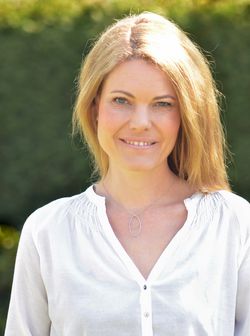
Dr Wiebke Rathje
Arbeitsschwerpunkte:
Experimentation in biology lessons
Development and accompanying research on molecular biology laboratories for schoolchildren
Development and evaluation of molecular biology experiments and teaching concepts for school laboratories
Project management InnovationPlus - Digitisation in teacher training
Projects
Current projects
Molecular biology student labs at Copernicus Gymnasium in Löningen and Helene-Lange-Schule Oldenburg
Whether it is a paternity test, enzymes in detergents or the detection of animal products in food, it is already impossible to imagine our everyday life without biotechnology methods. Some applications are highly controversial, for example in the field of genetic engineering or medical research.
Schools have an important role to play in teaching basic biological knowledge in order to support students in their later participation in social decision-making processes. And although this knowledge is required in the curriculum, the teaching of specialised knowledge through appropriately illustrative experiments is not possible in conventional biology lessons for reasons of capacity and cost. Theoretical subject content thus often remains abstract. This is where the biology didactics cooperation projects with the Copernicus Gymnasium and the Helene Lange School come in. In the student laboratories of both schools, students from grade 9 and upwards are given the opportunity to independently conduct molecular biology experiments on methods such as PCR, ELISA, gel electrophoresis or microarray under the guidance of trained project teachers.
The development of exemplary laboratory day concepts is one of the greatest challenges in establishing molecular biology student laboratories. On the one hand, topics closely linked to the core curriculum should be worked through in a way that is close to the students and relevant to everyday life; on the other hand, the experiments offered must be scientifically correct. This can be achieved well in a recursive process in which the learning environment, initially designed on the basis of subject-specific science and subject-specific didactics, is subsequently optimised on the basis of evidence. Even before and during the development of new lab days, subject-didactic studies are carried out on student perceptions as well as learning effectiveness studies. Student teachers are involved in this process, accompanied by didacticians and subject specialists.
Further information:
www.cgl-online.de/angebot/molekularbiologisches-schuelerlabor
www.nwzonline.de/oldenburg/bildung/ende-der-kreidezeit-im-bio-unterricht_a_31,2,336287400.html
eTrainer Fund: Development of Open Educational Resources for human biology subject areas
Open Educational Resources (OER) are educational materials published under an open licence. They allow free access, free use, reuse and editing with no or only minor restrictions. Thus, the material can be exchanged and widely disseminated on digital platforms.
OER also offer great potential for university teaching in particular. Teachers can freely access the teaching materials, adapt them for their own teaching and thus achieve an increase in quality while saving time. Without the restrictions associated with copyright, the materials are fully usable and offer teachers and students more opportunities for collaborative work.
In this project, funded by the Technical Information Library, Open Educational Resources on ten different topics in human biology are being developed for the course "Human Biology School Experiments". Through a multimedia introduction, students receive learning support and can at the same time test their knowledge independently. Although the learning units are developed in relation to the subject, they leave out content that is peculiar to the seminar, so that the digital learning materials can also be used and further processed for human biology seminars in other degree programmes (e.g. biology, medicine, nursing, etc.).
What are Open Education Resources? Here is a brief overview:
open-educational-resources.com/what-is-oer-3-2/.
More information on the eTrainer Fund:
Completed projects
"Innovative teaching and learning concepts: Innovation plus" - Digitisation in Teacher Training
The introduction of digitalisation into teaching is intended to make schools, teachers and students fit for the future. And indeed, digital devices, media and tools enable versatile methodological use: experimentation in biology lessons, for example, can be supported by the use of mobile devices such as tablets and special apps. These can also be used for video and audio documentation of short-term and long-term experiments. Digital tools are, of course, also used beyond experimentation. For example, pupils can create self-produced explanatory videos and animations and thus visualise their learning and thinking processes. Editable eBook formats enable teachers to create interactive worksheets with embedded videos, audio messages and animations. The use of hypertexts, with which e.g. links or glossaries are linked, can also promote constructivist learning. A variety of digital programmes and tools enable new forms of collaborative work not only in professional life but also at school.
However, the multitude of information and technical possibilities can also lead to students being overtaxed(information/cognitive overload). And often the question arises whether and when the use of a digital medium offers a meaningful added value to analogue teaching.
Teachers are thus challenged to select digital technologies in a targeted manner, to prepare them in a didactically meaningful way, to use them in a methodologically considered way, to evaluate them and also to question them critically. To do this, they must be competent in using the technology and know the basic functions and their possibilities. In teacher training at universities, subject-specific didactic courses seem particularly well suited to practising subject-specific use and demonstrating the direct benefits for later professional life.
The aim of this project, funded by the Lower Saxony Ministry of Science and Culture, is therefore the implementation of digital technologies in experimental teaching in biology teacher training and the subject-specific teaching of digital skills to prospective biology teachers. In the courses "General biological school experiments" and "School experiments on human biology", the handling of digital tools that specifically support biology teaching is to be practised during the laboratory internship. A special focus is on the use of mobile devices such as tablets. In the seminar that follows, the students are encouraged to integrate digital media and tools into their fictitious teaching sequences. The seminar offers the opportunity for joint reflection and evaluation of media use with their fellow students, lecturers and the cooperating teacher.
The project is accompanied and evaluated by empirical studies. Attitudes, self-concept, possible difficulties in dealing with digital tools as well as benefits and relevance for future professional life from the students' point of view will be investigated.
Further information:
Ethical evaluation competence and everyday fantasies of young people and students about the possibilities of genome editing
Crispr/Cas9 is the name of the latest method in genetic engineering with the help of which genomes can be specifically changed or edited. In this way, somatic gene therapies and interventions in the human germ line could become possible in the foreseeable future, with the prospect of curing serious diseases. This method of genome editing thus raises great hopes, but at the same time touches on central ethical values by bringing the question of human dignity and the fundamental rights status of the embryo into the focus of ethical consideration. Among other things, the question arises as to which ethical values young people see touched by genome editing and what significance these have for them.
Within the framework of this study, funded by the Federal Ministry of Education and Research, young people, students of medicine, life sciences, social sciences and humanities will be interviewed with regard to this central aspect and further ethical implications in order to record the ethical assessment competence and the world and human images (everyday fantasies) updated by genome editing of those who could be users of the new technologies in the future. Through this, an insight into the underlying implicitly effective values and presuppositions of young people and students can be gained.
Further information:
uol.de/news/art/was-junge-menschen-von-gentherapie-halten-2410/
Teacher training
Digital media for biology lessons
The ethical evaluation of new genome editing methodsin biology lessons
DNA microarray - The hunt for the tumour gene. Experiments and model games for biology lessons
Practical molecular biology student laboratory: What's in my fish fingers? Polymerase chain reaction and gel electrophoresis
Practice in the molecular biology lab: The ELISA method in the context of the Ebola epidemic 2014
Vita
| as of 2013 | Research assistant at the Carl von Ossietzky University Oldenburg, Institute for Biological and Environmental Sciences, Biology Didactics Working Group |
| 2008-2013 | Research associate at the Institute of Plant Genetics, Leibniz University of Hanover |
| Project coordination and development of the Lower Saxony model school laboratory project "HannoverGen | |
| 2002-2008 | delegated as scientific assistant at the Chair of Ornamental Crops at the Technical University of Munich-Weihenstephan |
| 2002-2007 | Doctorate (Dr. rer. nat.) at the Chair of Ornamental Crops at the Technical University of Munich-Weihenstephan |
| Topic of the dissertation: Characterisation of flavonoid biosynthesis and establishment of a transformation system in Rhododendron simsii hybrids(azalea) | |
| 1996-2002 | Study of Horticultural Sciences (Dipl.-Ing. agr.) at the Technical University of Munich-Weihenstephan |
Publikationen
Rathje, W. (in Druck). Die Neue Gentechnik: Chance für eine nachhaltige Landwirtschaft in der Klimakrise oder ökologisches Risiko ohne Nutzen? Bewerten mit Studierenden. In: Hößle, C., Rathje, W. (Hrsg.) (im Druck). Bioethik unterrichten – Urteilsfähigkeit fördern: Ein Aufsatzsammlung von Fachdidaktikern und Bildungswissenschaftlern für die Bildungslandschaft. Springer Spektrum Berlin
Hößle, C., Rathje, W. (Hrsg.) (im Druck). Bioethik unterrichten – Urteilsfähigkeit fördern: Ein Aufsatzsammlung von Fachdidaktikern und Bildungswissenschaftlern für die Bildungslandschaft. Springer Spektrum Berlin
Vajen, B., Ronez, J., Rathje, W., Heinisch, L., Ebeling, S., Gebhard, U., ... & Schlegelberger, B. (2021). Students’ attitudes towards somatic genome editing versus genome editing of the germline using an example of familial leukemia. Journal of Community Genetics, 1-10.
Hößle, C., Kuhlemann, B. Rathje, W., Saathoff, A., Weusmann, B., Winkler, H. (2020). Einblicke in das Potenzial Biologie didaktischer Lehr- und Lernlabore. In: Michael Komorek, Claudia Gorr, Lena Beyer, Simona Selle, Peter Röben, Caroline Kather (Hrsg.): Orte und Prozesse außerschulischen Lernens erforschen und weiterentwickeln: Tagungsband zur 6. Tagung Außerschulische Lernorte an der Carl von Ossietzky Universität Oldenburg. S. 327-339
Heinisch, L. M., Hößle, C., Krause, U. M., & Rathje, W (2018). Jugendliche bewerten die Möglichkeiten der Genom-Editierung – Eine Interventionsstudie. Erkenntnisweg Biologiedidaktik [17], 27-44
Rathje, W., Heinisch, M.L. (2017). Die ethische Bewertung der neuen Genom Editierungsmethoden im Biologieunterricht. 21. Internationale Tagung der Fachsektion Didaktik der Biologie (FDdB) im VBiO und des Forums Fachdidaktik & Schulbiologie. Halle
van Waveren, H. & Rathje, W. (2017). Verwandtes Gemüse – Pflanzenzüchtung und Evolution. Unterricht Biologie, 421, 26-31
Rathje, W. (2016). Vorstellung einer Unterrichtseinheit für molekularbiologische Schülerlabore zum Thema ELISA-Testverfahren und Ebola-Viruskrankheit. In Transfer Forschung – Schule. Annual Journal der Pädagogischen Hochschule Tirol, 2, S.253-265
Rathje, W. (2016). Farben aus der Blütenfabrik. Praxis der Naturwissenschaften, 65(5), S. 20-23
Rathje, W. (2015). Lehramtsstudierende entwickeln Konzepte für molekularbiologische Schülerlabore. In U. Gebhard, M. Hammann, B. Knälmann (Hrsg.), Bildung durch Biologieunterricht. 19. Internationale Tagung der Fachsektion Didaktik der Biologie (FDdB) im VBiO und des Forums Fachdidaktik & Schulbiologie (S. 262-263). Hamburg
Rathje, W. & van Waveren, H. (2015). Microarray – Auf der Jagd nach dem Tumorgen. Praxis der Naturwissenschaften, 64 (8). S. 37-42
Rathje, W. & van Waveren, H. (2013). Das Projekt HannoverGen – ein Resümee. In J. Mayer, M. Hammann, N. Wellnitz, J. Arnold & M. Werner (Hrsg.), Theorie, Empirie, Praxis. 19. Internationale Tagung der Fachsektion Didaktik der Biologie (FDdB) im VBiO (S. 240-241). Kassel: University Press. Abstract.
Rathje, W. (2011). Agrobacterium tumefaciens- Die Geschichte des Gentaxis. Praxis der Naturwissenschaften, 60 (3). S.17-20
Rathje, W. & van Waveren, H. (2011). Kohl – Der botanische Hund. Praxis der Naturwissenschaften, 60 (3). S. 20-23
Alfs, N., Gropengießer, H., Hößle, C., Jacobsen, H.-J., Rathje, W., van Waveren, H. (2009). HannoverGen – ein niedersächsisches Modellprojekt für Schülerlabore zum Thema Grüne Gentechnik. VBio Rundbrief, S. 14-16
Seitz, C., Vitten, M., Steinbach, P., Hartl, S., Hirsche, J., Rathje, W., ... & Forkmann, G. (2007). Redirection of anthocyanin synthesis in Osteospermum hybrida by a two-enzyme manipulation strategy. Phytochemistry, 68(6), 824-833.
Rathje, W. (2007). Agrobacterium tumefaciens-vermittelte Transformation von Azaleen (Rhododendron simsii). Journal für Verbraucherschutz und Lebensmittelsicherheit, 2, 112-112.
Rathje, W. (2007). Charakterisierung der Flavonoidbiosynthese und Etablierung eines Transformationssystems bei Rhododendron Simsii-Hybriden (Azalee) (Doctoral dissertation, Technische Universität München).