

Drug education and history in the classroom
Drug education and history in the classroom
Drug education and history in the classroom
23 November 2021, 19:00-20:30 hrs
Online panel discussion and audience Q&A with experts from research, didactics and prevention on drug education in German schools
Through joint activities with schools, one focus of the "Intoxicating Spaces" project is on education, especially with regard to the extent to which historical knowledge about intoxicants in the past can enrich our understanding of drug use and trafficking in today's society and raise new questions. With this panel discussion, we would like to incorporate our findings on drugs in past eras into a discussion on drug education in German schools, in which experts from educational research, historical didactics, addiction prevention and historical research will participate.
We cordially invite you to join the discussion. You can register via Eventbrite: www.eventbrite.de/e/drogenbildung-und-geschichte-im-klassenzimmer-tickets-201659959367
The event will be organised via Webex-Cisco. You will receive a confirmation email from Eventbrite. Please click on the red button ("View the Event") and register with Webex-Cisco. You will then receive a registration email from Webex-Cisco.
On the podium
Kristina Wille, Addiction Prevention Centre Hamburg
Dr Markus Otto, Gerhard Eckert Institute Leibniz Institute for International Textbook Research
Prof. Dr Andreas Körber, History Didactics, University of Hamburg
Moderator: Petra Boberg, journalist and presenter at Hessischer Rundfunk
Target audience
Educators, pupils, parents, educationalists, people from prevention, healthcare and politics, interested members of the public.
The questions
- What kind of drug problems are experienced in schools today and how is drug use in schools and among pupils dealt with in everyday school life?
- Which school education programmes focus on the topic of drugs? What content and attitudes are communicated and discussed? And through which media?
- To what extent do historical findings about consumption, regulation, trade and, in some cases, colonial production conditions, or knowledge about current conditions, play a role in dealing with the drug issue and in drug education?
- How could historical findings, e.g. the colonial conditions under which drugs originated, the different interpretations attributed to them and the consumption of drugs, enrich current debates on the subject of drugs?
The project
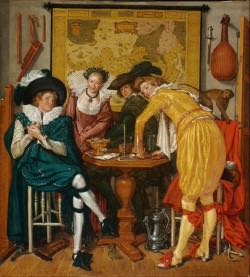
As part of the EU-funded research project "Intoxicating Spaces", researchers from four countries are investigating how the consumption of new intoxicants between 1600 and 1850 created new public spaces in northern European port cities and shaped new forms of sociability. However, the rapid spread of tea, coffee, tobacco, sugar and cocoa throughout Europe in the early modern period not only triggered a "psychoactive revolution" that permanently changed our socialising practices and demanded a new social, political and economic approach to mind-altering substances. It was also an important part of the first wave of globalisation, which was often based on exploitative international trade relations.
The consumption of tobacco, coffee and the like was always subject to changing interpretations and was therefore also interwoven with questions of fashion and lifestyle: How, why, with what, with whom and where one took one's coffee could express social status or affiliation, for example. The definition of a "drug" was also a shaky and changing one: where some substances were considered useful and healthy, others were categorised as dangerous or even evil. And it is certainly no different today, even if different social conditions determine these interpretations and classifications and new drugs are on offer.