Contact

Press and Communication

+49 (0) 441 798-5446

News feed of the news

https://uol.de/en/news/rss (XML)
Copy address and paste into feed reader

News articles

News search

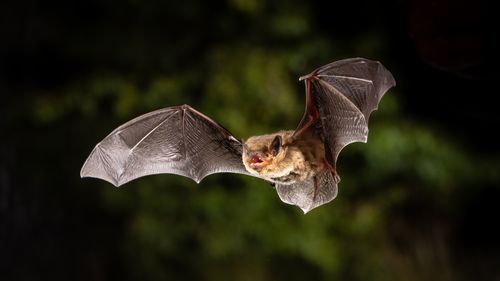
Close-up of a bat with outstretched wings in nature.
Christian Giese
Excellence Strategy Research Top News Biology

Migratory bats can detect the Earth’s magnetic field
Pipistrelle bats have a magnetic compass and calibrate it at sunset, according to a new study published in the journal Biology Letters. The research shows that these animals, like birds, are sensitive to magnetic inclination.

more: Migratory bats can detect the Earth’s magnetic field
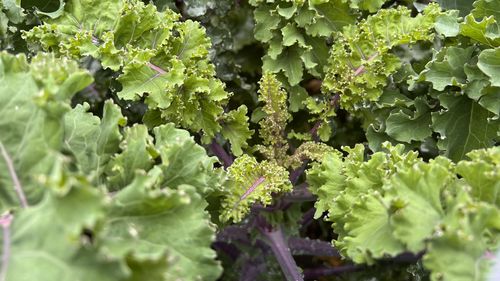
Close-up of leaves
University of Oldenburg / Ute Kehse
Research Top News Biology

How kale is affected by cold temperatures

Researchers from Oldenburg and Bremen investigated the effect of environmental factors on genetically different varieties of kale.


more: How kale is affected by cold temperatures
Bird sitting on a branch.
Research Excellence Strategy Top News Biology

A delicate compass
Many songbirds use the earth's magnetic field as a guide during their migrations, but radiowaves interfere with this ability. A new study has found an upper bound for the frequencies that disrupt the magnetic compass.

more: A delicate compass
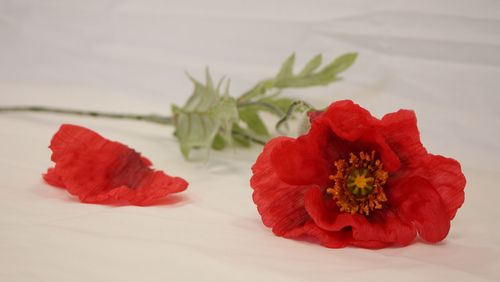
The photo shows an artificial poppy.
Campus Life Material Culture Biology

Flower stories in the university library
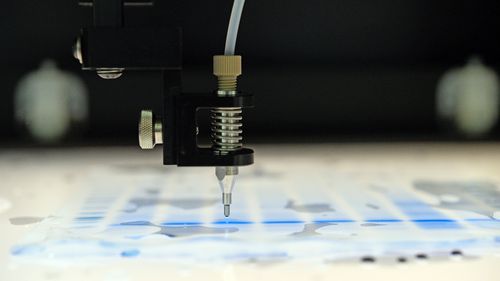
With an unusual and interdisciplinary exhibition, the Institute of Material Culture and the Institute of Biology and Environmental Sciences are making common cause - and drawing attention to a hidden treasure of the university.

more: Flower stories in the university library
Close-up of the described scene.
Research Top News Biology

Deciphering the inner workings of a bacterium
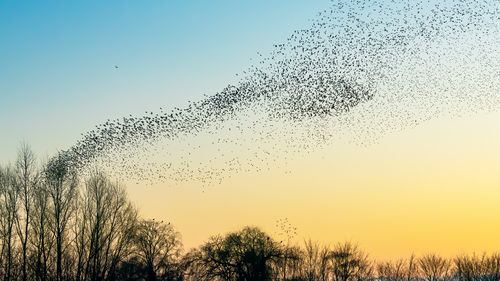
The metabolism of a key environmental microbe has been elucidated in detail by a team led by microbiologist Ralf Rabus. This holistic understanding allows to reliably predict the growth of the microbes.

more: Deciphering the inner workings of a bacterium
A flock of starlings against the winter evening sky.
istock / AGD Beukhof
Excellence Strategy Research Top News Biology

How animals find their way

The Collaborative Research Center "Magnetoreception and Navigation in Vertebrates” is going into its second phase: The German Research Foundation has granted the project funding for another four years.

more: How animals find their way
A flock of starlings can be seen as a cloud against the wintry evening sky.
Excellence Strategy Research Top News Biology

The sixth sense
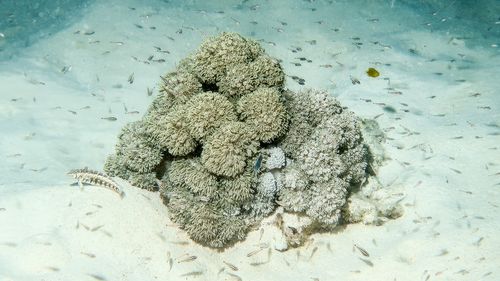
Many animals use the Earth's magnetic field for orientation. But exactly how they do this remains for the most part a mystery. In the Collaborative Research Centre "Magnetoreception and Navigation in Vertebrates", researchers are solving the puzzle.

more: The sixth sense
Underwater image of a coral with numerous small fish swimming around it.
Excellence Strategy Research Top News Biology

Navigation without sextant or GPS
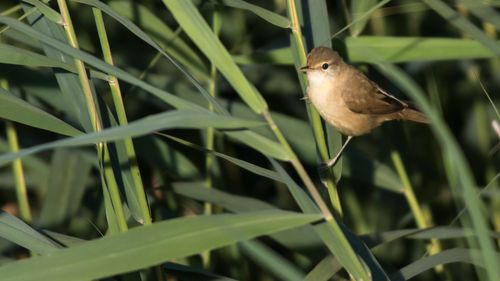
Fish migrations generally take place hidden from view. Researchers from the Magnetoreception Collaborative Research Centre at the University of Oldenburg are investigating how herring, sticklebacks and coral fish find their way in the sea.

more: Navigation without sextant or GPS
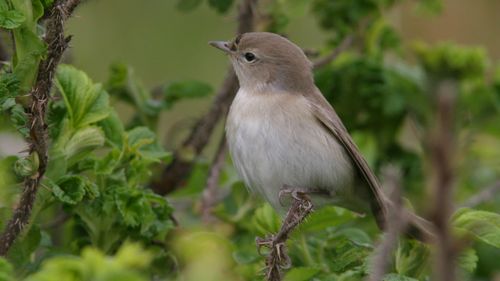
A small brown bird IS sitting among the reeds.
Top News Research Biology

A stop sign for songbirds
A new study published in Science Magazine has shed light on how birds navigate back to their breeding site after flying across two continents. Magnetic information seems to play a key role.

more: A stop sign for songbirds
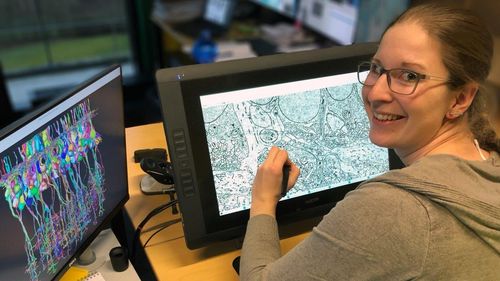
Photo of neurobiologist Anja Günther at work on the computer.
Excellence Strategy Campus Life Biology

A look at the details

Modern equipment, patience and perseverance are often important prerequisites for gaining new insights. Young scientist Anja Günther has accepted this challenge.

more: A look at the details
Enlarged view of the protein molecule
Excellence Strategy Research Top News Biology

Quantum Birds
New findings on magnetic sensing in birds are presented by an international team of researchers led by Oldenburg biologist Henrik Mouritsen. The results are published in the journal Nature.

more: Quantum Birds
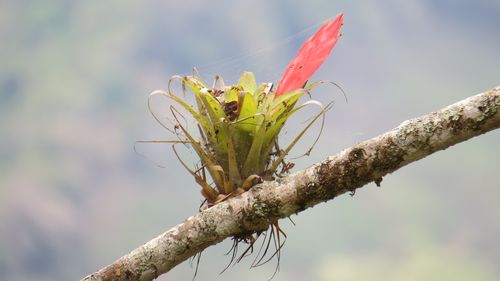
Close-up of a small bromeliad growing on a finger-thick branch.
Top News Biology

Defying the wind

What is stronger? The branches of trees in tropical rainforests or the roots of the plants that grow on them? To find out, biologists Helena Einzmann and Jessica Tay conducted experiments in the University's wind tunnel.

more: Defying the wind
Top News Biology

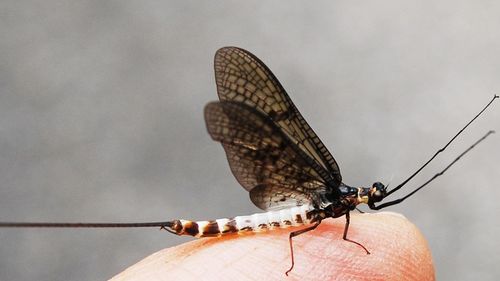
When the mayfly needs help moving
Can insects and other stream inhabitants be relocated from an ecologically intact body of water to a species-poor stream in order to improve the ecological quality there? Biologist Ellen Kiel and her team are investigating this.

more: When the mayfly needs help moving
Excellence Strategy Research Top News Biology

From bird migration to quantum chemistry

Henrik Mouritsen has been researching the magnetic sense of birds for more than 15 years. He has now summarised the current state of research in the journal Nature. In this interview, the neurobiologist talks about his fascination with birds and why basic research is so important.

more: From bird migration to quantum chemistry
(Changed: 30 Mar 2026)  Kurz-URL:Shortlink: https://uol.de/p60209en
Zum Seitananfang scrollen Scroll to the top of the page

This page contains automatically translated content.