Contact

Press and Communication

+49 (0) 441 798-5446

News feed of the news

https://uol.de/en/news/rss (XML)
Copy address and paste into feed reader

News articles

News search

A close-up of a krill shrimp against a dark background.
Carsten Pape / Alfred Wegener Institute
Research Excellence Strategy Top News Biology

Tracking tiny crustaceans on their long journey
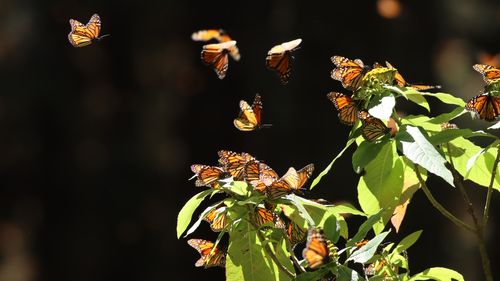
Antarctic krill cover vast distances during their migrations in the Southern Ocean. Researchers from the NaviSense Cluster of Excellence are setting up camp in Antarctica to investigate how these crustaceans navigate on their long journeys.


more: Tracking tiny crustaceans on their long journey
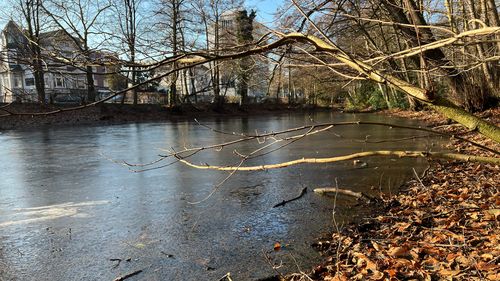
The picture shows the horse trough, a small body of water at Eversten Holz in Oldenburg. The water is frozen over and the trees have no leaves.
University of Oldenburg / Silke Rudolph
Top News Environmental Sciences Biology

What trees do for the urban climate

In Oldenburg, citizens can vote on 22 February on whether the city's tree protection statutes should be retained. In this interview, geographer Thorsten Balke talks about the special importance of trees for the urban climate.

more: What trees do for the urban climate
A woman is crouching in a meadow, with a drone standing in front of her.
University of Oldenburg/ Daniel Schmidt
Excellence Strategy Top News Biology

How light pollution disrupts orientation in moths

Light pollution poses a growing threat to moths. In her Lightstar project, which has been awarded a prestigious EU Starting Grant worth 1.5 million euros, zoologist Jacqueline Degen will investigate the underlying mechanisms.

more: How light pollution disrupts orientation in moths
Four zebra finches are sitting on a branch in an aviary, looking in different directions.
Markus Hibbeler
Research Excellence Strategy Top News Biology

Birds retinas function without oxygen

An international research team including neuroscientists Henrik Mouritsen and Karin Dedek has made a surprising discovery: Bird retinas – among the most energy-demanding tissues in the animal kingdom – operate permanently without oxygen.

more: Birds retinas function without oxygen
Aerial view of Latham Island: a potato-shaped piece of land surrounded by turquoise-coloured sea.
Shaked Palgi / Weizmann Institute of Sciences
Research Excellence Strategy Top News Biology

How fruit bats navigate in the wild

On a remote island in the Indian Ocean, an international team has observed the activity of compass neurons in the wild for the first time. Their study involved researchers from Oldenburg and has now been published in the journal Science.

more: How fruit bats navigate in the wild
A water flea in front of rainbow-coloured background.
Sebastian Neun / University of Oldenburg
Research Top News Marine Science Biology

Algae and water fleas in lakes: Light colour influences food webs

Phytoplankton is the basic food source for many aquatic organisms. A new study shows that the light spectrum is more important for these microalgae and for lake ecosystems than previously assumed.

more: Algae and water fleas in lakes: Light colour influences food webs
Close-up of a Bogong moth: A relatively large moth with closed wings sitting on a rock.
Ajay Narendra, Macquarie University
Research Excellence Strategy Top News Biology

Moths use stars and Earth’s magnetic field as a compass

Australian bogong moths are famous for their long-distance migrations. An international team including Oldenburg researchers has discovered that the insects use the stars as a compass during their annual journey to cool inland caves.


more: Moths use stars and Earth’s magnetic field as a compass
A small aeroplane stands on a meadow in front of a hangar, with trees and blue sky in the background.
University of Oldenburg
Excellence Strategy Campus Life Biology

Tracking birds, bats and bugs

In order to calibrate tiny radio transmitters, researchers from the Migration Ecology working group took to the skies. Their unique experiment was designed to enable more accurate tracking of migratory bird routes.

more: Tracking birds, bats and bugs
The picture shows Gudrun Massmann. She stands in a laboratory at a glass model box filled with sand. She has put her arm on the box and is smiling at the camera.
University of Oldenburg / Markus Hibbeler
Research Top News Marine Sciences Biology

Research on sandy beaches is being expanded internationally
The German Research Foundation is funding the „DynaDeep” project by Oldenburg hydrogeologist Gudrun Massmann with around five million euros for a further four years. A large part of the research will take place on Spiekeroog.

more: Research on sandy beaches is being expanded internationally
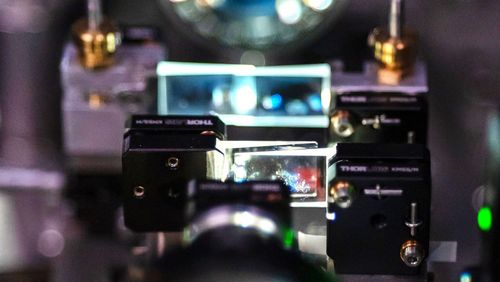
The picture shows a complicated test setup for an optical experiment. The laser light passes through two arrays of two wedge-shaped glass plates positioned closely behind each other.
Moritz Gittinger
Research Excellence Strategy Top News Physics Biology

Watching electron motion in solids
The rapid movements of electrons in solids or molecules can be analysed much more easily than before thanks to a development by researchers in Oldenburg. The team presents the new method in the journal Optica.


more: Watching electron motion in solids
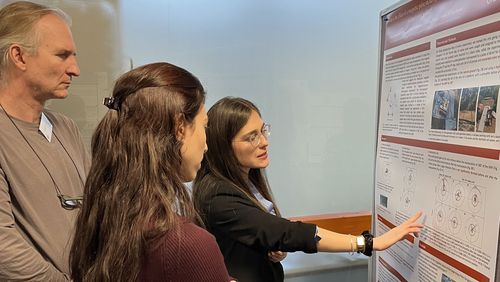
Two young women and an older man look at a scientific poster together and discuss it.
SFB 1372
Research Excellence Strategy Biology

Magnetoreception meets cutting-edge innovation

The first international symposium of the Collaborative Research Centre "Magnetoreception and Navigation in Vertebrates" attracted many international guests. The programme ranged from how moths navigate to exotic quantum materials and robots that fly like birds.

more: Magnetoreception meets cutting-edge innovation
University of Oldenburg / Christina Kuhaupt
Excellence Strategy Biology

Of birds and their compass

Henrik Mouritsen was on the US podcast Radiolab, chatting with host Annie McEwen about the idea that birds use a quantum compass to navigate and how they might visualize the magnetic field. 

more: Of birds and their compass
One of the men from the first picture is standing outside in front of a shattered window, in the background you can see the shelves with the old book spines again
Sergei Mosyakin
Ukraine Top News Biology

Research in times of war

Science is also suffering from the war in Ukraine. Botanist Dirk Albach explains how his colleagues in Kiev are coping with the restrictions.

more: Research in times of war
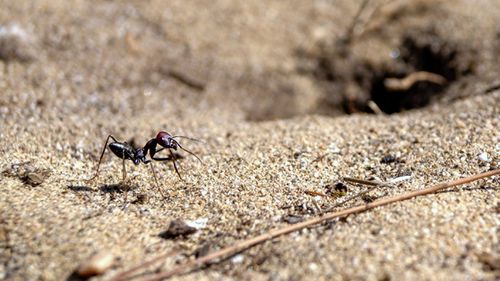
Close-up of an ant on sandy ground, with a hole in front of it.
Robin Grob
Excellence Strategy Research Top News Biology

Desert ants use the polarity of the geomagnetic field for navigation
Desert ants rely on a special component of the Earth's magnetic field to navigate. Their magnetic sense may be based on magnetic particles, according to a new study that has now been published in the journal Current Biology.


more: Desert ants use the polarity of the geomagnetic field for navigation
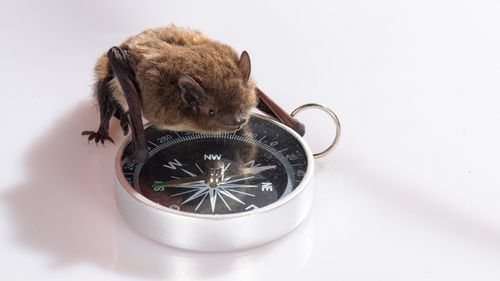
The picture shows a bat sitting on a compass.
Christian Giese
Excellence Strategy Research Biology

The inner compass

Many animals can perceive the Earth’s magnetic field, but corresponding sensory cells haven’t been located yet. Using sophisticated experiments and technology, several research groups are hot on the trail of this mysterious sense.

more: The inner compass
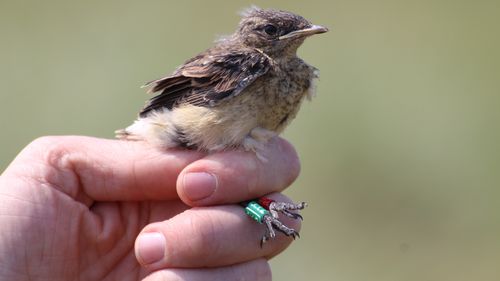
The picture shows a young wheatear. It is being held by a scientist and wears a small ring on its foot.
Heiko Schmaljohann
Excellence Strategy Research Biology

Migratory birds on a dangerous journey

Migratory species are particularly vulnerable to the effects of climate change, habitat loss and environmental pollution. Several research groups are joining forces to gain new insights into the behaviour of migratory birds.

more: Migratory birds on a dangerous journey
Georg Langebrake
Excellence Strategy Research Biology

Inspired by the animal world

In this interview, biologists Henrik Mouritsen and Miriam Liedvogel explain the importance of animal navigation and orientation for nature conservation – as well as for quantum technologies and autonomous vehicles.

more: Inspired by the animal world
Michael Winklhofer stands at the field emission scanning electron microscope
University of Oldenburg / Matthias Knust
Excellence Strategy Research Top News Biology

A whole new world of experimental possibilities
The university recently acquired a particularly powerful electron microscope, which is also available to external users. It is capable of imaging structures as small as 0.5 billionths of a meter.

more: A whole new world of experimental possibilities
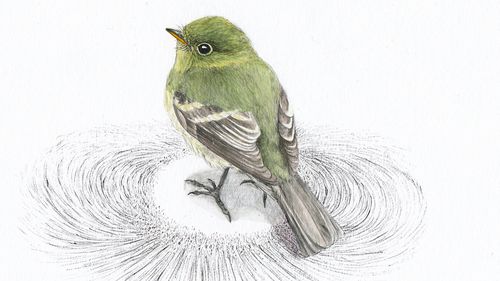
Drawing of a small green bird standing on a surface that looks like the field lines of the earth's magnetic field.
Corinna Langebrake
Research Excellence Strategy Biology

How evolution has optimised the magnetic sensor in birds

The magnetic sense of migratory birds is probably based on a special protein – this theory is supported by a new genetic study. A research team from the University of Oldenburg and the Institute of Avian Research found that the protein has been optimised through rapid selection.


more: How evolution has optimised the magnetic sensor in birds
Two ants crawl out of a hollow on a stone, the ground consists of sand and small stones.
Pauline Fleischmann
Excellence Strategy Research Top News People Biology

A biologist with a predilection for philosophy

Biologist Pauline Fleischmann researches desert ants and astonishing navigational abilities – both in the laboratory and in their natural environment. The insects are surprisingly good at orientating themselves in monotonous terrain.

more: A biologist with a predilection for philosophy
(Changed: 30 Mar 2026)  Kurz-URL:Shortlink: https://uol.de/p60209en
Zum Seitananfang scrollen Scroll to the top of the page

This page contains automatically translated content.