Groundbreaking ceremony for new University Medicine Oldenburg building
Groundbreaking ceremony for new University Medicine Oldenburg building
Groundbreaking ceremony for new University Medicine Oldenburg building
Research facilities and an anatomy department to be built in the Technology Park and completed by mid-2030
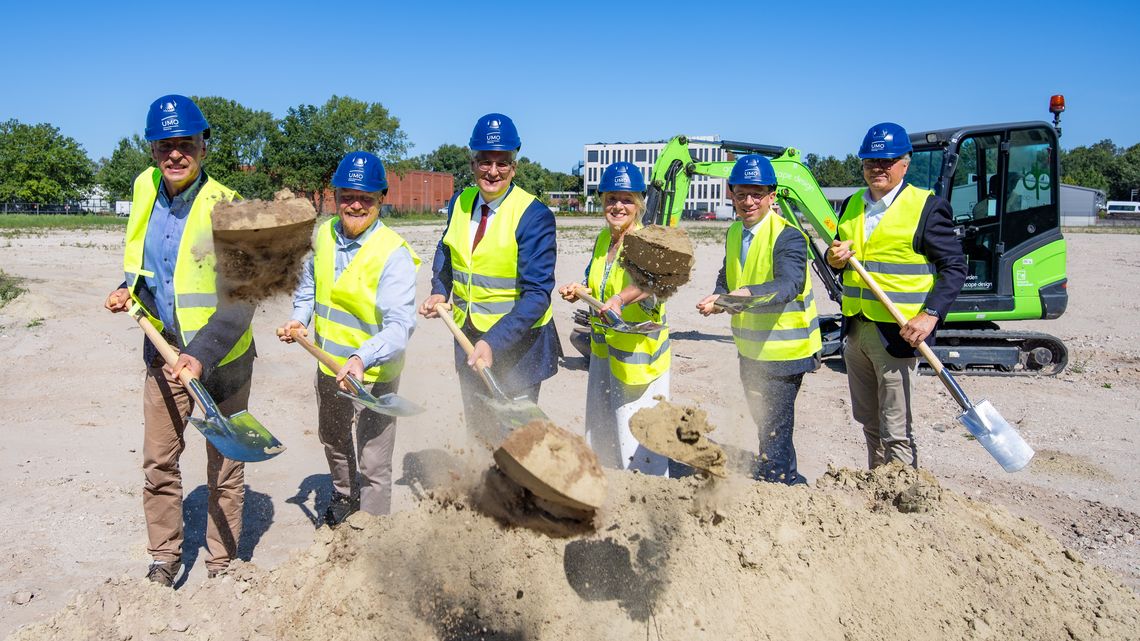
Today’s groundbreaking ceremony marks a turning point for both medical researchers and students of medicine at the University of Oldenburg. Attended by Lower Saxony’s Minister for Science and Culture, Falko Mohrs, the event celebrated the start of construction of the new University Medicine Oldenburg (UMO) buildings at the Technology Park.
In addition to research facilities, the first of the three planned building sections will also house a new anatomy department. The start of construction also marks the next stage in the development of University Medicine Oldenburg.
Minister Mohrs said: “With today’s groundbreaking ceremony, a new chapter begins for University Medicine Oldenburg: we as a state are making targeted and substantial investments here to create modern facilities for cutting-edge research and high-quality training for the doctors of tomorrow. This means that step by step, the University is finally acquiring the necessary physical infrastructure for its continued development. Not only students and researchers, but the entire healthcare system in Germany’s North-West region will benefit from this in the long term. The new building project represents a strong commitment by the state to Oldenburg as a centre of science and to the future of its University Medicine.”

Since 2012, when University Medicine Oldenburg was first founded, its staff and students have been teaching, conducting research and working in existing university buildings, rented premises dotted across the city, modular building containers and lab containers – even as the School of Medicine and Health Sciences steadily expanded. Now, in the first phase of construction on a site the size of three football pitches, a new building complex offering approximately 4,000 square metres of floor space will be created to provide urgently needed space for medical research. This section will also house the new anatomy department, where for the first time doctors in training at the University of Oldenburg will be able to use human bodies to study human anatomy. Up to now, they have had to make regular bus trips to Groningen for this purpose.
“We are delighted that construction of the first building section has now begun and will provide much needed teaching and research infrastructure for the University Medicine Oldenburg. Our special thanks go to the region, which has offered the University Medicine constant and unparalleled support in all matters – also in response to its urgent appeal for funding for the necessary facilities,” said Jörg Stahlmann, the University’s Vice President for Administration and Finance.
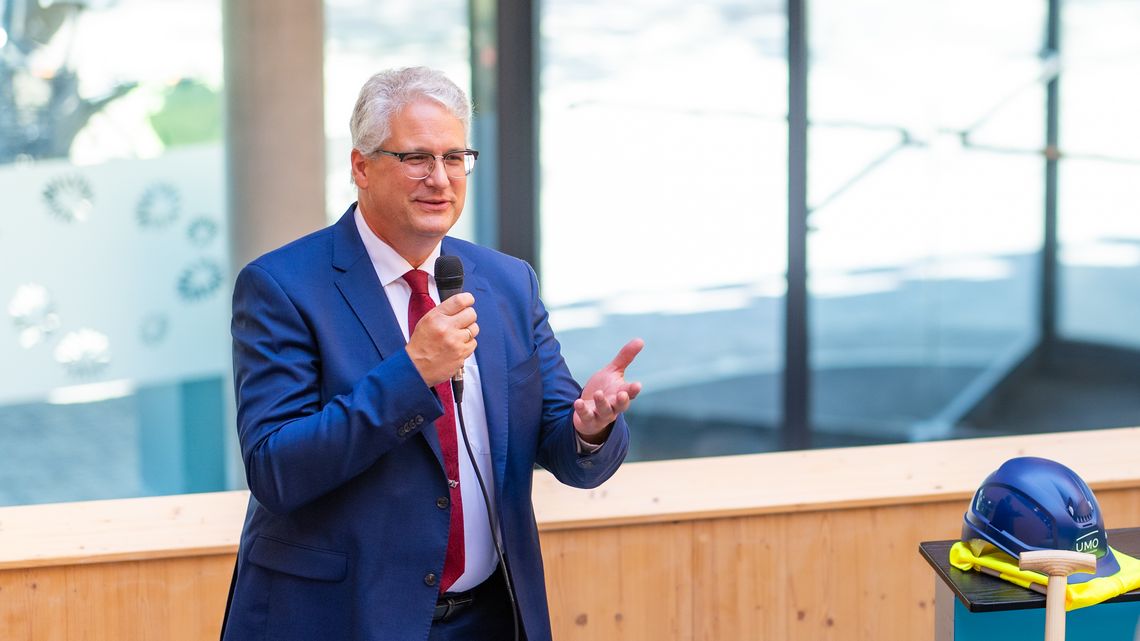
The City of Oldenburg is also among the key supporters of the building project. It secured a plot of land and sold it to the state in 2022, especially so that the new UMO building could be constructed there. “I am delighted that this farsighted decision is now bearing tangible fruits. Not only the students, but also people across the entire region, who will have access to better medical care in the long term, will benefit from the continued development of the University Medicine. The fact that 200 students per year will now begin their medical studies in Oldenburg underlines the growing importance of our University Medicine,” said Oldenburg’s mayor, Jürgen Krogmann.
The State Building Management Authority for the North-West Region (Staatliche Baumanagement Region Nord-West) is responsible for supervising this major project. “With the new campus for the University Medicine we are creating ideal conditions for scientific research and the training of future doctors,” said Cedrik Strüver, head of the authority’s Oldenburg Regional Office. “At the same time, we are sending a strong signal for sustainable construction, because the campus will be largely climate-neutral, making this a flagship project with an impact that reaches far beyond the region.” The architectural firm Gerber Architekten, based in Dortmund, designed the building.
The ceremony is also a special occasion for Prof. Dr Hans Gerd Nothwang, Dean of the School of Medicine and Health Sciences (School VI). “The groundbreaking ceremony marks another major milestone this year and, at the same time, symbolises the consistent and steady development of the UMO: with a new framework agreement, the state, the university and the hospitals recently put the medical faculty on a new organisational footing. This autumn is all about our first-year medical students, of whom there are 200 for the very first time,” he emphasised.
First construction phase: an overview
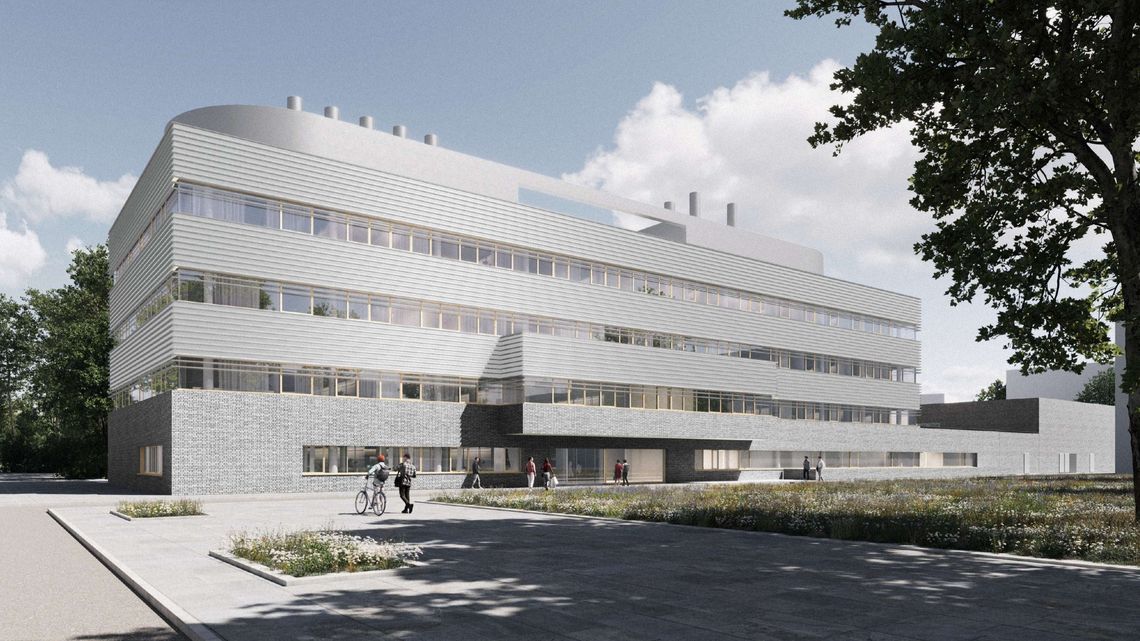
The first phase of construction will focus on a building comprising a basement, a ground floor and three upper floors. The basement will house multiple technical rooms, as well as providing sufficient space for more than 500 bicycles.
In addition to the foyer, the ground floor will house the anatomy department, which will be equipped with 13 examination tables at which students can learn all about human anatomy using donated bodies, as well as other equipment such as refrigeration units and dissection tables. A Body Donation Office will also be located here. This will be the first point of contact for people wishing to donate their bodies for medical teaching and research after they pass away.
The space in the upper floors will be occupied by various research units of the Department for Human Medicine along with their labs. Once completed, around 150 people will work in the building.
A façade featuring beige clinker brick at its base and metal elements on the upper floors will define the architectural style of the elongated building. A large seminar room that can accommodate 50 people will jut out, balcony-like, over the main entrance of the building. An energy control centre which supplies energy to this and the two other building sections in the project will be located next to the core building. A considerable proportion of the electricity for the building will be generated by a photovoltaic system on the planted green roof. Geothermal energy and heat pumps are to provide energy for heating.
The first phase of construction is scheduled to be completed by mid-2030. It will entail an investment of 85 million euros, around 18 million of which the University itself will provide and put towards the anatomy facilities.
The other buildings
As work on the first part of the project begins at the Technology Park, the planning for the two other building sections is also progressing. The construction of a second research building with around 3,400 square metres of usable floor space is scheduled to begin in 2029 and end around 2032. The costs are expected to amount to 76 million euros. The buildings completed in the first and second construction phases will provide new space for numerous clinical and non-clinical research groups from the Department for Human Medicine, whose subjects range from surgical and internal medicine to paediatrics and adolescent medicine. This will allow existing temporary accommodation solutions to be phased out or made available to new research groups. As part of the second construction phase, a multi-storey car park with around 130 parking spaces will also be built on the site.
The buildings of the third phase of construction will provide additional space for the teaching of medicine. A cafeteria will also be built on this site. UMO aims to open the building, which will feature 5,400 square metres of usable floor space, in the mid-2030s. According to current estimates, the project will cost some 77 million euros.
Looking back:
The road to today’s groundbreaking ceremony has been a long one. Ever since the medical faculty was first founded in 2012, the University has repeatedly made clear that a growing university medicine institution requires its own research and teaching buildings. An external report had already pointed to a significant shortage of space back then. When the government of the State of Lower Saxony initially refused to allocate funds for a new building in 2020, an unusually broad alliance comprising local authorities, the local business community and both academic and civil society structures formed across the entire region. A few weeks later, the state agreed to fund the first phase of construction. In view of the further expansion of the University Medicine and the decision to admit 200 medical students per year on a permanent basis, funding for the other buildings was also finally secured.
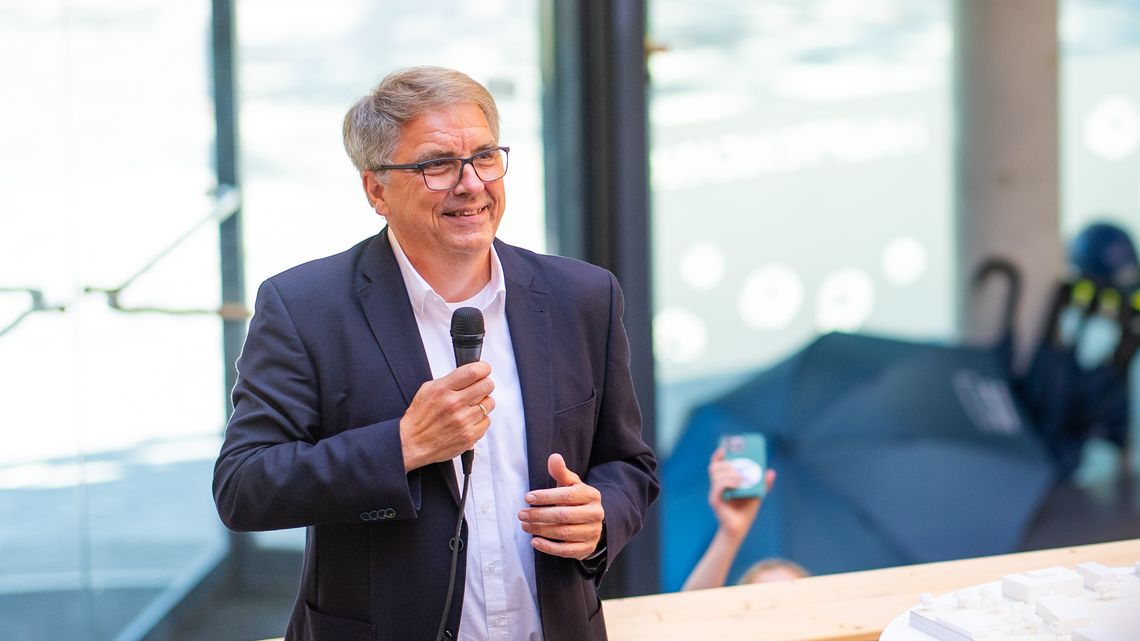
Jürgen Krogmann,
Mayor of Oldenburg
„Not only the students, but also people across the entire region, who will have access to better medical care in the long term, will benefit from the continued development of the University Medicine. The fact that 200 students per year will now begin their medical studies in Oldenburg underlines the growing importance of our University Medicine.“
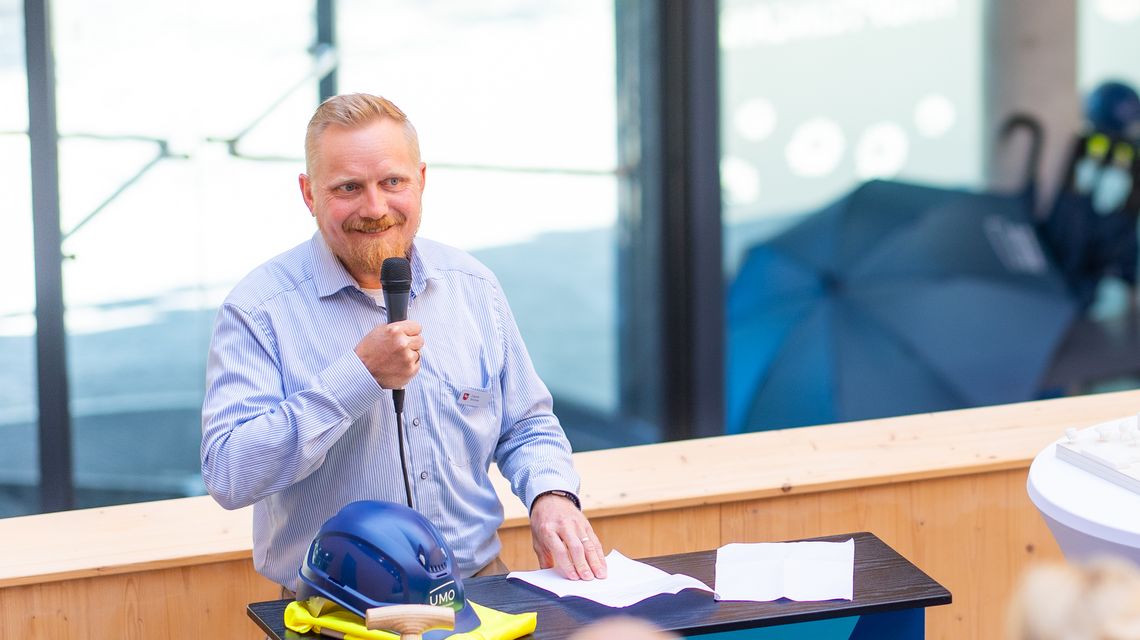
Cedrik Strüver,
State Building Management Authority for the North-West Region, Head of Oldenburg Regional Office
„With the new campus for the University Medicine we are creating ideal conditions for scientific research and the training of future doctors. At the same time, we are sending a strong signal for sustainable construction, because the campus will be largely climate-neutral, making this a flagship project with an impact that reaches far beyond the region..“
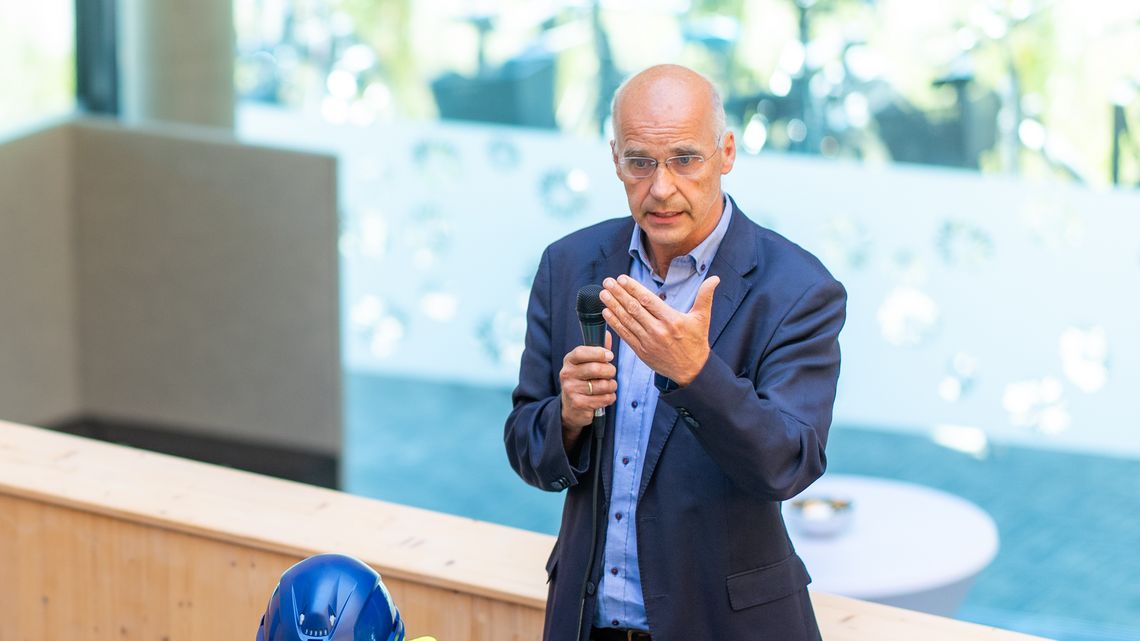
Prof. Dr. Hans Gerd Nothwang,
Dean of the School of Medicine and Health Sciences (School VI)
„Dean of the School of Medicine and Health Sciences (School VI)The groundbreaking ceremony marks another major milestone this year and, at the same time, symbolises the consistent and steady development of the UMO: with a new framework agreement, the state, the university and the hospitals recently put the medical faculty on a new organisational footing. This autumn is all about our first-year medical students, of whom there are 200 for the very first time.“

Prof. Dr. Anja Bräuer,
Director of the department of anatomy
"The new building provides an excellent foundation for the further development of anatomy and anatomical research in Oldenburg. I am particularly pleased that, with this new building, we are creating a space where modern teaching, innovative research and international collaboration come together."