
How is our view on nature changing?
How is our view on nature changing?
How is our view on nature changing?
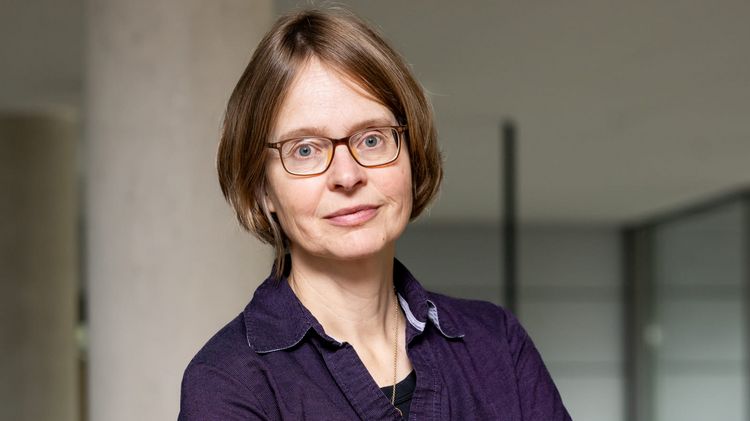
Our relationship with nature is constantly changing. Myriam Gerhard, professor of Critical Philosophy of Nature, encourages an open debate about our attitude towards nature.
"Until the early nineteenth century, it was predominantly theologians and philosophers who determined how nature was interpreted, and it was generally construed as something beyond the influence of human activity. That all changed from the middle of the century onwards, when the natural sciences began to emancipate themselves from philosophy and theology. The rationale that enabled this transition was that an objective understanding of nature could only be achieved using exact scientific methods such as reproducible experiments and observations. It was a watershed moment, because the objectification of nature increasingly led to its instrumentalisation and its being perceived primarily as a resource.
The twenty-first century has brought a new shift in our perception of nature. Particularly with regard to the climate crisis, we must ask ourselves if things that are now technologically and scientifically possible should really be translated into action. One example here is geo-engineering, in other words, large-scale human interventions aimed at removing carbon from the atmosphere. Some believe this could offer a practical alternative in case we fail to meet our climate goals. For others, further interference with nature would be a fatally misguided attempt to turn the cause of the problem into its solution. Critics warn against unforeseeable consequences for nature and fear that geoengineering would divert attention from the economic and societal causes of the climate crisis and disincentivise efforts to reduce greenhouse gas emissions.
This example shows that we are once again faced with the question of how we perceive and interpret nature: is it an object, a resource, a tool? Or does it have an inherent value beyond being "useful"? The idea here is not to make nature a legal subject, but rather that we respect it as something that stands outside such categorisations. My hope is that in future we will see nature aesthetically as something "sublime", and perhaps, too, as something that is ultimately beyond our grasp – not just as something that brings good returns on investment."