
Courses
Kontakt
Institutsdirektor
Geschäftsstelle
Contact
Director of the Institute
Administrative Staff
Address
More information about the department is provided in german language.
Courses

The registration process
The registration process
Once the course catalogue for School III / German Studies has been approved, it will be published on Stud.IP.
You can view the modules offered on your degree programme in the course directory on Stud.IP. (It is important that you select the relevant semester from the drop-down menu on the left-hand side).
You make your selection of which modules you wish to take in the next semester in accordance with the examination regulations or your study plan. Please note the sequence of modules, which you will find in the relevant subject-specific appendices to the examination regulations.
- The examination regulations can be found at: uol.de/studium/pruefungen/
- The current study plans for your degree programmes can be found at: uol.de/studium/studienangebot
Lectures: As there is generally no limit on the maximum number of participants for lectures, registration is usually on a first-come, first-served basis.
For all other courses (seminars, tutorials, colloquia), a maximum number of participants is set (usually 40 participants in the Bachelor’s programme; usually 25 participants in the Master of Education programme).
Enrolment for these courses takes place via the priority-based enrolment procedure (random draw).
In some modules, attendance at seminars, tutorials, etc. is linked to attendance at lectures in the current or previous semester. Please note the ‘enrolment rules’ specified inStud.IP.
If the number of students registered for a course exceeds the maximum number of participants, places will be allocated at random (by lottery).
When allocating places on a course, priority is given to students who are in higher academic semesters than those specified in the study plan for this module, or who are eligible for the hardship provision (see below).
Students in the academic semesters for which the module is intended have a significantly higher probability of securing a place on the course than students in earlier academic semesters.
Please refer to the ‘Enrolment Rules’ specified in Stud.IP (see below) for the dates on which places on the modules are allocated.
Once places on courses have been allocated via the priority procedure, you have the option to switch between courses within a module, provided that the course capacity allows it. This is usually possible during the first week of the course period for the respective semester.
Important: Please withdraw immediately from courses that you will not be attending.
Priorities
Places on courses are no longer allocated on a ‘first come, first served’ basis (where the quickest to register gets a place), but via a priority-based allocation system, which gives you far more opportunities to put together a sensible timetable.
You no longer need to register for a course at a specific time. There are registration periods for modules during which you can register for eligible courses within a module via Stud.IP for the lottery and set your priorities; the time at which you register does not affect your chances. After the relevant lottery date, you will be notified as to whether you have been allocated a place on the courses.
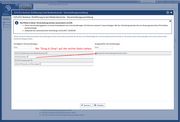
How to set your priorities:
Hardship cases
General information on the hardship provision
If you wish to claim hardship status, please follow the procedure below when registering for German Studies modules:
- Please sendan email to between 1 July and 31 August at the latest ( for the following winter semester) or from xx.xx to xx.xx (for the following summer semester), i.e. before the course registration period begins, to with the subject line ‘Hardship case application’, in which
- you informally request that a hardship provision be applied in your case;
- you must provide your Stud.IP username. Please note: this is not your email address. You can find your username by logging into Stud.IP, clicking on ‘Profile’ and then on ‘Personal details’. It will be in a format such as “EMustermann” or “EMustermann1”. The username is required so that we can uniquely identify you in Stud.IP.
- Please ensure you attach supporting documents (birth certificate, disability card, etc.) to this email to prove your hardship case.
- Please note: Incomplete or late proposals cannot be considered!
Otherwise, please enrol in the German Studies courses in the usual way (see the instructions here). You will be added to a list in Stud.IP that is not visible to the public, and this list will be integrated into the registration process in such a way that your course preferences (see description of the registration process) are given the highest priority.
A new proposal must be submitted for each semester!
Please note:
A long journey to university or employment cannot be considered a case of hardship!
There is no general entitlement to have a hardship application considered; this depends, amongst other things, on the available capacity in the courses.
This application applies to German Studies modules offered as part of the degree programmes provided by the subject. For other subjects, please enquire with the relevant department or School regarding their specific regulations. (All relevant information regarding the educational studies modules in the PB can be found at https://uol.de/fk1/studium/bildungswissenschaftliches-curriculum/organisation-der-module.
Childcare
If you are looking after one or more children aged 14 or under in your own household, you may be eligible for hardship provision. Please follow the procedure set out under ‘General information on the hardship provision’ when registering for German Studies modules.
Care
If you are caring for parents, a spouse, siblings, grandparents or children, you may be eligible to claim hardship status. Please follow the procedure set out under ‘General information on the hardship provision’ when registering for German Studies modules.
Illness
If you are suffering from a long-term illness, you may claim hardship status. Please follow the procedure set out under ‘General information on the hardship provision’ when registering for German Studies modules.
Severe disability
If you have a severe disability, you may claim hardship status. Please follow the procedure set out under ‘General information on the hardship provision’ when registering for German Studies courses.
Late admission to a degree programme
Have you been granted admission to the German Studies programme late? First of all, we would like to congratulate you on securing a place on the German Studies programme!
As your admission was delayed, we would ask you to contact the Institute for German Studies by email ( germanistik@uol.de ) as soon as possible, even if you have not yet received your Stud.IP login details.
If possible, please include your telephone number in your email and let us know whether you already have access to Stud.IP. We will either contact you by telephone or, if you already have access to Stud.IP, arrange a consultation appointment with you by email.
Please include your timetable with your email.
If you have been granted admission to a higher semester, please also send an overview of any modules you have already completed at other universities that may have been credited. It is sufficient to provide the module numbers in an overview in accordance with the Oldenburg examination regulations following credit transfer.
If the question of credit transfer has not yet been clarified: the contact person at the Institute for German Studies for this matter is
Prof. Dr Jörg Peters.
(The above information applies to German Studies. For modules in Educational Studies – area of specialisation PB – you can find all the relevant information at uol.de/fk1/studium/bildungswissenschaftliches-curriculum/organisation-der-module.)
Last academic term
‘Final semester’ means:
You are
– in a Bachelor’s programme, at least in your 6th semester; or
– in a Master’s programme, at least in your 4th semester
and will complete your degree by the end of the semester with 180 CP (Bachelor’s, including the Bachelor’s thesis) or 120 CP (Master’s, including the Master’s thesis).
- No application is required!
The registration process is set up so that students in higher semesters are automatically given priority.
Please therefore register for the German Studies modules in the usual way. If, having exhausted all the enrolment options permitted by the examination regulations applicable to you, you have still not secured a place, please send an email () during the clearing phase at the end of March. Please email your Stud.IP timetable and an overview of all modules you have completed so far in German Studies (the module number is sufficient)
The dates for the clearing phase will be published on this page.
Students on joint degree programmes
If you are a partner university student – that is, if you are studying at the Universities of Oldenburg and Bremen – you may be eligible to claim hardship status. Please follow the procedure set out under ‘General information on the hardship provision’ when registering for German Studies modules.
Waiting lists
Waiting lists are set up for each course with limited enrolment; these are usually restricted to a specific number of places. If you have not been allocated a place through the ballot system, you may still enrol in courses that have not filled up through the ballot system until the registration deadline.
Students on a waiting list may attend the first session of the course, provided they are on the waiting list, but must be aware that a decision on whether they may participate on a permanent basis will only be made after the first session. It is therefore strongly recommended that you look for an alternative course or module in good time.
During the first week of the semester, lecturers of courses with limited enrolment will check who is absent from the course without having at least contacted the lecturer by email to express their interest. These students will be removed from the course or from the waiting list after the first session. The rule regarding the expression of interest therefore also applies to students on the waiting list (Departmental Council resolution of 6 November 2019).
The following applies to advanced modules: students who are absent from the first session of at least one of the two compulsory components of an advanced module without having signalled their interest will be removed from the module.
After the first session, students on the waiting list who have indicated their interest in the course to the lecturer once by email will move up to fill the vacated places, in the order of their placement on the waiting list, provided there are no further cases of hardship to be taken into account. Subsequently, i.e. after the first session of the respective course and at the latest shortly before the second session, the relevant waiting list will be deleted! Students who were on the waiting list will be informed by email that they have been removed from it. From the second session onwards, only students on the regular attendance list may attend the course.
Students who are enrolled in a course but are no longer interested in attending are asked, in the interests of fairness, to withdraw immediately so that students on the waiting list can take their place. (In the case of advanced modules, please do not forget to remove yourself from the corresponding tutorial or the second corresponding seminar!).
Students who are not on either the attendance list or the waiting list for a course during the first week of the term – because there are no more places available – are not permitted to attend the course in question.
FAQs & Tips on the Registration Process
Which modules am I allowed/required to take?
Please refer to the subject-specific appendix to the relevant Bachelor’s or Master’s examination regulations (M.Ed. G; M.Ed. HR; M.Ed. Gym; M.Ed. Wipäd; M.Ed. Sopäd; M.A. German Studies; M.A. German as a Foreign Language/German as a Second Language). There you will find all the relevant information regarding course enrolment.
Please note the guidelines on the sequence of modules when enrolling.
Please note the following: The Institute for German Studies allocates a place to every student in courses in accordance with the modules to be taken as set out in the relevant subject-specific appendix (FSA) for German Studies/German. However, the Department of German Studies cannot guarantee places on your preferred courses. If you have not been allocated a place on your preferred course or in your preferred module, please switch to another course or module that you are permitted to take in accordance with the FSA applicable to you.
How do I enrol on German Studies modules?
Places on German Studies courses are allocated via a priority-based lottery system, which means it is no longer necessary to be sitting at a computer the moment registration opens.
Seminars, tutorials, practicals and colloquia have limited enrolment in accordance with the university’s quantitative teaching standards set by the Presidential Board.
We have provided detailed information on the registration procedure here.
Please read the information on the linked page and all the details on this page very carefully. Here you will also find a table showing the exact registration times for each module.
Do I have to be sitting at my computer at a specific time to log in?
No. There are registration periods for modules during which you can register for eligible courses within a module via Stud.IP for the allocation process and set your priorities; the time at which you register does not affect your chances. After the relevant allocation date, you will be notified as to whether you have been allocated a place on the courses.
How do I use the option to set priorities?
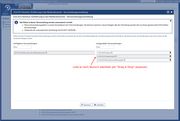
Select the module session you would most like to attend and place it at the top of your priority list in Stud.IP (Priority 1).
Then select the session you would like to attend in the event that you are not allocated a place in the session with the highest priority during the allocation process, and move it to second place on your priority list.
Repeat this process for the remaining courses until you have assigned a priority to all courses offered within the module.
You should only exclude courses that clash with courses in your other subject, the PB, or courses you have already enrolled in within the German Studies programme. Otherwise, you risk not securing a place in the module at all.
How can I improve my chances of getting a place on a course?
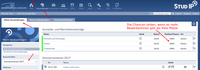
You can see which courses are particularly ‘in demand’. Stud.IP shows you how likely you are to secure a place on a specific course that you have selected as a priority. If, for example, ‘50% chance’ is displayed, this means that 80 people are interested in the selected AM seminar, which has 40 places, and have set it as Priority I on their Stud.IP list. Try to choose courses that are not yet overbooked, if possible!
What happens if I don’t get a place anywhere in the lottery?
Don’t panic! It is true that you might be unlucky in the allocation process. But firstly, there are often alternatives: for example, if you haven’t secured a place on any ger221 modules, most students can choose ger211 instead.
Secondly, depending on the module, you can still enrol in courses that haven’t filled up via the lottery system until the end of the relevant registration period.
Thirdly: if you have what seem to be insurmountable timetable problems, please contact the by email.
Note for first-year students (applies only to the winter semester): Please contact the by email if you have any questions regarding the clearing process.
I am unable to attend the first meeting – what do I need to bear in mind?
Have you been allocated a place on a course or module but are unable to attend the first session? If so, please note the following:
During the first week of the semester, lecturers teaching courses with limited enrolment will check who is absent from the course without having at least contacted the lecturer by email to indicate their interest. These students will be removed from the course.
The following applies to advanced modules: Students who are absent from the first session of at least one of the two compulsory components of an advanced module without having signalled their interest in this way will be removed from the module. In accordance with the Institute Council resolution of 6 November 2019, this also applies from the 2020 summer semester onwards to students on a course’s waiting list. (Latest Institute Council resolution on this procedure: 25 June 2025).
In addition, the rules on active participation set out in Section 2(1) ‘Active Participation (in accordance with Section 9(5) of the new BPO)’ of Annex 9, the subject-specific annex for German Studies to the BPO, apply.
I no longer wish to attend an event – do I need to do anything?
If you are registered for a course but are no longer interested in attending, please withdraw immediately so that your fellow students on the waiting list can take your place. In the case of advanced modules, please do not forget to withdraw from the corresponding tutorial or the second corresponding seminar. Withdrawal from the corresponding tutorial or seminar does not happen automatically!
Tips
- ALWAYS try to list several options (rank them in order of priority!). This will significantly increase your chances!
- Where possible, enrol in courses where your chances are between 75–100 per cent. The higher the chance, the greater the likelihood that you’ll secure a place!
- ALWAYS withdraw immediately from courses that you’ve been allocated to but won’t actually be attending! Please check for timetable clashes, as Stud.IP does not take these into account during the allocation process!
- Please be open to alternatives if you are unable to secure a place on your preferred module.
- You do not need to be sitting at your computer right at the start of the registration period. You can register right up until the allocation process begins. Please refer to the table of registration deadlines for the time window between the opening of registration and the start of the allocation process.
- Do not enrol in too many modules (“just to have a go…”). By doing so, you’re taking up places that others really need!