
research
Contact
Director of the Institute
Administrative Staff
Address
More information about the department is provided in german language.
research
Online commentary on Michael Ende’s *The Neverending Story* (1979)
(Duration: 2026–2029)

DFG project
Project leader: Prof. Dr Thomas Boyken
Research assistant: Dr Sarah Gaber
Collaborators: Prof. Dr Klaus Müller-Wille (University of Zurich), Prof. Dr Gerhard Lauer (University of Mainz)
Funding: DFG
Funding period: February 2026 to January 2029
Building on the emerging field of Michael Ende research, the project aims to produce a digital commentary on *The Neverending Story*. At present, there are no editions of Ende’s texts that meet the standards of textual criticism. This applies more broadly to German-language children’s and young adult literature. As a first step, the project is exploring what a commentary for a young adult novel might look like. In a second stage, the various preliminary drafts and variants held at the German Literature Archive in Marbach and the International Youth Library in Munich will be documented and analysed from a text-genetic perspective. These will also be made available on the project website for further research. Insights into the text’s genesis will be incorporated into the line-by-line commentary.
The project also addresses gaps in research on German-language children’s and young adult literature: for instance, it provides an opportunity to reflect upon and test the standards for a annotated digital edition of children’s and young adult literary texts. Furthermore, the project can shed light on how to produce scholarly commentaries on texts subject to copyright that are both useful for research and digitally accessible. In this respect, the project may also offer an answer to the question of how to deal with copyright-protected texts from contemporary literature within the framework of digital edition and commentary projects.
Biopolitics in Vienna’s cultural pages during the interwar period. Close readings and quantitative analyses of newspapers
(Duration: October 2025 to September 2028)

DFG project
Project leader: Prof. Dr Urte Helduser
Contributor: Wiebke Gärtner
Collaborating partners:
Prof. Dr Roland Innerhofer (Vienna/Linz)
Prof. Dr Nils Reiter (University of Cologne)
Funding body: DFG, FWF (Weave)
Project duration: October 2025 to September 2028
This DFG-funded research project examines the arts and culture sections of Viennese daily newspapers from the interwar period from the perspectives of literary history and the history of knowledge, utilising methods from the digital humanities and computational linguistics. The centre of the research is biopolitical knowledge, in particular discourses on eugenics, hygiene and physical culture, which were formative for the media culture of modernity. The arts and culture sections of Viennese daily newspapers are of particular significance in this context, as the Austrian capital was a centre for medical and biological research and its popular dissemination during the interwar period, and served as a socio-political laboratory for the reform projects of the Social Democratic local government of ‘Red Vienna’. The project will conduct a comparative analysis of the two leading Viennese daily newspapers of the early 20th century, which played a defining role in political and cultural life: the *Arbeiter-Zeitung* and the *Neue Freie Presse*, thereby examining the cultural and ideological tensions between Austro-Marxism and the liberal-bourgeois camp.
Particular focus is placed on the literary texts published in the newspapers. Novels and short stories by authors such as Joseph Roth, Leo Perutz, Veza Canetti, Gina Kaus, Rudolf Brunngraber, Karel Čapek, Karl Schönherr and others reflect, in a dimension hitherto scarcely explored, on contemporary discourses on eugenics and physical culture. The combination of the history of knowledge with media- and genre-related perspectives on the literary supplement is intended, not least, to shed light on the aesthetic dimension of biopolitical knowledge in early 20th-century modernity.
The digitisation of the two newspapers, carried out by the Austrian National Library as part of the project, will result in an extensive digital text corpus, which will then enable methods from computational linguistics and the digital humanities to be utilised for data-driven research in the history of knowledge.
Acoustic indicators of cognitive load in multilingual language use within local language communities
(Duration: 2025 to 2028)
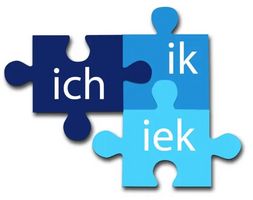
DFG project, DFG PE 793/5-1
Project leader: Prof. Dr Jörg Peters
Research Associates
Sater Frisian, spoken in the north-west of the Cloppenburg district in Lower Saxony, is the last remaining variety of East Frisian and one of the most endangered minority languages in Europe. Historically, Sater Frisian has never had significantly more than 2,500–3,000 speakers. The current threat stems from the fact that Sater Frisian, which is now spoken almost exclusively within the family, with neighbours and amongst the closest circle of friends, competes with High German and Low German and is experiencing a dramatic decline in transmission to the younger generation.
The project seeks new ways of assessing the vitality of Sater Frisian, focusing on factors that might hinder the establishment of this language as a family language. The starting point is the assumption that, for a minority language acquired in a multilingual context, language proficiency alone is not sufficient to ensure its intergenerational transmission. An equally important factor is likely to be the cognitive load associated with the use of this language. If the use of a minority language is accompanied by an increased cognitive load, the likelihood of this language becoming established as a family language is likely to decrease, despite existing language proficiency. To measure the cognitive load involved in the use of Sater Frisian and its contact languages, acoustic measures of voice quality and speech fluency are collected; these have been shown in psychological research, as well as in research on multilingualismand foreign language research. Particular attention will also be paid to the relationship between cognitive load and age, language proficiency, language dominance, and the speakers’ social and linguistic relationships with other members of their local language community.
New approaches will also be explored in the context of data collection. Instead of a representative survey and a public call for participants – which primarily attracts speakers who consider themselves sufficiently competent – the aim is to systematically identify family networks, which may be spread across one or more households. Such an approach not only allows for the recording of a broader spectrum of proficiency, but also the identification of structural characteristics of family networks, including the communicative networks constituted by interactions between network members in one or more languages. This analysis should enable the project to provide valuable information for future language preservation measures. Furthermore, the project aims to provide extensive audio data that can be used to train AI-supported dialogue systems for the purposes of language teaching and revitalisation.
Narratives of Female Resistance in Medieval German Literature
(Duration: 1 November 2025–31 October 2027)
Dr Britta Bußmann in co-operation with Prof. Dr Anja Becker (University of Bremen, principal investigator and lead spokesperson)
Co-operation project between the University of Bremen and the University of Oldenburg; funded by the University of Bremen’s Central Research Funding Office, Funding Line 06 A: Exploratory projects on new topics
Participants: Prof. Dr Anja Becker (University of Bremen) (principal investigator and lead coordinator), Dr Britta Bußmann (second coordinator), Prof. Dr Albrecht Hausmann (University of Oldenburg), PD Dr Sonja Kerth-Wittrock (University of Bremen)
The project examines Middle High German literary narratives of female acts of resistance, both in terms of their narrative content and form, as well as their intra-literary functions and their cultural-historical significance as narratives.
The contemporary theme of resistance has many facets that remain invisible if resistance is reduced to the realm of politics and active action. Women have resisted at all times, as literary texts bear witness to, including in the Middle Ages. However, this topic has so far been overlooked in literary research, which is why the first step is to bring female resistance in medieval literary texts to light and to map out its dimensions. In what contexts, by what means and with what outcomes do female characters in Middle High German literature offer resistance? As these are literary narratives of acts of resistance, the techniques and methods of storytelling must also be examined. Who narrates, how, and through which patterns of female resistance? These narratives are usually part of a larger narrative context; consequently, we must examine their functions in relation to the overarching framework of meaning within the literary work: do they offer exemplary, alternative or even subversive interpretations of meaning? Do they, moreover, offer meaning-making interpretations and patterns of thought to medieval (and contemporary) culture? If so, do these reinforce existing beliefs, or do they open up new ways of understanding, or even new cultural narratives?
The project not only explores an innovative field of research at the intersection of medieval studies and literary studies, but also constitutes a central element of an interdisciplinary research initiative by Department 10 at the University of Bremen on ‘Constellations of Refusal’. A collaborative research project is currently being prepared in this regard. Within this framework, the collaborative project plays a key role. The exploratory project on female resistance therefore aims to secure external funding (planned through the DFG).
The Post-War Period and the Middle Ages: Children’s and Young Adult Literature (1945–1970)
(Duration: 1 April 2022 to 15 August 2027)
DFG project
Project leader: Prof. Dr Thomas Boyken
Research assistant: Sofie Dobbener
Although research into post-war literature has enjoyed a tremendous boom over the last ten years, one sub-field has so far remained largely overlooked: children’s and young adult literature. This is highly regrettable, as a focus on the literary ‘pinnacle’ overlooks the breadth and diversity of the literary field. This project makes a decisive contribution to exploring this field. Using the example of medieval themes and motifs in children’s and young adult literature between 1945 and 1970, the project examines the interplay between literary construction and integration into socio-cultural contexts of utilisation. It is precisely through this motif/theme that the diverse processes of exchange between adult literature and children’s and young adult literature can be clearly demonstrated. The research project complements a different view of post-war children’s and young adult literature with a shift in perspective at a systematic level: Children’s and young adult literature is regarded as a ‘hybrid form’ comprising both artificial-aesthetic and socio-cultural practices. The aim here is a praxeological definition of children’s and young adult literature as an aesthetic-social practice.
As part of the project, a database has been created which brings together the bibliographic data of the medieval narrative children’s and young adult literature identified in the research and allows this data to be filtered.
Pamphlet literature. 19th-century Oldenburg fair-ground prints in their cultural and media context
(Duration: October 2023 – December 2026)

Research project: Pro*Lower Saxony / Cultural Heritage
Project leader: PD Dr Christian Schmitt
Cooperation partner: Oldenburg State Library
This research project, funded by the State of Lower Saxony (Pro*Niedersachsen / Cultural Heritage) aims to digitally catalogue, conduct literary research on and make accessible a unique part of Lower Saxony’s cultural heritage: a collection of 19th-century small prints held in the holdings of the Oldenburg State Library. Funded by ‘zukunft.niedersachsen’, the joint research funding programme of the Lower Saxony Ministry of Science and Culture and the Volkswagen Foundation.
Variation in the use of competent writers
(Duration)
DFG project
Project leader: Prof. Dr Kristian Berg
Variation is now taken seriously in almost all linguistic sub-disciplines and studied as a phenomenon in its own right; this is only true to a limited extent in graphemics. In particular, there are hardly any relevant studies available for written Standard German. Yet graphemic variation is particularly important for practical reasons too, as it should form the basis for the formulation of the standard. This project systematically investigates graphemic variation using a corpus of A-level examination papers from the last 90 years. This text type offers three advantages: Firstly, the authors are highly educated, fully-fledged writers who – at least within an institutional context – are unlikely to receive any further training in orthography. Secondly, the influence of writing aids can be controlled in this text type. In contrast, texts written on a computer are potentially corrected by word-processing programmes, in some cases even automatically; texts that are published are potentially edited by final editors or proofreaders. Thirdly, A-level examination papers have been produced under very similar conditions for decades. A total of 1,397 A-level examination papers have already been compiled; these are now being digitally captured, processed and annotated morphologically and syntactically.
The project has three main objectives:
- Firstly, the aim is to document synchronic graphemic variation. The result will be an overview of the areas in which variation occurs and the extent to which it is evident.
- Secondly, the diachronic development of this variation is to be described.
- Thirdly, the aim is to create a corpus that can be used to address these objectives and which is versatile for further research. A secondary objective is to investigate the relationship between variation in usage and the prevailing standard.
Inclusive Philology. Literary Disability Studies in the German-speaking world
(Duration: 1 January 2022 – 31 December 2025)
DFG project
Contact: Urte Helduser
The aim of this academic network, funded by the German Research Foundation (DFG), is to further establish the perspective of Literary Disability Studies in the German-speaking world. In addition to bringing together researchers interested in issues relating to Literary Disability Studies, the network is developing a sophisticated theoretical framework for the literary and cultural studies analysis of representations of disability in literary texts and other media. Thirdly, literary-historical case studies are being undertaken, particularly on 18th-century German-language literature, Classical Modernism and contemporary literature, which highlight the multifaceted representation and discursivisation of disability. In this way, the network contributes, on the one hand, to the theoretical development of Literary Disability Studies and, on the other, to the revision of the literary canon from a disability perspective.
First edition of Kaspar Friedrich Renner’s *Hennynk de Han* (Bremen, 1732) – A student project at the University of Oldenburg

Thees Becker, Joschka von Lienen, Theresia Remmert, Lena Sassen, Jan-Ludwig Schlachter, Kea-Marie Wolters and Doreen Brandt
At the University of Oldenburg, a group of German Studies students is currently collaborating with Prof. Dr Doreen Brandt on a critical edition of the Low German animal epic ‘Hennynk de Han’, which was printed in Bremen in 1732. Preliminary discussions regarding this project took place as part of a Master’s seminar in the summer semester of 2023.
Not only does the title of the work, ‘Hennynk de Han’, and the layout of the print recall the Middle Low German animal epic ‘Reynke de Vos’, which was printed in Lübeck in 1498. The alleged editor, Franz Henrich Sparre – who is mentioned in a preface at the beginning of some printed copies – also describes the work therein as an imitation of ‘Reynke’, which he claims to have come across in an old 16th-century manuscript. However, scholars in the late 18th and early 19th centuries recognised that the editor’s name was a pseudonym for the Bremen town bailiff Kaspar Friedrich Renner (1692–1772). At the same time, it was he who had composed the animal epic in the style of ‘Reynke’.
The Middle Low German animal epic ‘Reynke de Vos’ occupies a prominent place in the history of Low German literature. This is evident, amongst other things, in the lively reception it received through reprints and translations well into the 18th century, even though the shift in the written language from Low German to High German, which began in the 16th century, led to a significant decline in Low German literature. The ‘Hennynk’ must also be included in the history of the reception of ‘Reynke’.
To date, there has been little extensive consideration of the ‘Hennynk’ in academic research. The prevailing view here was that the ‘Hennynk de Han’, in both form and content, was a deliberate imitation of ‘Reynke de Vos’. Not only was the work thus denied its independence, but, in the view of 20th-century research, its literary quality also fell short of that of ‘Reynke de Vos’, which is why studies have for the most part remained superficial and generalised. Consequently, analyses of the work that emphasise its literary-historical and poetic originality have, to date, been few and far between (Lesser 1936; Bellmann 1977; Brandt 2021).
One reason for the research situation outlined above is likely to be the fact that, to this day, no modern scholarly edition of the work exists. This is where the edition project comes in, aiming to contribute to more in-depth studies of this work, which has received little attention to date. The edition is also intended to encourage a consideration of ‘Hennynk’s’ emergence amidst a less productive phase of Low German literature between 1650 and 1800, in such a way that the specific circumstances of his work’s creation are likewise made apparent. The project thus also fills a gap in the history of Low German literature and scholarship.
The plan is to produce a text edition featuring a translation into Modern High German and extensive commentary.
Contributions to Medieval Narrative Studies
Project leaders: Prof. Dr Albrecht Hausmann (Oldenburg) / Prof. Dr Anja Becker (Bremen)
The ‘Contributions to Medieval Narrative Studies’ (BmE) is a series dedicated to the publication of works that explore medieval and early modern narrative in its traditional forms, as a cultural technique and poetic device, and as a category for reflections on literary and cultural theory. Its scope extends from the early Middle Ages to the 16th century and is not limited to narrative genres, but also encompasses the narrative element in poetry or drama.
The journal does not see itself as ‘narratological’ in the narrow sense; it does not, therefore, focus exclusively on the study of storytelling itself, but rather regards medieval narrative research as a subject-specific method within historical literary studies. The BmE is primarily a forum for publishing research findings in German studies; however, relevant articles from other medieval philological disciplines and art history are also welcome. The academic quality of the contributions is generally ensured by a peer-review process in which the members of the advisory board play a key role.
The BmE publishes research articles, scholarly essays and special issues. Unlike conventional journals, contributions are published online on an ongoing basis as soon as they have completed the editorial process. This enables us to make research findings widely available very quickly (open access). All BmE publications are archived for the long term and are published under a Creative Commons licence (CC BY-NC-ND 4.0). The layout of the articles is optimised for both on-screen reading and printing.
If you are interested in publishing in the BmE, please feel free to contact the editors, Anja Becker and Albrecht Hausmann (), at any time. We offer organisers of academic conferences and workshops the opportunity to publish special issues free of charge as guest editors. We look forward to receiving your proposals!