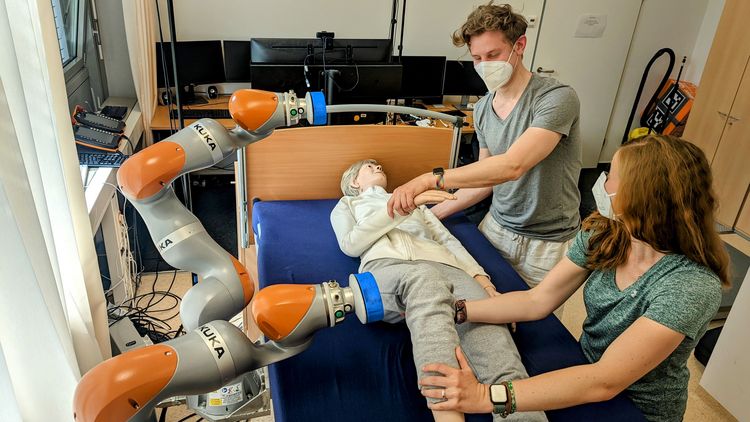
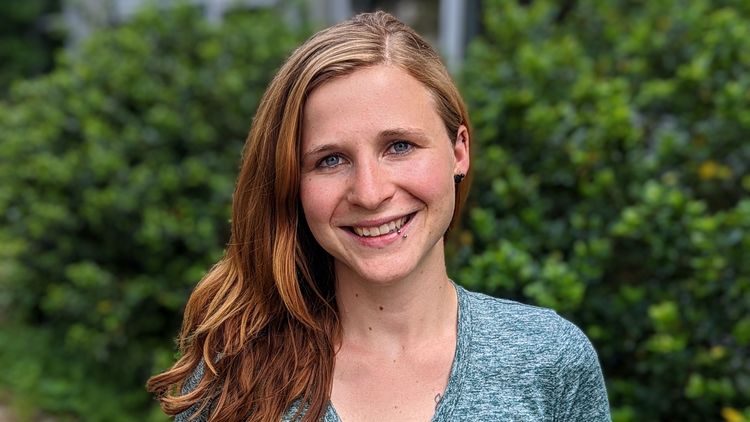
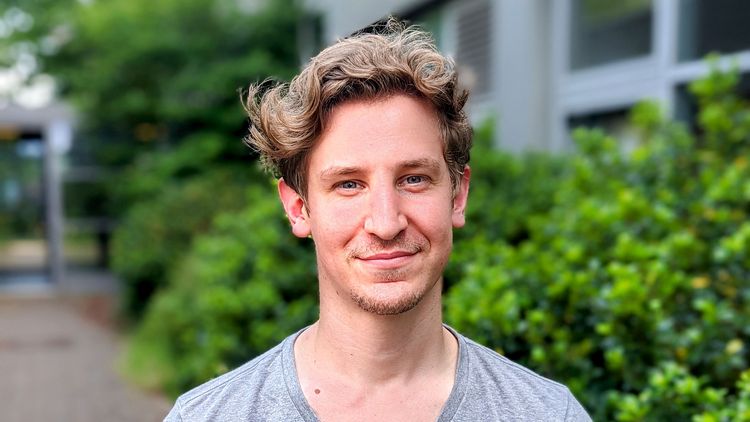
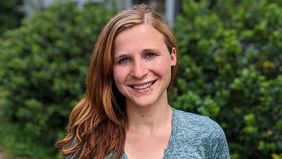
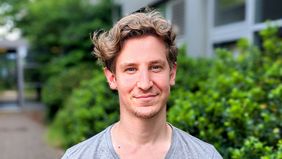
Kathrin Wandscher and Frederik Pohlmann are pioneers. These budding healthcare researchers explain what it’s like to study a subject that has only just been introduced at the university.
Unusual – that’s certainly how the first two semesters at the University of Oldenburg were for them. “Together, we make up 33 per cent of our degree programme,” says Frederik Pohlmann with a laugh, pointing to himself and his fellow student Kathrin Wandscher. Six students are currently working towards a Master’s degree in health services research, a programme that has only been on offer in Oldenburg since last winter semester. They will be the first graduates.
Senior students offering helpful advice or past written exams to help with revision – none of that exists on the Master’s in Health Services Research at the moment. Instead, students and lecturers are experiencing new ‘firsts’ every day: the first seminar, the first work placement, the first research project of their degree.
Wandscher and Pohlmann see the small cohort size as a stroke of luck. “We also had plenty of face-to-face sessions last winter semester,” says Kathrin Wandscher, referring to the coronavirus situation. With just six budding health services researchers, this was no problem. And when the situation became more difficult as the pandemic worsened, the students quickly got together with their lecturers to decide which seminars could easily take place online and which content they would prefer to learn in person.
Both made a conscious decision to take the plunge and become part of the very first cohort. During their bachelor’s degree in Berlin, Kathrin Wandscher’s lecturers initially recommended the healthcare research master’s programme at another university, which was already well established there. The newly qualified health scientist was promptly offered a place. “However, a fellow student who knew I was from Oldenburg then told me about the Master’s programme planned here and suggested I should at least attend the information session,” says the qualified health and nursing professional.
Her conversation with Prof. Dr Lena Ansmann and Prof. Dr Falk Hoffmann, who both teach on the degree programme, convinced the 29-year-old. The same was true of her fellow student, who had applied for various Master’s degree programmes across Germany from his home in Bremen – only to end up in neighbouring Oldenburg after all. He wants to familiarise himself with as wide a variety of research methods as possible during his studies and found this opportunity in the curriculum of the Oldenburg degree programme. Among other things, students learn how to collect quantitative research data, for example by conducting surveys of patients or healthcare staff, and they learn when qualitative methods, such as interviews, are better suited to achieving a research objective. The analysis of the data collected is just as much a part of the timetable as methods of evidence synthesis and the critical evaluation of study results.
Day-to-day life on this relatively new degree programme is characterised by close personal contact. “We’re on first-name terms with all our lecturers,” they both say. Pohlmann finds it helpful that Lena Ansmann and Falk Hoffmann are both part of the younger generation of professors. “They’re good at putting themselves in our shoes as students and are always approachable.” There’s also frequent interaction with those involved in organising the degree programme. “As there isn’t a student body yet, we all take on committee duties as well,” says Frederik Pohlmann, who sits on the examining board and the department council on behalf of the students, whilst Kathrin Wandscher is a member of the admissions committee.
From next semester onwards, this work will be shared amongst several people. That’s when the second class of students will start the Master’s programme. Applications for this are still open until 15 July 2022.
Meanwhile, for Kathrin Wandscher, Frederik Pohlmann and their four fellow students, there are still many ‘firsts’ to experience even in their final year of study – until they are finally presented with their Master’s certificates as the first graduates.