
Das Team
Das Team
Prof. Dr Dmitry Momotenko
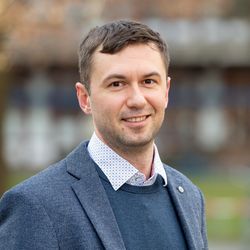
Dmitry Momotenko studied chemistry at M.V. Lomonosov Moscow State University (Russia) and was awarded his PhD in 2013 from the École Polytechnique Fédérale de Lausanne (Switzerland). His doctoral thesis focused on the investigation of mass transfer phenomena in electrochemical systems for applications in analytical chemistry and electrochemical scanning microscopy. Later, in 2014, he was awarded a Marie Curie fellowship for a project at the University of Warwick (UK), where he worked on nanoscale ion flows for high-resolution electrochemical imaging. In 2017, he joined ETH Zurich (Switzerland) as an independent researcher with an Ambizione Grant from the Swiss National Science Foundation to work on nanoparticle manipulation, scanning probe microscopy and sensor technology. In 2020, he was awarded an ERC Starting Grant and, in 2021, joined Carl von Ossietzky University of Oldenburg as a junior research group leader. His current research interests are nanoscale 3D printing and electrochemical energy storage.
Karl Stefan Petrasz
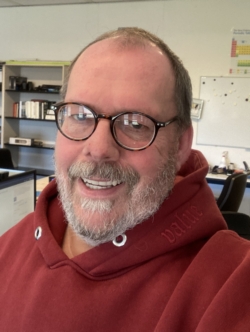
Hello, my name is Karl Stefan Petrasz. I trained as a chemical technician at Fresenius University of Applied Sciences until 1985 and as an IT specialist in application development at TBG Roffhausen until 2006. I have been a research assistant (MTV) at the University of Oldenburg since 2007. Since 2025, I have been a member of Prof. Dr. Momotenko’s research group, Technical Chemistry 2.
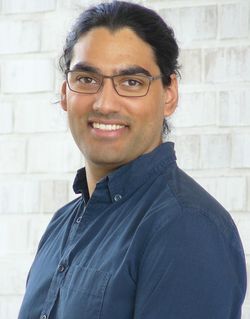
Karuna Aurel Kanes
Person
Spin-off project
Hi, my name is Karuna Kanes. I completed my Master of Science degree in Nanoscience at the University of Hamburg. During my Master’s thesis, I investigated nanostructured CuFeO₂ delafossite thin films for photoelectrochemical applications. I am currently working on my PhD research into very small-scale additive manufacturing, with the aim of developing new 3D printing techniques offering higher resolution and faster printing rates at the nanometre scale.
To bring the resulting technology to market, I am working alongside Simon Sprengel on further developing it to market-readiness and on preparing a spin-off company called NanoXion.
Weishan Wu
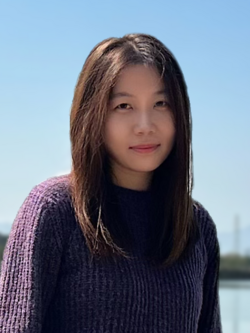
Weishan Wu studied functional materials and physics and obtained her Master’s degree from Philipps University of Marburg. In her Master’s thesis, she investigated organic semiconductor and metal interfaces using absorption spectroscopy and electron diffraction techniques. Her current PhD research focuses on the development of advanced nanoscale 3D printing techniques for the fabrication of active battery materials with ultra-fine structural features. The aim of this project is to adapt additive manufacturing concepts for the production of nanostructures with a high aspect ratio, and to achieve increased charging performance and higher charging rates without compromising battery capacity.
Simon Sprengel


Person
Spin-off project
Simon Sprengel studied chemistry at bachelor’s and master’s level at the Carl von Ossietzky University of Oldenburg. As part of his PhD research in the Electrochemical Nanotechnology research group, he is currently working on fundamental advancements for additive manufacturing of micro- and nanoscale metal structures through electrochemical concepts. The aim of his research is to overcome existing technical limitations in the manufacture of small, highly conductive interconnects through new feedback logics and technological modifications.
To translate the resulting technology into practical applications, he is working alongside Karuna Aurel Kanes on further developing it to market readiness and on preparing a spin-off company called NanoXion.
During his Master’s thesis, he also conducted research within the group on the development of a novel 3D bioprinting process for the precise manipulation of cells, for example for the production of novel prostheses, biological tissues or artificial neural networks.
Polina Evstigneeva
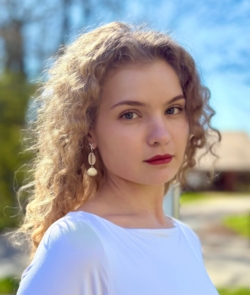
Polina Evstigneeva studied chemistry at Lomonosov Moscow State University and obtained her diploma in fundamental and applied chemistry in 2024. She completed her dissertation at the N.D. Selinski Institute of Organic Chemistry of the Russian Academy of Sciences (RAS). She has been pursuing her PhD at the University of Oldenburg since 2025.
Alexander Darsow
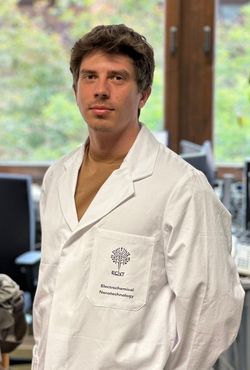
Hello, my name is Alexander Darsow. I studied Materials Science and Engineering at Christian-Albrechts-Universität zu Kiel. As part of my Master’s thesis, I worked at the ISOF-CNR (Institute for Organic Synthesis and Photoreactivity) in Bologna, Italy, on the development of graphene-based, open-pored structures for the removal of PFAS as a renewable alternative to current approaches. I am currently pursuing my PhD at the Carl von Ossietzky University of Oldenburg.
Dr Luiza Zudina
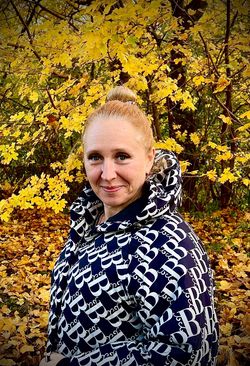
Luiza Zudina is a Ukrainian chemist, scientist and educator with over twenty years’ experience in chemistry and science education. Most recently, she worked as a postdoctoral researcher at RWTH Aachen University in the field of electrochemical reaction engineering. Her research focused on the electrochemical activity of electrode-doped manganese oxides for the oxygen evolution reaction in alkaline and neutral media.
Dr Zudina obtained her PhD in Chemistry in 2021 from the National Aviation University (Kyiv, Ukraine). In her doctoral thesis, she investigated doped manganese(IV) systems obtained by electro-crystallisation from fluoride-containing electrolytes and analysed their composition, structure and functional properties.
In addition to her research work, she has extensive teaching experience at school, college and university level. She has taught inorganic, physical and colloid chemistry, as well as biology and ecology, and has been involved in the administration of national education examinations in Ukraine.
Furthermore, she holds an additional diploma in quality management, standardisation and certification (Quality Engineer). Her specialist expertise encompasses electrodeposition, rotating disc electrode (RDE) measurements, materials characterisation and laboratory organisation, combined with strong analytical and teaching skills.