


Sometimes small things have great power. Even grains of rice can trigger social, political and ecological change. Researchers in Oldenburg were recently able to see this for themselves.
What happens when seeds are no longer sold but given away? What economic, social and ethical consequences can be observed? Young scientists from the "RightSeeds" group at the University of Oldenburg's Institute of Business Administration and Business Education have been researching the extent to which commons-based rights to seeds and varieties can trigger ecological and social change in crop cultivation for two years. The Federal Ministry of Education and Research is funding the joint project, led by Oldenburg economist Prof Dr Stefanie Sievers-Glotzbach, for a total of five years. In addition to the University of Göttingen and the Institute for Ecological Economy Research (IÖW) in Berlin, eight practical partners are also involved, including several breeding associations.
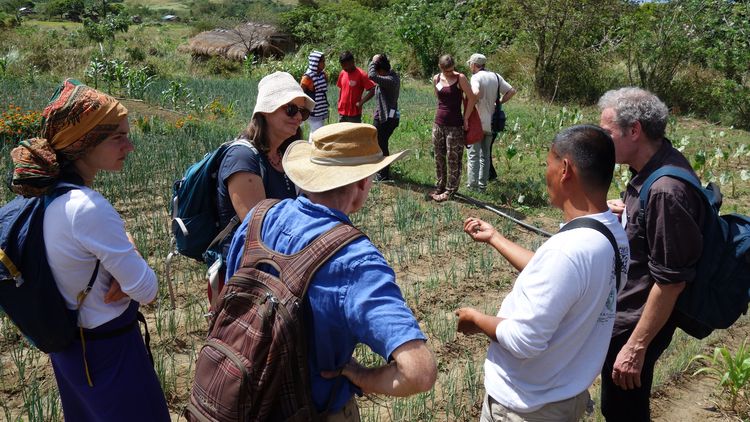
In mid-February, Right Seeds doctoral students Nina Gmeiner and Julia Tschersich had the opportunity to put their research into practice: They visited the Philippine rice farmer network MASIPAG, where giving away seeds and varieties has been a matter of course for over 30 years. Around 35,000 small farmers belong to the MASIPAG network, most of whom cultivate less than five hectares of land.
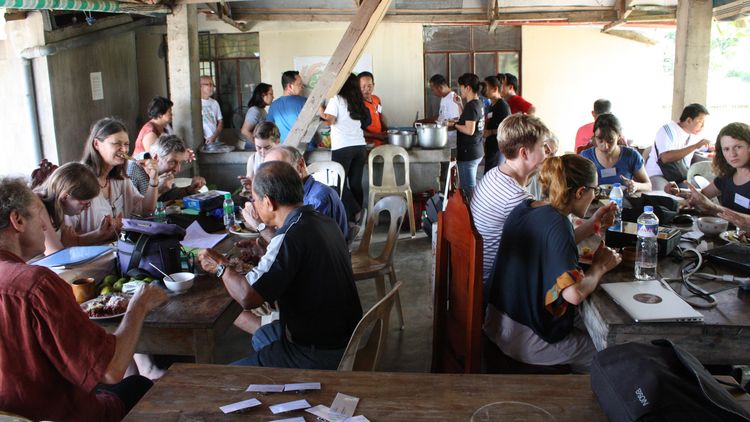
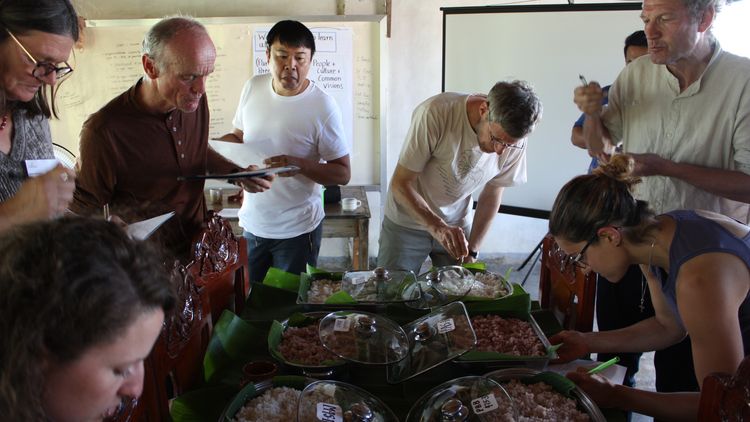
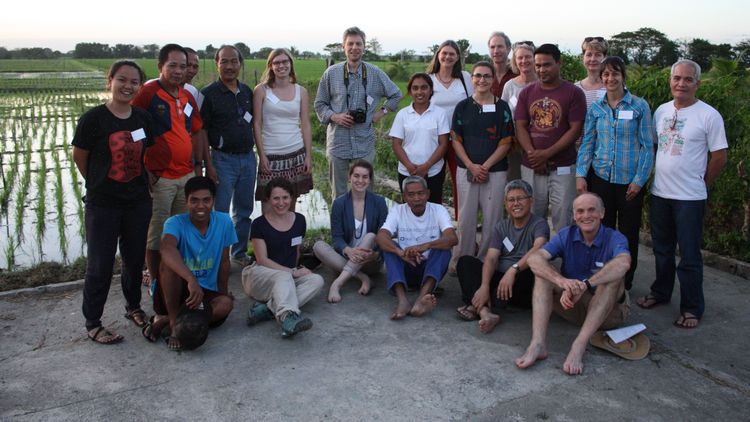
Together with representatives of the cooperating breeding associations, the two researchers travelled to Southeast Asia. The highlight of their stay was a week-long workshop, which they organised with other Right Seeds researchers from Berlin and Göttingen. "The workshop was very successful. Our practice partners - the German breeding associations and the Filipino smallholder farmers - exchanged views on the opportunities and risks of such common property networks and on the differences between German and the Philippines," says Gmeiner.
Sensitivity to social impact
The grain of rice is particularly important in the Philippines, as it is highly valued as a staple food. "They say 'seed is sacred'," reports Gmeiner. "This also explains why this network does not want to sell seeds, but only give them away." The researcher would like to find out more about this. She conducted numerous interviews with various people involved: "What surprised me the most: The coordinators of the rice farmers' network have a very strong sense of the importance of their network. I thought they mainly saw the economic component, but they are also very aware of the social and political impact." The social dimension of the commons-based approach is particularly important to her, as her doctoral thesis focusses specifically on the well-being of the farming families involved.
What Gmeiner noticed straight away was that Filipino farmers are under much greater pressure than their colleagues in Germany. "In Germany, farmers and their children have a good education and can pursue another academic appointment if farming no longer works out," explains Gmeiner. In the Philippines, there is often no other option to earn money for the family - the pressure to succeed is correspondingly high.
The church aid organisation Misereor recognised this tense situation back in the mid-1980s and launched the MASIPAG network in response. Since then, the small farmers have shared the economic risk. They breed and exchange a total of more than 2,200 varieties. They are also involved in the network's own research into new seeds and encouraged to critically question their cultivation behaviour. Every participating farmer undertakes to work in an ecologically sound manner. The network also exchanges information on suitable locations and tips on sowing and care. The decentralised storage of seeds and knowledge also protects against natural disasters or the El Nino weather phenomenon, which usually causes periods of drought in the Philippines.
A model for Germany?
A model that could also work in Germany? "Unfortunately, it's not that simple," explains Gmeiner. In Germany and most Western countries, plant breeding is largely a commercial system that relies on biotechnological methods, non-replicable seeds and licensing. Newly bred varieties must be registered with the Federal Plant Variety Office before they can be placed on the market. In most cases, variety protection is then also applied for - this prevents seeds from being reused, given away or sold without further ado. However, the German practice partners of Right Seeds, including Kultursaat e.V. and ARCHE NOAH, do not licence the intellectual property of the seeds and varieties. They do not apply for plant variety protection and therefore do not pay licence fees. This means that every farmer can freely dispose of the seeds: propagate them themselves, continue breeding with them or give them away to their neighbours. In this way, they are trying to realise the idea of common property. During the discussions with the MASIPAG representatives, they were primarily interested in finding out how such a complex network can remain functional and how it is possible to get the attention of politicians.
A return visit to Germany has already been planned. Next year, a Philippine delegation will come to Oldenburg to learn the secrets of successful vegetable cultivation - a topic that is to be promoted in South East Asia in the future.