
Contact

Press & Communication

+49 (0) 441 798-5446

Vita

Prof. Dr. Kathrin Boerner has been appointed as Professor of Prevention and Rehabilitation Research at the Department of Health Services Research. She was previously Professor of Gerontology at the University of Massachusetts Boston (US).

Boerner studied psychology in Kiel and Trier. As part of her PhD at the Freie Universität Berlin, she conducted research at Harvard Medical School in Boston. From 2000 on, Boerner held various senior research scientist positions at eldercare facilities in the US, including Lighthouse International, a rehabilitation agency for adults with visual impairment, and Jewish Home Lifecare, a health care system for older adults offering all levels of care. Aging research was her main focus at all stages. Since 2014 she conducted research and taught at the University of Massachusetts Boston.

Boerner investigates the management of age-related chronic diseases in mid- to late life, as well as unique challenges in the care of very old adults. Of particular interest in this context are social isolation and loneliness in late life, as well as ways to optimize care teams in the care of older people.

  • University of Massachusetts Boston

Kathrin Boerner

Prevention and Rehabilitation Research

„A topic that affects everyone sooner or later”

Prof. Dr. Kathrin Boerner has been appointed as Professor of Prevention and Rehabilitation Research at the Department of Health Services Research. She was previously Professor of Gerontology at the University of Massachusetts Boston (US).

What does your research focus on?

As a psychologist with expertise in ageing research, I am particularly interested in the psychosocial aspects of eldercare. My research addresses topics such as managing chronic impairments common in later life, unique challenges in the care of very old adults, and experiences and needs of family caregivers and professional care workers. A current focus for me is how social isolation and loneliness affect the health of older adults, and how this health risk can be prevented.

What do you like about your field of study?

Researchers in my field are concerned with a topic that affects everyone sooner or later. Healthcare in late life is simply an unavoidable and important topic which presents many challenges, but also much room for optimisation. I find that hugely motivating. When I talk about my research, people are always very interested. In many cases there’s even a personal connection, namely that the people I’m talking to are experiencing a situation that at least partially reflects my research. This reinforces my sense of doing something meaningful and useful.

Who or what influenced you most during your studies?

As an undergraduate student in Kiel, I took a keen interest in literature on life courses and lifelong development. That's why I switched to Trier University for my advanced courses, where this was offered as focus area in psychology. I was particularly influenced by Prof. Dr. Jochen Brandtstädter's research on coping and adaptation processes in late life. In one of his seminars we read an article entitled “The Myths of Coping with Loss”, in which the authors radically questioned all at the time prevailing ideas about how we deal with loss. I found it so fascinating that I contacted the first author from New York, Prof. Dr. Camille Wortman and asked her if I could come and spend a semester with her. She did invite me and that was the beginning of my research career.

Any tips for surviving on campus?

Developing strong social connections with fellow students is key in my opinion. The people you study with are an important resource in many ways when it comes to information and exchange. But it’s also simply more fun to experience graduate school together. Another good idea is to contact student representatives and get actively engaged in student associations and organisations on campus.
This might also be of interest to you:

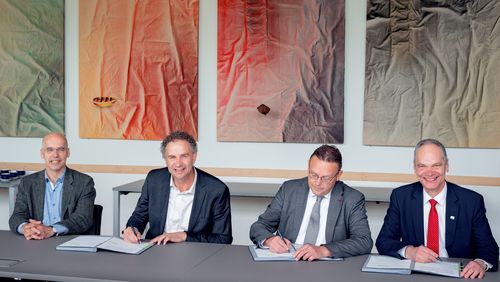
The four people mentioned are wearing suits and sitting next to each other at a table. Jouke de Vries signs his name. Four colourful pictures hang in the background.
University of Oldenburg / Marcus Windus
University Medicine Top News Health Services Research

An important step for cross-border healthcare research

Oldenburg and Groningen are consolidating their cooperation in the field of health research under the umbrella of the Cross-Border Institute of…

more: An important step for cross-border healthcare research
The picture shows the six people mentioned. They are standing in front of the entrance to the Alte Stadtkasse Oldenburg and smiling at the camera.
OLB Foundation / Markus Hibbeler
Campus Life Marine Science Hearing Research Health Services Research

OLB Prize: A resounding success for the university

All three dissertation prizes awarded by the OLB Foundation as part of the OLB Science Prize go to the University of Oldenburg. Prizes were awarded…

more: OLB Prize: A resounding success for the university
woman, senior, seniors, exercise, exercising, lockdown, covid-19, run, running, jog, jogging, smart watch, fitness tracker, app, smart technology, health, healthy lifestyle, outdoors, countryside, retired, retirement, elderly, front view, waist up, women, female, one person, person, people, 60s, sixties, caucasian, smiling, positive, lockdown, active, fitness, autumn, fall
Monkey Business Images - stock.adobe.com
Research University Medicine Top News Health Services Research

Researchers are working on a fall early warning system

Exercise keeps you fit - but balance can be impaired after intensive physical activity. Researchers at University Medicine Oldenburg want to…

more: Researchers are working on a fall early warning system
(Changed: 27 Apr 2026)  Kurz-URL:Shortlink: https://uol.de/p82n8747en
Zum Seitananfang scrollen Scroll to the top of the page

This page contains automatically translated content.