


One of the most important groups of marine bacteria is at the centre of the "Roseobacter" Collaborative Research Centre. The German Research Foundation (DFG) is now funding the project for a further four years with 9.7 million euros.
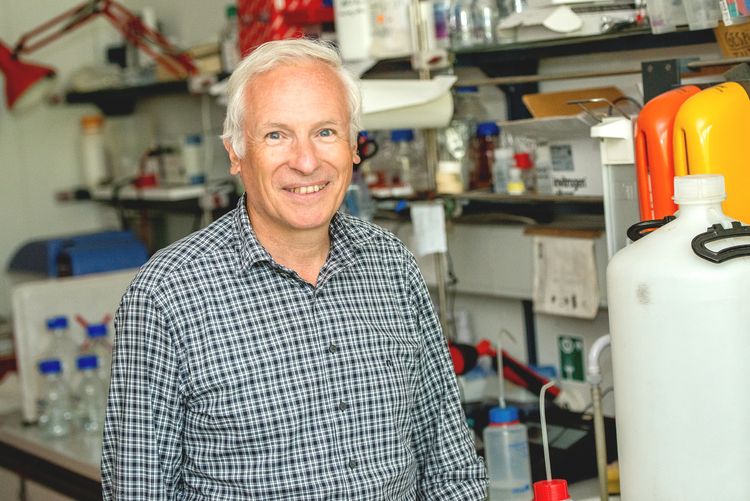
Since 2010, microbiologists, natural product chemists, geneticists and bioinformaticians have been conducting joint research under the leadership of microbiologist Prof Dr Meinhard Simon in the large-scale project with the official title "Ecology, Physiology and Molecular Biology of the Roseobacter Group: Towards a Systems Biological Understanding of a Globally Important Group of Marine Bacteria".
In addition to the University of Oldenburg, the Technical University of Braunschweig, the Helmholtz Centre for Infection Research, the German Collection of Microorganisms and Cell Cultures, the Genome Research Laboratory at the University of Göttingen and the Kekulé Institute for Organic Chemistry and Biochemistry at the University of Bonn are also involved in the final phase.
Unique network
The "Roseobacter" Collaborative Research Centre brings together the excellence in the field of marine microbiology in Lower Saxony. "The focus of our work is unique in Germany. The consortium has created a network for marine microbiology in Lower Saxony that has great appeal worldwide," emphasises CRC spokesperson Simon.
"With the funding for a further four years, the DFG is recognising the successful work and performance of our Collaborative Research Centre. We are delighted with this success, which further strengthens marine research in Oldenburg," explains University President Prof Dr Dr Hans Michael Piper.
Versatile bacteria
The bacteria of the Roseobacter group are characterised by an unusually versatile metabolism, which also provides interesting substances for biotechnological applications. The scientists in the CRC are investigating the evolutionary, genetic and physiological characteristics and adaptations of the bacteria in their various habitats, which differ, for example, in terms of salinity or nutrient ratios.
In recent years, Simon and his team of experts have therefore focussed on the metabolism of two representative bacteria from the Roseobacter group. They also analysed samples and data obtained on five expeditions with the research vessels "Polarstern" and "Sonne" in the Atlantic and Pacific between the Subantarctic and Subarctic. The results show both how different groups of bacteria are geographically distributed and how their metabolism and thus their ecological function differ. In total, the scientists' work has resulted in over 100 scientific publications in the past four years alone, some of them in highly renowned journals.
Global significance
The experts now want to continue and finalise their investigations into the global functional biogeography of the Roseobacter group. Based on the data and using mathematical models, predictions are to be made as to how the numerous different representatives of the Roseobacter group are geographically distributed and what ecological function they fulfil. One of the aims is to assess possible influences of climate change on the role and distribution of the Roseobacter group in different marine areas. The scientists are also interested in the question of how the bacteria influence the global cycle of substances such as carbon. Specific laboratory experiments with representatives of the Roseobacter group and selected typical microalgae should provide answers to these questions.