Contact

Press & Communication

+49 (0) 441 798-5446

More

University Botanical Garden

contact

Nina Gmeiner

Institute of Biology and Environmental Sciences

  • Biodiversity in the city with a local recreational effect: the Botanical Garden has designed the "Oldenburg Climate Tour" together with partners and is one of the six stations that demonstrate climate adaptation strategies. Photo: Bernhard von Hagen

  • Green façade: the Botanical Garden's seed house. Photo: Nina Gmeiner

Off into the countryside

Living plant roofs, green oases of well-being, underground water reservoirs and biotopes in the neighbourhood: the "Oldenburg Climate Tour" shows how climate change is also changing the city, including in the university's Botanical Garden.

Living plant roofs and green oases of well-being, underground water reservoirs and biotopes in the neighbourhood: the "Oldenburg Climate Tour" shows how climate change is also changing the city, including in the university's Botanical Garden.

What do urban woodlands and tree populations mean for our local recreation in times of climate change? How can we contribute to biodiversity in the city? And how important are and will green roofs and façades be in adapting buildings to the changing climate? Answers to these and other questions are provided by the climate tour, which the Botanical Garden has designed together with partners.

The stops on the tour are summarised online and in a printed brochure and are freely available. The "Climate Tour Oldenburg" leads to various climate adaptation locations in the city and provides information about the associated strategies. Climate adaptation is about how people, municipalities and companies actively adapt to the changed environmental and living conditions caused by climate change. For example, urban planning must also take into account the expected climate development over the coming decades.

The adaptation strategies in the city highlighted by the climate tour are partly obvious, partly invisible or already appear to be a matter of course. The tour includes the following six stations, which provide information and invite you to join in: EWE's climate data garden, youth climate activism at the youth environmental network JANUN e.V., building greening in the university's Botanical Garden, the "KlimaOasen" project and cool feel-good places in Eversten Holz, biodiverse flowering meadows at ImmerBunt and rainwater solutions from the Oldenburgisch-Ostfriesischer Wasserverband OOWV.
 

This might also be of interest to you:

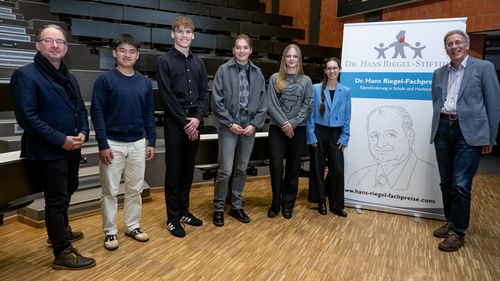
Foundation, Hans Riegel Specialised Award, Chemistry, Biology, Mathematics, Physics, STEM, School 5
University of Oldenburg / Matthias Knust
Campus Life prizes and awards

Antibacterial kitchen herbs and efficient wind turbines

They explored the effects of kitchen herbs or the synthesis of ammonia: twelve pupils from Oldenburg have been recognised for their outstanding work.

more: Antibacterial kitchen herbs and efficient wind turbines
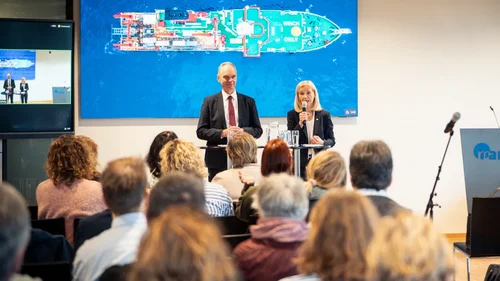
President Günther speaking into a microphone, next to president Bruder. Both are standing facing the crowd, of which a few dozen are in the frame.
Annemarie Popp / University of Bremen
Campus Life

Info session on the future of the Northwest Alliance

The universities of Oldenburg and Bremen are continuing to develop the NWA. During an internal info session, Presidents Bruder and Günther outlined…

more: Info session on the future of the Northwest Alliance
University of Oldenburg, Marcus Windus
Climate protection Sustainability Campus Life Botanical garden

Sustainable heating for the Tropical House

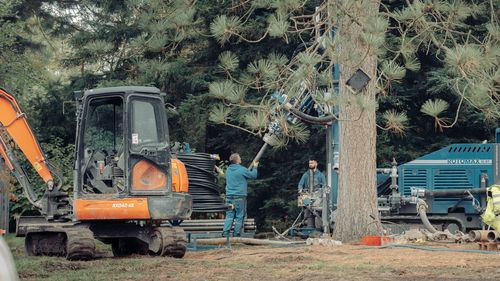
Drilling is currently taking place every day in the Botanical Garden. This is creating what is known as a geothermal probe field. It forms the…

more: Sustainable heating for the Tropical House
(Changed: 14 Oct 2026)  |  Kurz-URL:Shortlink: https://uol.de/p82n7867en
Zum Seitananfang scrollen Scroll to the top of the page

This page contains automatically translated content.