

by Tobias Peter
In Workshop 3 "Digitalisation", these guests from the trades, science and politics discussed their experiences in dealing with the digitalisation of the social, political and economic spheres: Andreas Fickenscher (Managing Director, Fickenschers Backhaus), Ira Diethelm (Professor of Didactics of Computing Science, CvO University of Oldenburg), Jochen Meyer (Division Manager, R&D Health, OFFIS, CvO University of Oldenburg; Self-Tracker) and Nele Heise (Media Scientist).
-
Digitalisation processes are always surrounded by an atmosphere of fascination, which is triggered and reinforced by personal experiences and examples. This was also confirmed in the future workshop on 'digitalisation', in which the ideas of the future associated with digitalisation and the effects that can already be observed today were discussed: What is being digitised and how, and with what political and social consequences?
The descriptions and lines of discussion at the future workshop revealed aspects that also seem to characterise the digitalisation debate in general. The strong present-orientation of the contributions is striking. Implicit references to the future tended to be made via the force of the transformation - the future becomes visible via the effects of digitalisation that can already be observed in the present. This reveals fundamental ambivalences of digitalisation that are also typical of the present of other transformation processes. A number of conflicting topoi and subject concepts emerge clearly, which are created through the interplay of argumentation figures, narratives and rhetoric.
Rapidity and ubiquity
Digitalisation is characterised on the one hand by rapid and profound change, which is observed in the past, observed in the present and expected in the future. This accelerated transformation stands in contrast to processes of social change, such as the consequences of migration processes, which are described more as gradual change. Probably the most impressive scientific figure is the exponential development of digital technologies, as described by Moore's law (Heise).
This development not only reformulates the old thesis of the unstoppability of technological progress, but also expresses the dynamics of an age of acceleration (Hartmut Rosa), which is prominently described in the diagnosis of the present. Various linguistic images are inscribed in this narrative, such as those invoked by Heise: Early users and latecomers or nations as the first wave of digitalisation are just a few figures of subjectivised temporality. Just how deeply the logic of acceleration is inscribed in digitalisation processes can be seen, for example, in the efficiency gains achieved by the Fickenscher bakery, for example in the significantly faster processing of complaints or the takeover of complex activities such as calculating recipes.
The example of the bakery also shows how profoundly and ubiquitously digital change is understood: every family business seems to need a digitalisation strategy, because codes and algorithms can be used everywhere and have positive effects. As digital technologies increasingly determine and revolutionise everyday life, it is becoming increasingly difficult to escape them. The associated urgency effects are manifold: digitalisation enables the individualisation of cakes and cars alike and is thus driving a radical change in sales culture. The expectation for the future is that those who do not face up to this pressure to change risk being left behind. This applies to the economy as well as to other areas such as education: Digitalisation makes it possible to catch up on development gaps, such as in literacy in certain African countries (Meyer), while at the same time it puts pressure on established education systems to meet the "digital education mandate" (Diethelm). Incentives are no longer enough where there is a need to respond to urgency - a compulsory digital curriculum and lessons for pupils and mandatory further education in digitalisation for teachers are being discussed accordingly (Diethelm). With the speed and ubiquity of digitalisation, the possibilities of withdrawal or refusal in the face of social transformation pressure seem to be dwindling compared to other contemporary diagnoses such as sustainability or migration.
Complexity vs. manageable complexity
As obvious as the scope and dynamics of digital transformation appear to be, the judgements on the consequences are very different. On the one hand, the current diagnostic descriptions of digitalisation problematise a new complexity. They oscillate between utopian promises and utopia-fulfilling promises on the one hand and dystopian threat scenarios on the other, as Ira Diethelm and Martin Butler explain. The assessments of digitalisation range from controversial to conflicting and are by no means unambiguous. Visualisations of this complexity, such as confusing network structures (Heise) and linguistic images such as the "labyrinth of the internet", also make it clear that the phenomenon of digitalisation often eludes comprehension.
On the other hand, there is the perspective that digitalisation also provides opportunities to be able and have to master complexity. Digitalisation facilitates the generation of knowledge and the development of new knowledge, new skills and new markets. With the uniquely high availability of information, digitalisation also requires and enables it to be filtered. This in turn results in an increased need for visibility, which can be met with profiling strategies (Heise). Digitalisation is thus sparking positioning battles in all areas of society - be it in science or in the skilled trades. High-quality products are not enough; storytelling is crucial (Fickenscher). Digitalisation is based on cultural factors in order to assert itself on the market, be it the iPhone (Meyer) or 'Heimatbrot', which stages food as a cultural asset in Fickenscher's bakery.
Yet it is precisely digital technologies that make it possible to find the original and authentic. "Singularisation" (Reckwitz) is a response to the digitalisation-driven need to be different. Digitalisation creates complexity and at the same time provides the "digital tools" (Fickenscher) to master this complexity. Indexing systems such as Google Scholar, the sorting of digitally generated information using graphs and statistics (Meyer) and the iconography of tool logos from WhatsApp, Skype to Slack all insinuate the manageability of digitally generated complexity.
Closure vs. opening
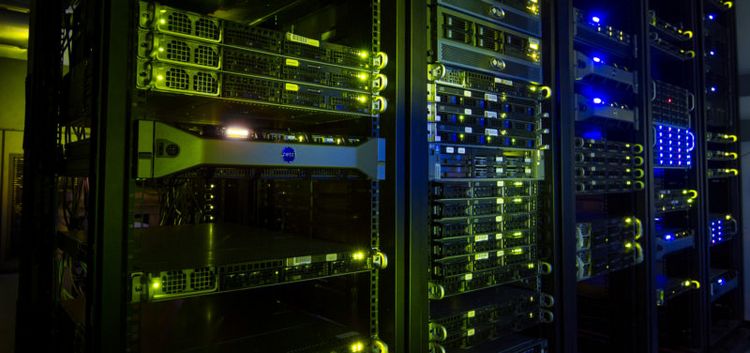
The question of whether the digital transformation contributes to social closure or opening is also controversial. On the one hand, talk of digitalisation evokes images of hidden activity: Digital processes, codes and algorithms work as hidden problem-solving rules under user interfaces (Heise). Computer judgements, bots that independently develop secret languages and ubiquitous NSA surveillance (Diethelm) are fuelling a renewed scepticism of machines. The narrative of automated and hidden power works with images that tie in with machine and robot metaphors from earlier eras (Heise). At the same time, the data centres of Google and other corporations symbolise a concrete address for a critique of power (Diethelm). The hidden workings of digital processes and actors - according to the dystopian perspective - tend towards closure and increasingly elude the availability of control by the autonomous subject.
In addition, digitalisation processes are turning out to be socially divisive in many ways. On the one hand, digitalisation creates barriers to accessing and using digital skills and infrastructures, which, according to Paul Mecheril and Jochen Meyer, reproduce underlying differences in terms of income and educational status, age or migration background as negative factors in access to technology. At the same time, fragmentation within digital communication contexts is favoured. The common image of the bubble refers to the formation of professional bubbles (Diethelm) as well as hermetic social or ideological islands of communication in which anti-enlightenment tendencies and fake news thrive (Heise).
In sharp contrast to this, there are hopes that digitalisation will open up new opportunities for social openness. A democratisation of social discourse is based in particular on the opening of communication channels for groups that were previously unable to speak (Heise). This refers not only to the new opportunities for self-organisation and communication in public affairs, but also at other levels. At an institutional level, digital tools facilitate (company) participation processes, including for the deaf, for example, through written communication systems (Fickenscher), thus enabling transparency and inclusion. In this context, the digital potential of individual empowerment stands in sharp contrast to the descriptions of powerlessness mentioned above.
Immaturityvs. empowerment
A further fault line in the ambivalent assessment of digitalisation can be seen in the question of whether digitalisation processes are more likely to promote immaturity or trigger empowerment. Films such as Metropolis and E.M. Forster's early description of the internet as an incapacitating machine in The Machine Stands Still from 1909 formulate a narrative of technology-induced immaturity early on. Two intertwined levels are invoked here: on the one hand, the sorcerer's apprentice principle of technology taking on a life of its own, which is discussed in debates about artificial intelligence; on the other hand, the alienation of the self through the loss of a sense of one's own body through technologies such as self-tracking or a multitude of personal competences that are taken over by digital assistance tools. In the combination of both levels, the immaturity of the individual is formulated as a threatening consequence of digitalisation. Not least in the debates surrounding the comprehensive collection and aggregation of data, the linguistic image of the digital panopticon (Diethelm) emerges, in which the subject appears merely as a powerless victim of technological overpowering. As a consequence, a conflict arises between technical feasibility and ethical justifiability, e.g. with regard to the influence of power and the responsibility of Google, Facebook & Co. or the ethics of programming (Heise), in which familiar questions from the nuclear debate are reformulated. The "German Angst" is seen as a positive resource in dealing with the new dangers of data misuse. Due to the explosive nature of the risk of incapacitation, resistance to surveillance and the misuse of data appears to be a duty - Edward Snowden appears in the same league as Henry David Thoreau and Sun Tzu. At the same time, counter-designs to digital power, such as free cloud solutions (Heise), are becoming more urgent than ever: "program or be programmed" (Rushkoff) is the slogan and solution for some (Diethelm).
These interventions in the face of experiences of immaturity and powerlessness thus highlight the empowerment potential of digitalisation. They appear not only against the backdrop of the negative potential of digitalisation, but also against the backdrop of general social developments such as health risks, demographic change or the nursing crisis (Meyer). The promise of "digitalisation" (Fickenscher) holds out the prospect that today's unresolved questions will be answerable in the future. Digital empowerment refers to both social relationships and individual behaviour in everyday life. According to this, the quality of contact in private contexts as well as in services such as bank conversations will increase with the work facilitation and networking possibilities offered by digital tools. The seemingly paradoxical argument: it is precisely the relief provided by digitally supported technologies such as maturing rooms and automated recipe mixing in a bakery that makes it possible to concentrate on core competences such as developing authentic recipes and to introduce more humane working conditions by dispensing with night shifts (Fickenscher). Digital techniques such as self-tracking (Meyer) promise a better understanding of one's own behaviour and consequently better control of one's own health. Impressively demonstrated by successes such as significant weight loss, technologies such as self-tracking lead to improved self-image by helping to categorise subjective feelings through objective data using statistics and graphs of weight, walking and getting up times. They suggest individual control in an uncontrollable world. Smart health devices and the smart homes of networked living are reactualising the familiar technological promise of relief from tedious tasks and the associated increase in individual reach and a more active and self-determined life. The subject figures of self-optimisation invoke a normative design of the sovereign subject that also makes the flip side of every empowerment visible. Where subjects can be empowered, being empowered and having to be active is not far away (Diethelm).
Tobias Peter, Dr rer. pol., is a research assistant at the Institute of Sociology at the Albert-Ludwigs-Universität Freiburg im Breisgau.
Contact: