Pop-up store "Uni in the city"
Pop-up store "Uni in the city"
From 2 to 30 May, the university had a "branch office" in the city centre. In a shop at Haarenstraße 39, we offered our visitors many exciting insights into researching, studying and working at the University of Oldenburg. Interested parties were able to experience experiments and other hands-on activities, exhibitions, theatre evenings, lectures and much more.
Impressions from the pop-up store can be found in our picture gallery.
That was the programme
Theatre: "A good, decent thing"

Thursday, 30 May, 20.00 hrs
Theatre performance with opening remarks by the University President Prof. Dr Ralph Bruder
To mark the 50th anniversary of the University of Oldenburg, the Oldenburg University Theatre is presenting a special theatre project. In this historical drama, the life and work of Ossietzky is shown from the perspective of his daughter Rosalinde. Alternating between biographical scenes and moments in which a modern Rosalinde speaks directly to the audience, she attempts one thing in particular: to show that she was more than just a daughter - a pacifist, social worker, dancer, but above all an emancipated woman.
Research insights: How quickly do you react?
Thursday, 30 May, 10.00 a.m. to 5.00 p.m.
Research insights from the Department of Foundations and Applications of Systems of Cyber-Physical Systems
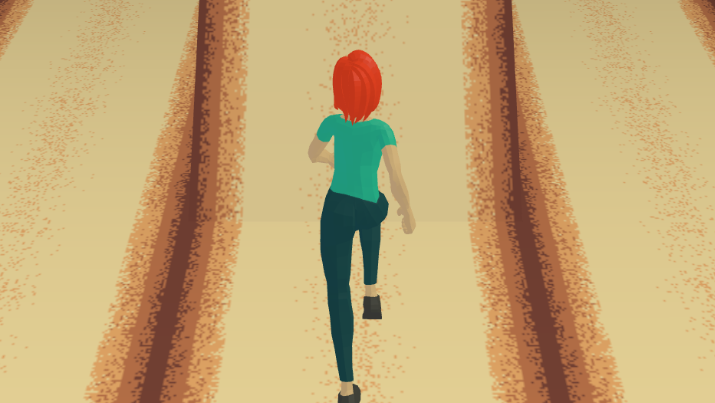
You can experience how much fun research can be in a small experiment from the Department of Computing Science. In a short computer game, interested parties are asked to steer a figure so that it collects as many coins as possible. They are given tips on the direction of the character. If the players react quickly enough, they can collect even more coins. The anonymous data is used in the scientists' research.
Lecture: Storytelling - convincing through narrative

Wednesday, 29 May, 5.30 pm
Lecture by Sandra Vieth, owner of onlinemarketingliebe.com and lecturer at C3L - Centre for Lifelong Learning
In times of information overload, it is more important than ever to attract attention and stand out from the crowd. One effective method of achieving this is storytelling. In this short presentation, Sandra Vieth gives an impulse on how to "tell stories" and thus be convincing. How can topics be developed in such a way that they are interesting? How can a strong and emotional connection to the target group or dialogue partners be established?
Advice: Study?! - What you always wanted to know about studying

Wednesday, 29 May, 2.00 pm to 5.00 pm
Opportunity to discuss study options with the Study and Career Counselling Service
What do Bachelor’s and Master’s degrees mean, what are credit points and what is a module? What can you actually study at the University of Oldenburg and how does the application process work? And what is everyday student life actually like? This afternoon, the university’s student advisers will answer all your questions about studying. Whether you’re thinking of studying yourself or not, please do come along!
Film evening: we & YOUR PLACE

Tuesday, 28 May, 7.00 pm
Film evening followed by a discussion
In the course "We'll talk about art later", offered by artist Anke Fischer at the Institute of Art and Visual Culture, students work with the idea of the office as a living space for the permanent service family. The video works bring together the following questions: What do ownership and work mean in films by DEFA and the culture industry, on video platforms and in social media? How do these media references age?
Research insights: On the trail of antibiotic resistance

Tuesday, 28 May, 12.00 to 16.00 hrs
Research insights from the Medical Microbiology and Virology Group
What exactly is antibiotic resistance? And how do human cells defend themselves against viral infections? With posters, discussions and a small exhibition, the Department of Medical Microbiology and Virology will present its current research focus to all interested parties. Prof Dr Axel Hamprecht will give a short lecture at 3.00 pm.
Lecture: Post Covid and then...? From research to practice

Monday, 27 May, 7 p.m.
Lecture by Andrea Diana Klausen, Ann-Kathrin Knak and Jella Voelter (all University of Oldenburg)
Recovery after a Covid-19 infection? Some people are still severely restricted in their everyday lives months after the infection. For example, they suffer from fatigue, impaired attention or memory (cognition). What options are there to provide additional support for those affected? What contribution can research and special procedures make? We look at the COVISION project and the case management procedure to show the benefits of research for practice.
Exhibition: Low German in the Linguistic Landscape of Northwest Germany

Monday, 27 May, 5 p.m. to 6 p.m.
Exhibition of the Institute for German Studies: Focus on Low German & Sater Frisian
How is the public visibility of Low German organised and perceived? Students of German Studies have investigated this question and documented numerous examples of the various functions and manifestations of Low German text characters in the linguistic landscape. A selection of the most interesting results will be presented in an exhibition with an introductory lecture.
Workshop: The many lives of objects - clothing and its history(ies)

Monday, 27 May, 2 p.m. to 3.15 p.m.
Workshop on the subject of "Object biographies"
Clothing and textile objects constantly surround us in our everyday lives. Yet we rarely take the time to think about the stories behind these things. In the university's Textile Everyday Culture Collection, it is precisely these "object biographies", i.e. the life stories of the objects, that take centre stage. During the workshop, we will work together to try out different creative methods relating to objects and their (possible) life stories.
Counselling: Recognition and pedagogical competence in the migration society

Saturday, 25 May, 11 a.m. to 4 p.m.
An offer of the contact study programme
In the project "Kontaktstudium: Anerkennung und pädagogische Kompetenz in der Migrationsgesellschaft" we offer further education, counselling, co-operation and networking. This gives highly qualified migrants*refugees access to the (social) education sector in an educationally appropriate and qualified manner. At the pop-up store, you can look forward to constructive discussions and hands-on activities on the topic of diversity and a colourful mix of spices to take away.
Theatre: "A good, decent thing"
Friday, 24 May, 8.00 pm
Theatre performance
To mark the 50th anniversary of the University of Oldenburg, the Oldenburg University Theatre is presenting a special theatre project. In this historical drama, the life and work of Ossietzky is shown from the perspective of his daughter Rosalinde. Alternating between biographical scenes and moments in which a modern Rosalinde speaks directly to the audience, she attempts one thing in particular: to show that she was more than just a daughter - a pacifist, social worker, dancer, but above all an emancipated woman.
Hands-on offer: Teddy bear doctor's surgery

Friday, 24 May, 3 p.m. to 5 p.m.
Participation programme of the University Medicine Oldenburg (UMO)
UMO invites you to the "Teddy bear doctor's surgery"! Equipped with an examination booklet, children can record the size, weight and cuddle factor of their teddies and dolls after a detailed "check-up" of their cuddly toys. Of course, the children take the medical check-up booklet home with them.
Advice & information: Vocational training at the university

Thursday, 23 May, 11.00 a.m. to 6.00 p.m.
Vocational trainers at the university introduce themselves
Maintaining laboratory equipment, compiling statistics or planning media productions - young people can learn a variety of academic appointments at the university. As one of the largest employers in the region, the university provides training in ten future-oriented academic appointments in its workshops and laboratories, IT services, library, swimming pool operations, gardens and central administration. Anyone interested is cordially invited to familiarise themselves with the training occupations.
Lecture: AI and ethics - using AI responsibly

Wednesday, 22 May, 5.30 pm
Lecture by Klaas von der Heide, IT auditor
Everyone has been talking about AI since ChatGPT at the latest. The ease of use of the well-known chatbot makes it easier than ever to use AI for emails, homework or research. But we shouldn't simply rely on the results. Even AI is not free from bias and is even capable of lying. The lecture will deal with challenges like these. The speaker will also take a look at how we can use AI responsibly in organisations.
Research Insights: Binaural Confusion - Acoustic Labyrinth

Wednesday, 22 May, 10.00 a.m. to 2.00 p.m.
Interactive exhibit of the Signal Processing Group, Department of Medical Physics and Acoustics
The "Long Night of Hearing" offers exciting insights into hearing research with lectures, lab tours, concerts and much more. The pop-up store will give you a foretaste of the main programme: Does sound come from the right, left, front or back? The acoustic labyrinth is all about the importance of hearing for spatial perception. Here you can test your own directional hearing in a playful way.
Theatre: "A good, decent thing"

Tuesday, 21 May, 8.00 pm
Theatre performance
To mark the 50th anniversary of the University of Oldenburg, the Oldenburg University Theatre is presenting a special theatre project. In this historical drama, the life and work of Ossietzky is shown from the perspective of his daughter Rosalinde. Alternating between biographical scenes and moments in which a modern Rosalinde speaks directly to the audience, she attempts one thing in particular: to show that she was more than just a daughter - a pacifist, social worker, dancer, but above all an emancipated woman.
Exhibition: Carl von Ossietzky

Friday, 17 May, 1 p.m. to 5 p.m. and Saturday, 18 May, 10 a.m. to 3 p.m.
Exhibition on Carl von Ossietzky
The University of Oldenburg's namesake, Nobel Peace Prize winner Carl von Ossietzky, has been interpreted and given meaning in many different ways over the years. Our exhibition explores the question of who the namesake actually was. The various "images" of and about Carl von Ossietzky are shown, which were ultimately also responsible for the protracted naming dispute.
Hands-on offer: Exotic seeds and fruits
Thursday, 16 May, 2 p.m. to 5 p.m.
Exhibition of the Botanical Garden
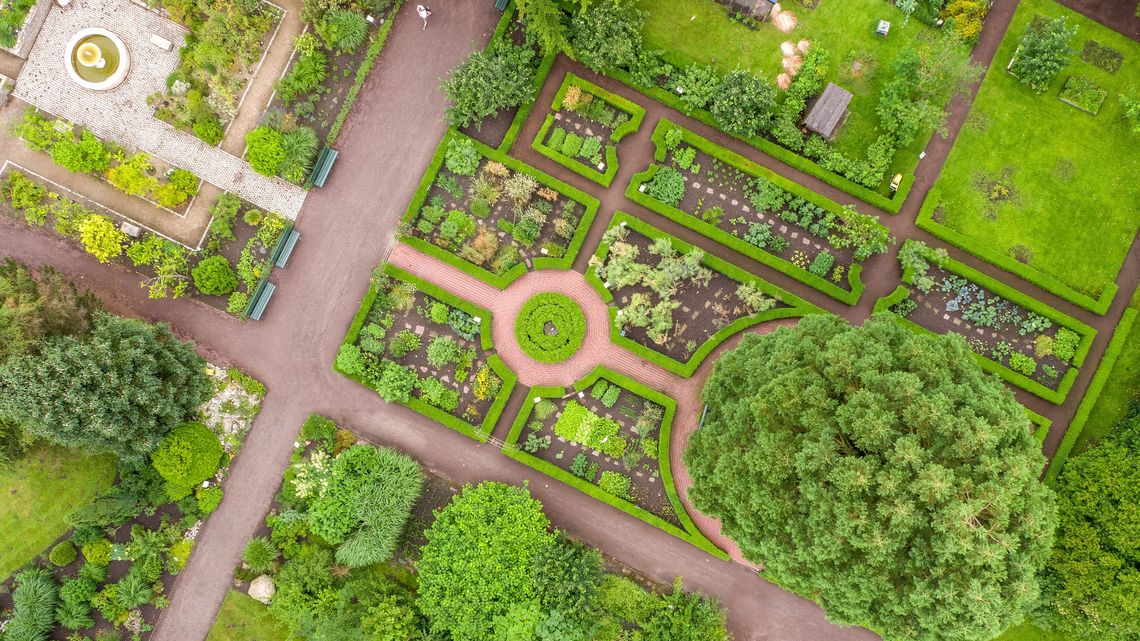
The University Botanical Garden not only has living plants in its display areas, but also has an extensive collection of seeds and fruits. Parts of these can be viewed in the pop-up store and examined under microscopes. For example, the fruit of a Seychelles palm, which is four times the size of an otherwise similar coconut. Or burrs that adhere so well that they are used as mouse traps. You can also see oat fruits that jump like grasshoppers and pine cones that have already killed people. If you like, you can plant your own kale and take it home with you.
Film evening: Waves of Change - Building Sustainable Minds

Tuesday, 14 May, 7.00 pm
Film evening followed by a discussion
How can we succeed in acting sustainably across borders and protecting the ocean? Answers to these questions are provided by the documentation of a teaching and learning project lasting several days, which was developed by biology teaching students together with their lecturers Prof. Dr Corinna Hößle and Dr Holger Winkler and carried out at Muizenberg High School in South Africa. The film shows how the global concept of "Education for Sustainable Development" can be implemented and inspires students to take responsibility for our planet.
Hands-on offer: Virtual reality for training in medicine and nursing

Monday, 13 May, 10.00 to 17.00 and Tuesday, 14 May, 9.00 a.m. to 5.00 p.m.
Participation programme of the participate@UOL project
Simply put on a pair of glasses and immediately find yourself in a patient's room or in the emergency room? Examine patients, even take blood samples? Virtual reality (VR) makes it possible! We will show you how VR is used in the degree programmes "Human Medicine" and "Nursing - Advanced Nursing Practice" and you can try it out for yourself.
Exhibition: Physics stories

Tuesday, 7 May, to Saturday, 11 May, 10.00 to 18.00 (Sat to 17.00, Thu closed)
Exhibition on historical research equipment from the field of physics
Experiments and measuring instruments from the history of physics tell their very own stories: of scientific searching, failure and discovery; of the competition between ideas and the people who vehemently defended these ideas; of the co-operation between scientists and instrument makers, which is often neglected in tradition. In the exhibition, replicas of key historical instruments are presented and explained. Science historians Dr Falk Rieß and Wolfgang Engels (both of whom will be on site) as well as numerous students and the university's workshops were involved in the creation of the devices between 1985 and 2010.
Research insights: HiRn looked at

Saturday, 4 May, 12:00 to 18:00
Insights into research from neuroscience, hearing research and psychology
Various teams will be presenting their projects in the fields of tinnitus, loneliness, depression treatment, post-Covid syndrome, hearing research and science communication. Visitors can find out about the projects at information stands, try out neurological tests and research set-ups at hands-on stations and give their opinions on current research questions on interactive walls. Short presentations on various topics round off the programme.
Exhibition: Climate neutrality under the magnifying glass

Friday, 3 May, 10 a.m. to 5 p.m.
Exhibition on the university's climate protection concept
The university has set itself the ambitious goal of being climate-neutral by 2030. At this interactive exhibition on 2 and 3 May, you can take a closer look at climate protection at the university and see what measures are planned in areas such as energy, mobility and ecology.
Lecture: Hydrogen as a miracle cure - a building block of energy transformation

Thursday, 2 May, 4.15 to 5.45 pm
Lecture and discussion with Dr Alexander Dyck, German Aerospace Centre (DLR) and lecturer at C3L - Center for Lifelong Learning
Discover the future of energy with hydrogen! This versatile building block of the energy transition is produced using innovative technologies such as electrolysis. Learn how hydrogen is used as an emission-free fuel and what infrastructure is needed for this. Discover the advantages of hydrogen as a supplement to renewable sources and how it can revolutionise sectors such as industry and transport.
Exhibition: Climate neutrality under the magnifying glass
Thursday, 2 May, 12.00 to 16.00 hrs
Exhibition on the university's climate protection concept
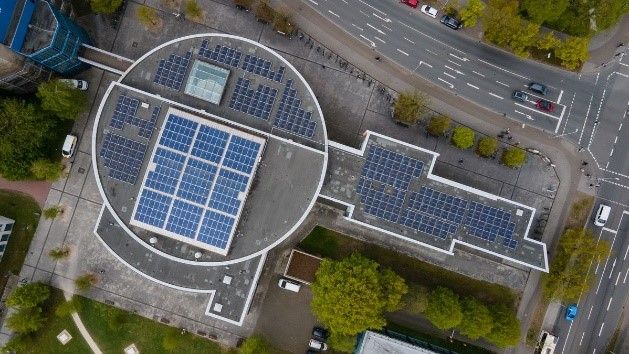
The university has set itself the ambitious goal of being climate-neutral by 2030. At this interactive exhibition, you can take a closer look at climate protection at the university and see what measures are planned in areas such as energy, mobility and ecology.
