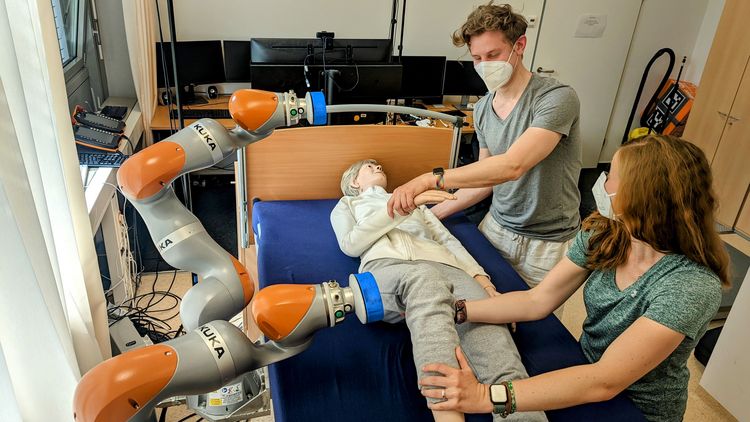
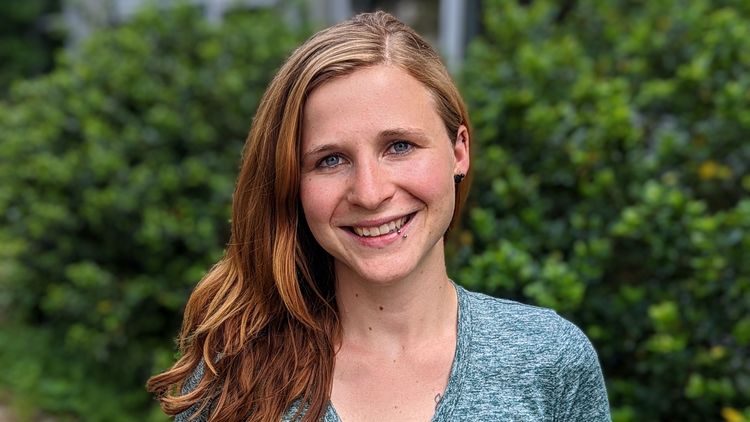
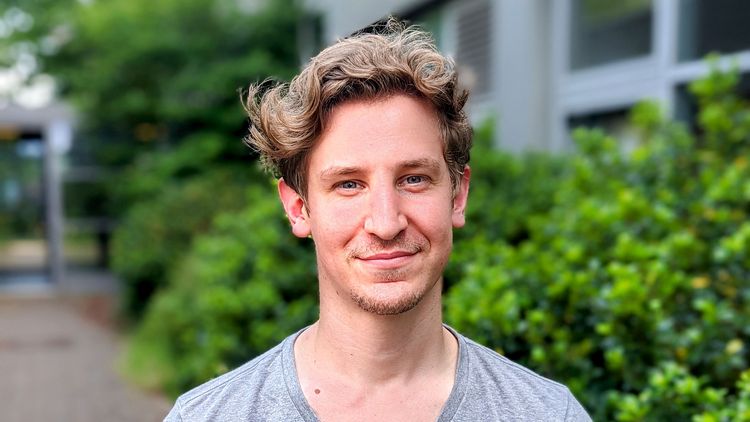
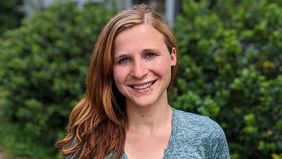
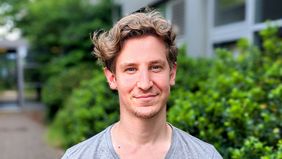
Kathrin Wandscher and Frederik Pohlmann are pioneers. The budding healthcare researchers tell us what it's like to study a subject that was newly created at the university.
The first two semesters at the University of Oldenburg were certainly unusual for them. "Together we are 33 percent of our degree programme," says Frederik Pohlmann with a laugh, pointing to himself and his fellow student Kathrin Wandscher. Six students are currently on their way to completing a Master's degree in Health Services Research, which has only been offered in Oldenburg since last winter semester. They will be the first alumni.
Older fellow students and their helpful advice or written exams from previous years to prepare for exams - this does not yet exist in the Master's in Health Services Research. Instead, students and lecturers are experiencing new firsts every day: the first seminar, the first internship, the first research paper in the degree programme.
Wandscher and Pohlmann see the small cohort size as a stroke of luck. "We also had a lot of face-to-face events last winter semester," says Kathrin Wandscher, referring to the coronavirus situation. No problem with only six prospective healthcare researchers. And when this became more difficult as the pandemic situation worsened, the students quickly considered together with their lecturers which seminars could easily be held online and which content they would prefer to learn in person.
Both of them made a conscious decision to take the risk of becoming students from the very beginning. During her bachelor's degree in Berlin, her lecturers initially recommended Kathrin Wandscher to enrol on the healthcare research master's degree programme already established there at another university. The newly qualified health scientist was promptly offered a place on the programme. "A fellow student, who knew that I was from Oldenburg, then told me about the Master's programme planned here and said that I should at least take a look at the information event," says the trained healthcare and nursing professional.
The exchange with Prof. Dr Lena Ansmann and Prof. Dr Falk Hoffmann, who both teach on the degree programme, convinced the 29-year-old. This was also the case for her fellow student, who had applied for various Master's degree programmes throughout Germany from Bremen - but ended up in neighbouring Oldenburg. He wanted to get to know as wide a variety of methods as possible during his studies and found this offer in the curriculum of the Oldenburg degree programme. Students learn, for example, how to collect quantitative research data by surveying patients or healthcare staff and when qualitative methods such as interviews are better suited to achieving a research objective. Analysing the data obtained is just as much a part of the timetable as methods of evidence synthesis and the critical evaluation of study results.
Everyday life on the still young degree programme is characterised by intensive personal contact. "We are on first-name terms with all our lecturers," the two say. Pohlmann finds it helpful that Lena Ansmann and Falk Hoffmann are both young professors. "They are able to empathise with our situation as students and are always approachable." There are also frequent exchanges with those involved in the organisation of the degree programme. "Because there is no student body yet, we all take on committee tasks," says Frederik Pohlmann, who sits on the examining board and department council on behalf of the students, while Kathrin Wandscher is a member of the admissions committee.
From next semester, this work will be spread across several shoulders. The second year of the Master's programme will then begin. Applications are still possible until 15 July 2022.
For Kathrin Wandscher, Frederik Pohlmann and their four fellow students, there will still be many firsts in their final year - until they finally receive their Master's certificate as the first graduates.