
Archive 2014
Archive 2014
Lecture on the implementation of the EU agricultural reform in Lower Saxony
As part of the series of lectures on "Agriculture and Agricultural Policy", which is offered under the direction of Prof. Dr Ingo Mose in the COAST master's cluster
, Dr Jürgen Wilhelm, policy officer from the Lower Saxony Ministry of Food, Agriculture and Consumer Protection, visited the University of Oldenburg on Monday, 6 January 2014. In front of numerous students, other interested parties from the university and various representatives from institutions outside the university, Dr Wilhelm spoke on the topic of "Implementation of the EU agricultural reform in Lower Saxony - objectives and evaluation". In his presentation, the speaker also addressed the agricultural policy objectives of the Ministry of Agriculture, which is headed by the Green Party. It became clear that the focus of future agricultural policy in Lower Saxony will be on greater consideration of environmental objectives, as also envisaged by the EU in the course of so-called "greening". In addition, family farms in particular are to be strengthened in their role in agriculture in Lower Saxony. It became clear that this does not only refer to agricultural production in the narrower sense, but to rural development as a whole. This should be more strongly orientated towards sustainability goals. The series of lectures will continue on Monday, 14 January 2014 with a presentation by the Managing Director of the Centre of Excellence for Organic Farming on the situation of organic farming in Lower Saxony. The series is organised and financed by the Jean Monnet Chair for "Europeanisation and Sustainable Spatial Development".
Download the lecture.
Excursion to Bremerhaven
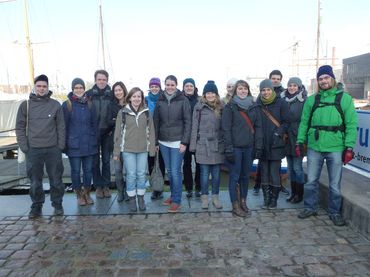
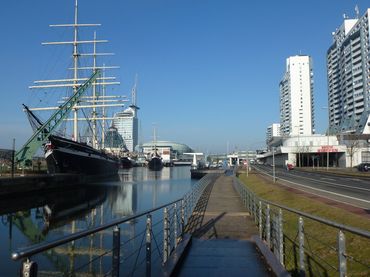
Students on the Master's degree courses in Landscape Ecology, Sustainability Economics and Management and Water and Coastal Management visited the city of Bremerhaven on 4 February 2014 as part of the "Sustainable tourism" seminar. Over the course of the day, they visited Bremerhaven Touristik GmbH, the Morgenstern Museum - Historical Museum for Bremerhaven and the surrounding area and took part in a guided tour of the city's harbours on the HafenBus. The excursion, which was led by Prof Dr Ingo Mose, also marked the end of the seminar.
Master's students develop cross-border spatial planning development concept
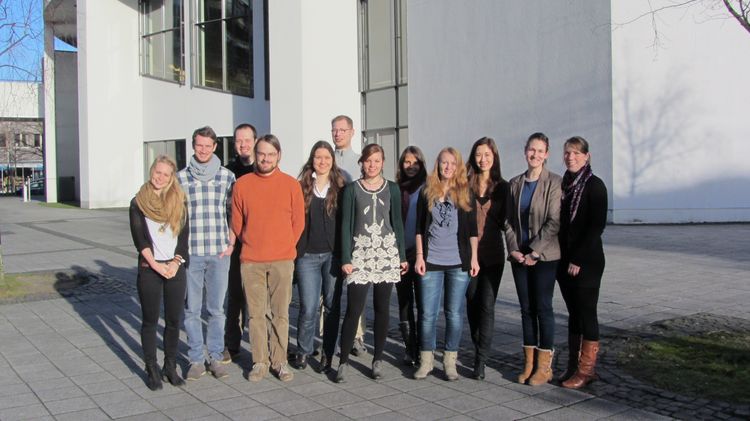
On Thursday, 13 February 2014, Oldenburg students from the Master's degree programmes in Sustainability Economics and Management and Landscape Ecology submitted proposals to the members of the Northern Sub-Commission of the German-Dutch Spatial Planning Commission for updating the mission statements for the "Cross-border Spatial Development Concept" (GREK). The proposals had been drawn up as part of a group project on "Spatial Environmental Development" led by Dr Peter Schaal and Prof Dr Ingo Mose. The UK North officially commissioned the students to work on the GREK in autumn 2013. The results presented are now to be discussed further by the UK North and subsequently incorporated into the further political decision-making process for cross-border spatial planning.
"Parks of the Future" workshop 2014
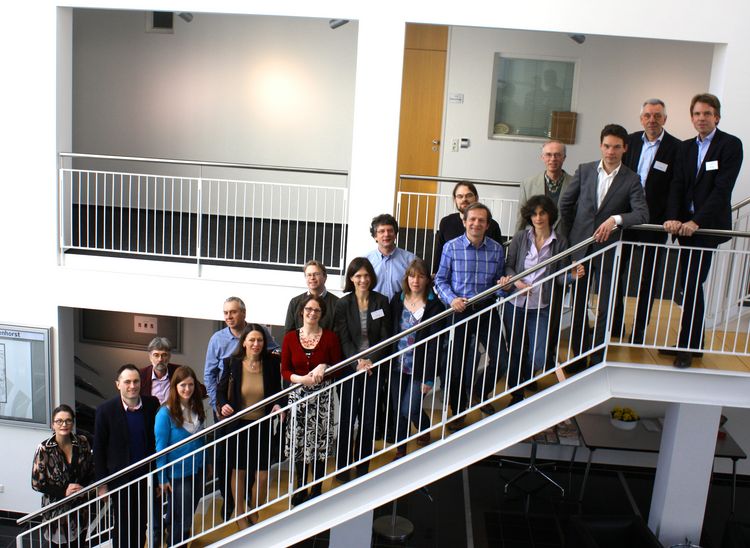
At the invitation of the Jean Monnet Chair "Europeanisation and sustainable spatial development" at the University of Oldenburg, 16 scientists and representatives of high-ranking nature conservation organisations from eight European countries discussed the future challenges of large protected areas in Europe at a workshop at the Hanse Wissenschaftskolleg in Delmenhorst from 25 to 27 March 2014 under the direction of Prof. Dr. Ingo Mose. In light of global problems such as climate change, threats to biodiversity, urban sprawl and demographic change, large protected areas, national parks, biosphere reserves, nature parks, UNESCO World Heritage sites and other categories of protected areas face particular challenges for the future. A central question here concerns the possible function of selected types of protected areas, e.g. biosphere reserves, as model regions for sustainable spatial development, in the context of which strategies for overcoming the aforementioned problems are conceivable.
The workshop participants agreed to continue the dialogue intensively at European level. The intention is to address key issues from the workshop in a book project, and a joint research initiative at European level is also being considered.
Future Day - pupil visits AG
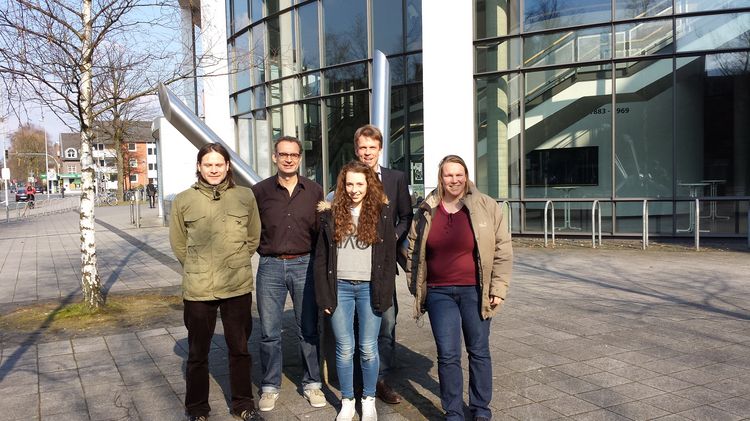
Paula Lang visited the Applied Geography and Environmental Planning working group for this year's Future Day, where pupils can take a look at possible careers. Paula is in Year 8 at Liebfrauenschule in Oldenburg. At the working group, she was able to record geographical coordinates with a GPS and then process environmental information with a geographic information system (GIS) and create a map. Paula was then given an insight into the landscape ecology laboratory and the analysis of environmental samples. At the end of the day, the pupil carried out literature research on the consequences of climate change in the Alpine region. "Today was a great change from school and super interesting for me," she said, expressing her satisfaction with the experience of the Future Day at the University of Oldenburg.
Prof Dr Ingo Mose takes up teaching position at the University of Salzburg
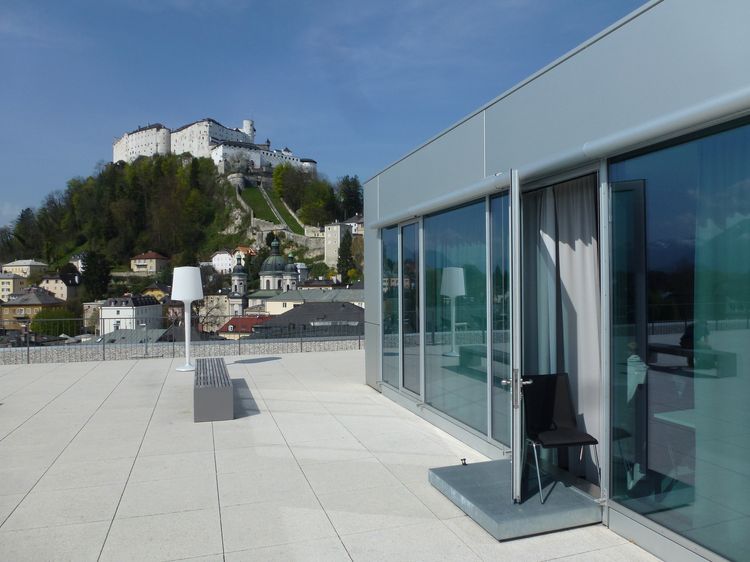
The Head of the Applied Geography and Environmental Planning Research Group, Prof. Dr Ingo Mose, is taking up a teaching post at the University of Salzburg during the summer semester of 2014 as part of the ERASMUS partnership.
Together with his colleague there, Prof. Dr Karl Müller from the Institute for German Studies is running a seminar entitled ‘On the Construction of Nature and Landscape from an Interdisciplinary Perspective’. Students from the Bachelor’s and Master’s degree programmes in German Studies and Geography are attending the course. Students of History and Theology have also enrolled. Following an initial block of sessions last week, the course will continue in June. Ingo Mose has visited the partner university in Salzburg on several occasions in the past and has also served there as a visiting professor in the Department of Geography and Geology.
Excursion to the Wildeshauser Geest Nature Park
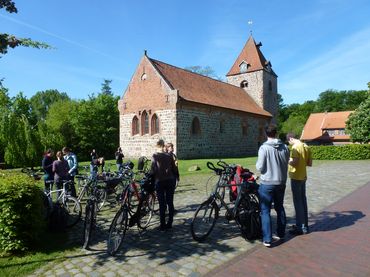
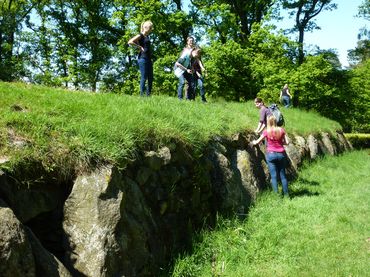
Master's students on the seminar course "Protected Areas and regional development" (Ingo Mose) explored the Wildeshauser Geest Nature Park on Friday, 16 May 2014. As part of an all-day cycling excursion, the participants visited selected tourist attractions in the nature park, including the historic town centre of Dötlingen, the Pestruper Gräberfeld nature reserve and the Kleinenkneter Steine megalithic site. The programme also included a visit to the nature park office in Wildeshausen, where Ms Iris Gallmeister informed the group about the tasks, problems and challenges of nature park management. The group travelled to and from the nature park on the NordWestBahn.
Participation in the International Conference of Rural Geography at the University of Nantes, France
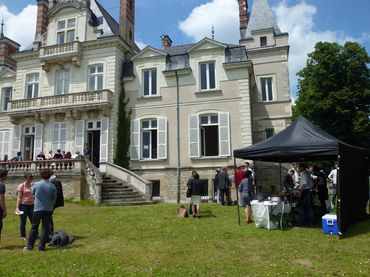
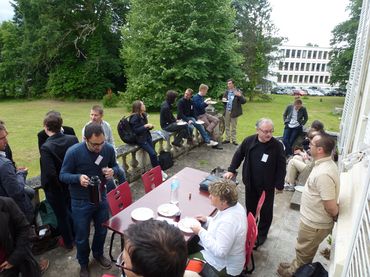
Ingo Mose took part in the International
Conference of Rural Geography at the University of Nantes, France, from 2 to 6 June 2014 as a representative of the Rural Working Group of the German Geographical Society. It was the first conference of its kind to bring together researchers with a
focus on rural geographies at a European level. The participants included geographers from Italy,
Great Britain, Portugal, Ireland, Spain and France. Germany was also represented by several participants. Together with his
colleague Luisa Vogt from the University of Applied Sciences in Soest, Ingo Mose contributed a presentation on the role and significance of regional brands in large protected areas.
Completion of KLIFF-IMPLAN and publication of the project report
The cross-sectional project "IMPLAN - IMplementation of results from KLIFF in spatial PLANNing in Lower Saxony"(www.kliff-implan.de), which is part of the Lower Saxony research network "KLIFF - Climate Impact Research in Lower Saxony"(www.kliff-niedersachsen.de) and was carried out with the participation of the Applied Geography and Environmental Planning working group at the University of Oldenburg, was completed at the end of May. As part of KLIFF-IMPLAN, recommendations for dealing with the consequences of climate change in selected fields of spatial planning were developed in collaboration with the two project partners, the Academy for Spatial Research and Planning (ARL) and the Hannover Region, as well as the IMPLAN working group accompanying the project. These fields of action include coastal protection and water management in lowland areas, inland water management, settlement and infrastructure development, the protection of biodiversity, agriculture and forestry as well as tourism.
The KLIFF-IMPLAN project report entitled "Adaptation to climate change in spatial planning - recommendations for action for planning practice in Lower Saxony at state and regional level" is available as a free pdf download at the following link: shop.arl-net.de/anpassung-klimawandel.html

4th Trilateral Research Workshop Groningen-Oldenburg-Bremen "Adaptation and social innovation in the Wadden Sea area"
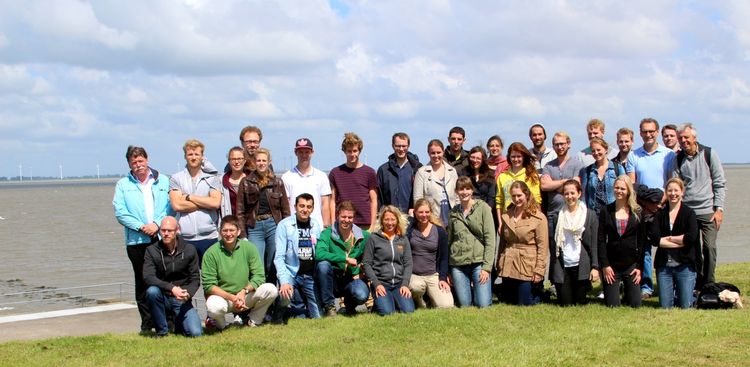
For the fourth time, around 20 students from the universities of Oldenburg, Bremen and Groningen from the fields of geography, spatial planning, environmental sciences, landscape ecology and water and coastal management met for a trilateral workshop from 12 to 14 June 2014. The event, which has been held annually since 2011 and is also attended by several lecturers from the three partner universities involved, was initiated by the Center for Sustainable Spatial Development Oldenburg (ZENARiO). The aim of the event is to promote exchange between the spatial science subjects at the universities of Oldenburg, Bremen and Groningen and to tap into potential for cooperation in teaching and research.
This year's event was organised by the School of Spatial Sciences at the University of Groningen and was held under the overall theme of "Adaptation and social innovation in the Wadden Sea area". In addition to the presentation of outstanding Bachelor's, Master's and project work in the fields of climate protection, adaptation to climate change and socio-economic innovation processes, the programme included a one-day excursion to the Groningen region. The excursion focussed on the phenomena associated with gas extraction there (land subsidence processes, earthquakes) and their consequences for regional development as well as possible adaptation and coping strategies.
The next trilateral workshop will take place at the University of Bremen in 2015.
Excusion on the topic "River develompent"
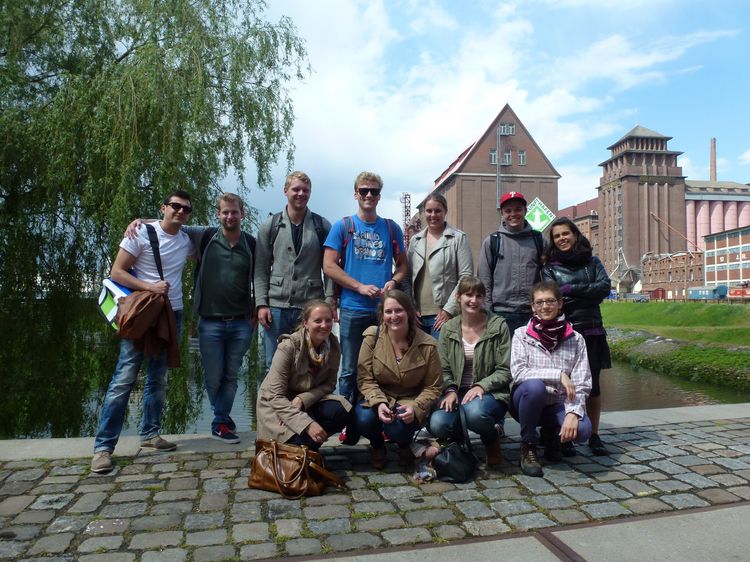
Students on the Master's degree programme in Water and Coastal Management visited various destinations in Bremen in June as part of a three-day excursion on the topic of "River development". Led by Ingo Mose, the excursion group also focussed on the development of the so-called Überseestadt. In addition to the Oldenburg students, two students from Kingston University London also took part in the excursion.
Hiddensee excursion
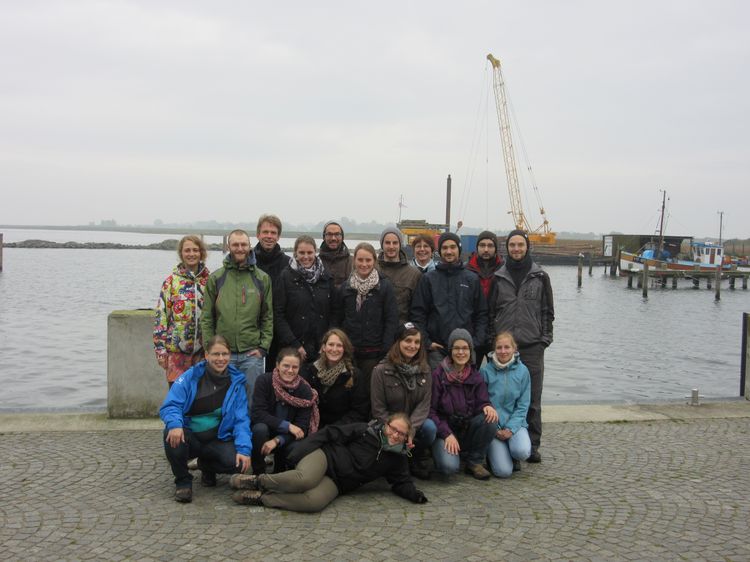
From 13 to 17 October, students on the Master's degree courses in Landscape Ecology, Water and Coastal Management and Sustaiability Economics and Management travelled to the island of Hiddensee with Prof. Dr Ingo Mose as part of the "Practice of Nature Conservation" module.
Annual conference AK Ländlicher Raum
From 13 to 15 November 2014, the
annual conference of the Working Group on Rural Areas of the German
Society for Geography will take place at the University of Oldenburg. The theme of the conference is:
"European peripheries between stagnation and awakening"
- Further information on the annual conference
Conclusion of the conference: Rural peripheries in Europe between stagnation and awakening
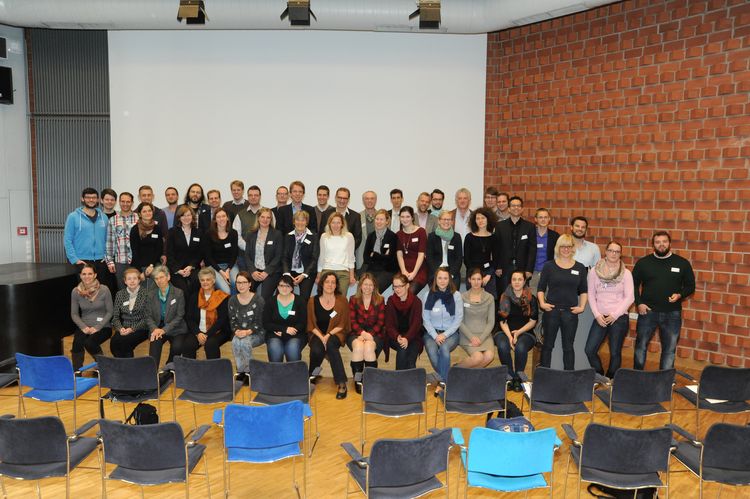
The Rural Areas Working Group of the German Geographical Society (DGfG) recently held its three-day annual conference at the University of Oldenburg for the first time. The general theme of this year's conference was "European Peripheries between Stagnation and New Beginnings" and, at the invitation of the Jean Monnet Chair "Europeanisation and Sustainable Spatial Development" of Prof. Dr. Ingo Mose, which is part of the Applied Geography and Environmental Planning working group, it brought around 60 geographers from all over Germany to Oldenburg. In keeping with the European dimension of the conference topic, several guests from other European countries - France, Luxembourg, the Netherlands, Austria, Sweden, Scotland and Portugal - also came to Oldenburg, including representatives from universities with which the University of Oldenburg maintains an ERASMUS partnership.
Research on the development of rural peripheries has always been a central theme of research on rural geography. While in the past the peripheries were predominantly perceived as problem areas or even as a "remnant" of spatial development, the image of these regions is now subject to considerable differentiation throughout Europe. As the various expert presentations made clear, this concerns both the considerable development dynamics that characterise various peripheries today and the large number of fields of action that are currently under discussion in the rural regions "on the periphery".
Several examples impressively illustrated the scope of the development processes that can be observed throughout Europe, as well as the associated challenges and problems. As the example of the Scottish Hebrides showed, revitalisation processes are often the result of bottom-up initiatives by the local population, who define their own priorities for the development of their regions. In particular, these initiatives are characterised by demands for participatory, self-responsible development based on the principles of sustainability. Projects for a "gentle" valorisation of the natural and cultural heritage for tourism, projects for the development and marketing of regional products in agriculture, but also initiatives for the use of renewable energies provide illustrative examples of such approaches.
The latter play a not uncontroversial role in many regions. The opportunities that arise from the use of renewable energies as new sources of income for rural peripheries were therefore focussed on, as well as the risks that can arise at the same time. The "cornification" of the landscape and the loss of valuable grassland biotopes, as well as the threat of being sold off to major international investors, are hotly debated topics in this context, which also affect various regions in north-west Germany.
The consequences of demographic change are also known to be associated with particular problems for many rural peripheries. The continuing exodus of younger people, the ageing of the remaining population and the associated issues relating to the provision of services of general interest are of concern to peripheral rural areas in France as well as in Sweden and Germany. However, universal solutions are not to be expected; the challenge lies rather in formulating answers adapted to the respective situation.
As part of an excursion to the district of Wesermarsch, discussions with various stakeholders "on the ground" provided interesting insights into developments right on Oldenburg's doorstep. The mayor of the municipality of Lemwerder, Ms Regina Neuke, addressed issues of local development in the face of shrinking, in particular the modernisation of outdated buildings and ensuring a sustainable infrastructure. On the other hand, Christoph Muth, Managing Director of the Center Parcs Nordseeküste in Tossens, addressed the question of what positive effects a major tourist facility can have on regional development. Finally, a visit to the Neustadt village community centre near Ovelgönne provided the opportunity to discuss the potential of civic engagement in the region with Torsten Horstmann, one of the initiators of the cooperative meeting point, and Meike Lücke from the regional management "Wesermarsch in Bewegung".
At the end of the event, Prof. Dr Ulrike Grabski-Kieron, University of Münster, and her colleague Prof. Mose, spokesperson for the Rural Areas Working Group, gave an all-round positive summary of the conference. Above all, the idea of European networking and learning from each other in an enlarged Europe was identified by all participants as an immense opportunity for overcoming future challenges in dealing with the problems of rural peripheries.