
SYN 1
Contact
Principal Investigator
PostDoc
Co-Investigators
SYN 1
Spatial community ecology: searching for ecological transitions along gentle landscape gradients
Spatial transitions between contrasting ecological communities have long interested ecologists. The concept of the “ecotone”, a distinct often narrow ecological zone between two contrasting homogenous community types, is widely used to define research and management. However, this concept has also been questioned, for example in estuaries, where a marine and freshwater communities overlap to create a two-ecocline gradient, rather than a distinct estuarine community.
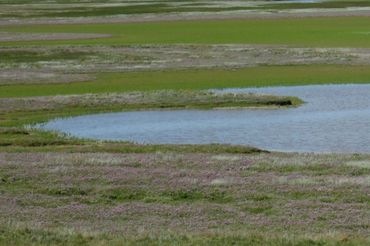
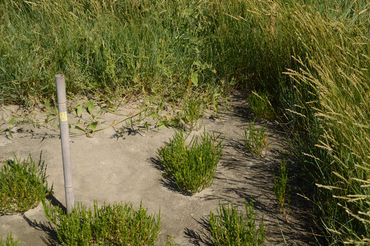
This synthesis subproject 1 (SYN 1) will take a new look at functional ecological transitions in a topographically very gradually changing landscape in the Wadden Sea. SYN 1 in this third phase of DynaCom and will integrate a wide range of multitaxa and multitrophic field observations with 9 years of data across the complete elevational gradient from (almost) fully terrestrial conditions in the upper salt marsh to the (almost) always inundated tidal flat. The dataset is unique as it includes intensive high frequency abiotic monitoring in an environmentally very stochastic system. Manipulative field experiments were combined with observations in the natural system which will help to isolate specific processes.
SYN 1 will work across two overarching objectives:
- O1: Defining the transition zone (across all available field data):
Under Objective 1, to build a solid base for your analysis, we will conduct a literature review to conceptualise how, where and when functional and structural ecological transitions can be defined in space and time. We will utilize multivariate statistics to identify functional and structural transitions along the gradient from Mean High Water Spring to Mean Low Water of Spring Tides. We will further determine if metacommunity processes, isolated in our manipulative experiments, can override the identified functional and structural transitions along the elevational gradient. - O2: Identifying the response diversity to temporal variability (magnitude vs. frequency) of abiotic conditions:
Objective 2 will focus on how the temporal variability of abiotic conditions affects species distributions. We will to this by investigation whether frequency or magnitude are better descriptors of with species presence and abundance along the gradient and whether compounding events contribute significantly to this.
Overall, we seek to better underpin long standing ecological concepts on marine-terrestrial transition zones with quantitative analysis of collaborative collected multitaxa and multitrophic multi-year field data. Through a better definition of the functional transition between the marine and terrestrial communities and better understanding of the abiotic drivers and their stochasticity, we seek to guide future management and research of coastal transition zones exposed to increasingly stochastic forcing and long-term accelerated sea level rise.