She spends a lot of time in the laboratory, but has also been to the Southern Ocean: a visit with Birgit Kürzel, Technical Assistant at the ICBM.
I've been at the Institute of Chemistry and Biology of the Marine Environment since 1992 and in Prof Dr Meinhard Simon's "Biology of Geological Processes" working group since 1997. However, I came to the University of Oldenburg over 30 years ago. Before I moved to the ICBM, I worked in various research groups. I quickly realised that the job at the university was the right one for me. I was able to work analytically and that was what I had always wanted.
I am now responsible for analytics in our working group. We analyse microorganisms in the sea, including bacteria, for example. The samples come from the Wadden Sea, the North Sea, but also from the Pacific and the southern polar seas. My job is to determine the concentration of amino acids. Amino acids are components of proteins and are released from dying organisms. They are important nutrients for the bacteria. Through the analyses, we find out which amino acids are present in the sea and are available to the bacteria. This allows us to draw conclusions about the importance of bacteria in the marine ecosystem. I find it very exciting that my analyses contribute to finding out such connections.
Today, these analyses are somewhat easier to carry out. This is because a lot has changed technically in my field. I used to have to spend a lot of time analysing the samples by hand. Today there is equipment for this. I still remember our first photometers well, where I had to change the filters myself by hand. Today, these things can be operated and adjusted electronically.
Nevertheless, I still have my toolbox to hand because the devices and machines sometimes fail. I can do minor repairs myself, I've taught myself that over the years. The job title "technical assistant" applies particularly well in such cases. I can pass this knowledge on to our students and doctoral candidates. I really enjoy doing this and it provides variety.
An absolute highlight for me was being able to accompany the research trip to the Antarctic. We travelled over 3000 kilometres from Cape Town on the "Polarstern". On the way and on site, we took samples from the sea. That was really exciting! We were travelling for a total of four weeks and naturally had to prepare well for this trip. We did a lot of planning, packed boxes with work materials and hoped that we would get everything on the ship in the end. The work was very exhausting, but I had such great experiences that I would go on the trip again at any time. Accompanying a research voyage like this was a dream I had harboured for a long time. It's great to have a job that offers opportunities like this.
Written by: Daniela Reile
-
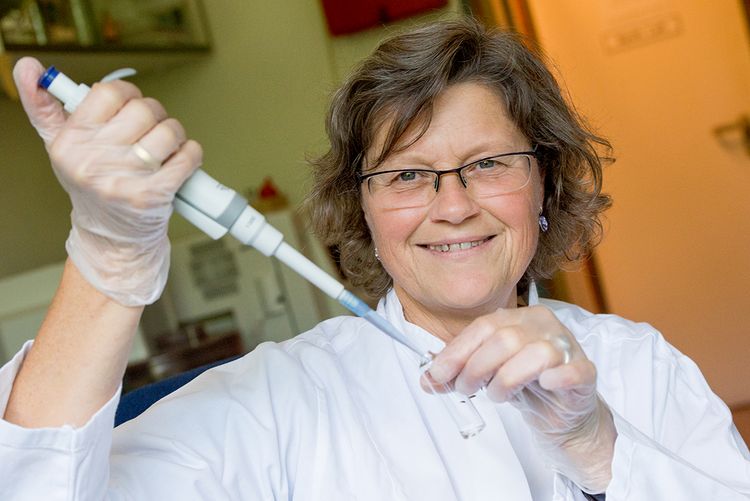
Photo: Daniel Schmidt
"Antarctica was a highlight"


Topics
- Astronomy
- Biology
- Botanical garden
- Chemistry
- Computing Science
- Cooperations
- Covid
- Culture
- Dutch Studies
- Early Career
- Economics
- Educational Sciences
- Energy
- Energy Research
- Environmental Sciences
- Equal opportunities
- German Studies
- Graduate academy
- Health Services Research
- Higher Education Policy
- History
- Human Medicine
- International affairs
- Marine Sciences
- Material Culture
- Medical ethics
- Medical Physics and Acoustics
- Music
- Neuroscience
- People
- Philosophy
- Physics
- Presidential Board
- Psychology
- Research
- Slavic Studies
- Social Sciences
- Special Needs Education
- Sport Science
- Study Affairs
- Sustainability
- Teacher Education
- Theology
- Transfer
- University Medicine
- Ukraine
- Wind Physics