

In the coming weeks, people over the age of 60 who are treated as outpatients in the emergency department of the Oldenburg Clinical Centre or Evangelical Hospital after a fall will receive an unusual admission: they can become part of a new study by University Medicine Oldenburg. The team of geriatric researchers is investigating the extent to which customised movement exercises help to maintain motor functions and prevent further falls. The Federal Ministry of Education and Research is funding the "iSeFallED" project with 1.79 million euros.
In a previous study, the researchers had already examined older people after a fall and followed them for at least twelve months. "We discovered that around two thirds of people receiving outpatient care are at risk of falling again," says Prof Dr Tania Zieschang, Professor of Geriatrics and Director of the University Clinic for Geriatrics at Oldenburg Hospital. "Whether someone falls again depends on various factors. Age plays a role, but so do cognitive limitations or concerns about falling again, for example."
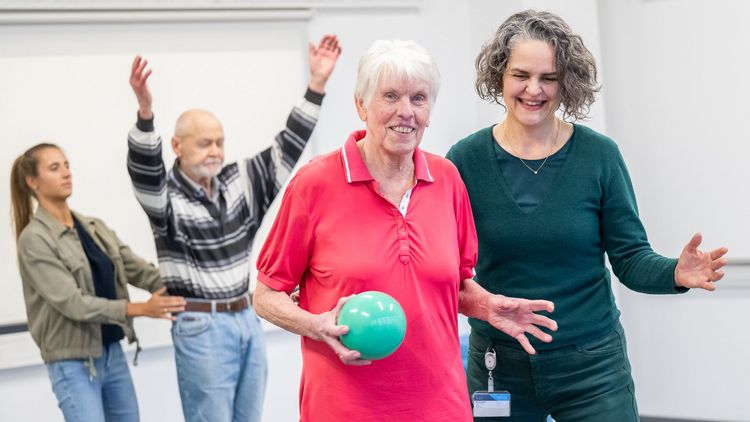
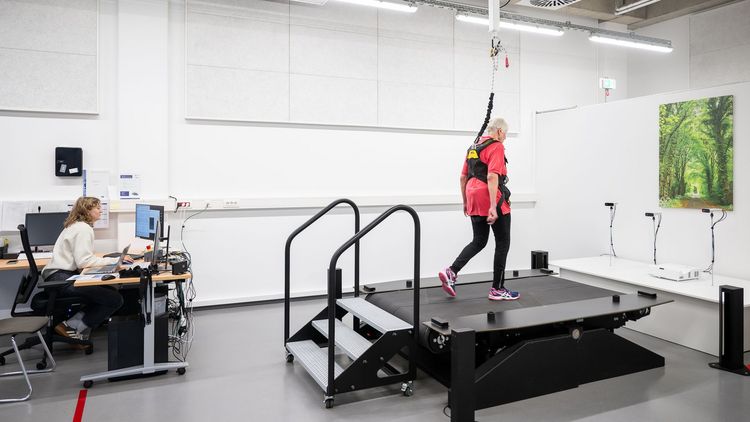
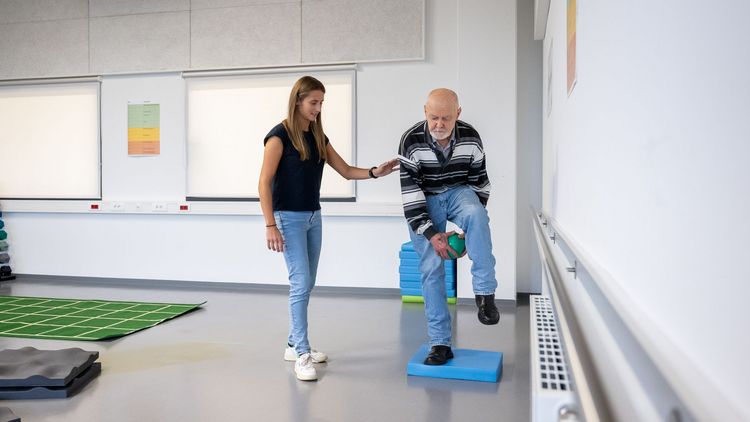
People who the researchers believe are at risk of falling again based on their previous research results are eligible to take part in the study. These people first receive a thorough check-up at the university's geriatric outpatient clinic. Together with the medical specialists, the researchers collect data on the patient's general condition, leg strength, memory or concerns about falling. If there is no medical reason not to participate in the study, the test subjects receive six months of strength and balance training customised to their personal situation. In the university's gait laboratory, for example, they train on a so-called perturbation treadmill, which simulates situations where they could fall by making unexpected stops, or do various exercises with balls, dumbbells and balance boards to ensure greater stability. The research team bases its training programme on the newly published guidelines for fall prevention, which it has adapted for implementation in Oldenburg.
Those who are unable to come to the university will be given videos to help them do the training at home three times a week. The researchers are also in dialogue with the city's sports association to offer corresponding training in sports clubs.
Six or twelve months after the start of training, the researchers will examine the test subjects again and compare the status of their general functionality with the test results at the start of the study. "In the end, we will be able to show how the risk of falling has changed as a result of the special training. These are important findings not only for geriatrics, but of course also for the study participants themselves," says study director Dr Tim Stuckenschneider.