
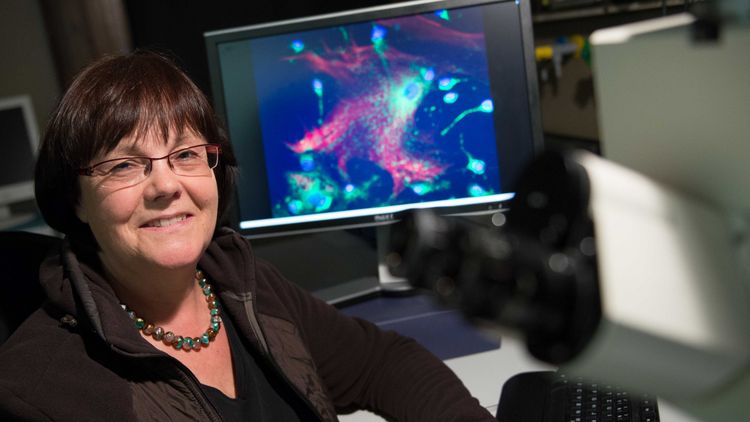


Why do neurodegenerative diseases such as Alzheimer's or Parkinson's develop and what role does "autophagy" - the self-cleaning of cells in the brain - play? An interview with molecular biologist Christiane Richter-Landsberg.
QUESTION: "Well-being and woe of the brain" was the title of this year's Oldenburg Castle Talks, to which you were invited as an expert. Is well-being just as much a part of the brain as its decay?
RICHTER-LANDSBERG: The brain is our life: It's where our thinking, remembering and feeling take place, our ability to speak and our intelligence are achievements of the brain. 100 billion nerve cells send and receive messages, and they are supported by billions of other cells, the so-called glial cells. Our brain is extremely sensitive to disruption, which manifests itself in massive functional failures, such as memory loss or movement disorders. The well-being of the brain is essential for our ability to live and our quality of life. We should endeavour to prevent - and combat - the "pain" caused by poor lifestyle choices, but also by ageing processes and neurodegenerative diseases such as Alzheimer's and Parkinson's.
QUESTION: What exactly is the focus of your research?
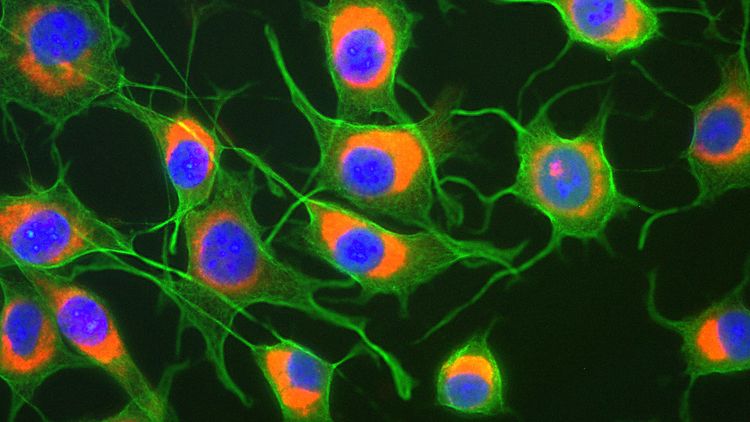
RICHTER-LANDSBERG: The cells in our brain have an extremely complex structure. They are widely branched, have a well-developed support system and are in close contact with each other. In my cell and molecular biology research, I focus on the factors that enable this cell morphology to develop under "healthy conditions" - and how the cells communicate with each other. Another focus of my work is analysing the molecular causes of pathological changes, especially in glial cells, which occur in degenerative processes of the nervous system.
QUESTION: What is the connection between such degenerative diseases?
RICHTER-LANDSBERG: Pathological deposits of proteins, typical protein clumps, can be observed in the brains of patients with Alzheimer's or Parkinson's disease and also with other diseases that are associated with memory loss or movement disorders. The questions that concern me are: How do these deposits develop, how are cells affected by them and how can they possibly be saved?
QUESTION: You also shed light on autophagy, a self-cleaning process of cells. What exactly does this mean?
RICHTER-LANDSBERG: In the course of evolution, cells have developed a strategy to break down cellular proteins that are no longer used or even entire organelles, such as the mitochondria, the power stations of our cells, and to utilise the breakdown products in the metabolism. This can be described as a kind of recycling process, i.e. efficient waste disposal. This process, known as autophagy, can also be used to dispose of large clumps of proteins and cellular waste that arise during disease.
QUESTION: If there is such a disposal system, why do pathological protein deposits arise in the first place?
RICHTER-LANDSBERG: That is one of the big questions we scientists are grappling with in this area. Cellular stress situations play an important role here, which occur, for example, in the course of inflammatory processes or during ageing. These stress situations can cause proteins to form, be altered and increasingly appear in insoluble form. In a number of diseases, genetic defects also lead to an incorrect and increased occurrence of proteins, which are then deposited. The result: the degrading systems are overloaded and no longer have sufficient capacity. However, it is also possible that the autophagic process itself is weakened or disrupted.
QUESTION: In other words, a malfunction of this process can lead to disease?
RICHTER-LANDSBERG: Yes, there is now a lot of evidence for this. For example, a disruption or weakening of the autophagic mechanism can have fatal consequences and contribute to diseases such as cancer, Alzheimer's or Parkinson's disease. In my working group, we have also been able to show that defective quality control in brain cells and an impairment of the protein-degrading systems contribute to the disease processes. We have published these latest results in international journals such as the Journal of Neurochemistry, PlosOne and Glia.
QUESTION: Is it possible to change or influence the cellular cleaning process called autophagy in order to prevent the onset of neurodegenerative diseases?
RICHTER-LANDSBERG: There are also positive results here. However, these studies have so far only been carried out on cell culture model systems or so-called transgenic mice to which foreign genetic material was transferred or in which autophagy-relevant genes were switched off. In these animals, for example, there was an increased occurrence of these typical protein clumps, which could be removed again by activating autophagy with the help of certain substances. At the same time, these animals showed improved learning and memory performance.
QUESTION: Is there any chance of a cure for neurodegenerative diseases?
RICHTER-LANDSBERG: Unfortunately, so far there have only been therapeutic measures that delay the progression of the disease, but do not cure it. However, ground-breaking progress has been made in recent decades and our findings allow us to understand the basic molecular and cell biological processes of the diseases to a large extent. The diagnostic possibilities have also improved enormously. Activities in the field of research into neurodegenerative diseases are also receiving increased support in Germany. It has been recognised that the number of diseases in the ageing population is increasing and that this represents a serious social problem. I am therefore very confident that we will find new treatment options in the next ten years that will at least delay the onset of the disease.
------------------------------------------
------------------------------------------
PROF. DR. CHRISTIANE RICHTER-LANDSBERG
Prof Dr Christiane Richter-Landsberg has been a university lecturer in "Molecular Neurobiology" in Oldenburg since 1993. She studied pharmacy in Marburg and obtained her doctorate in the subject of biology in Göttingen. After study visits to Israel and the USA, she habilitated in Bremen in 1988. Her research interests include nerve cells and glia, stress responses and the significance of stress proteins in brain cells.