
Less plastic waste in the North Sea and better cooperation in spatial planning: two new EU projects at the university are addressing these topics.
The "Treasure" project, led by Oldenburg environmental scientists Prof Dr Ingo Mose and Dr Holger Freund, aims to reduce the amount of plastic waste entering the North Sea from rivers and inland waters. The "Norsaic" project focuses on creating transnational cooperation in maritime spatial planning for the North Sea that is future-proof and based on innovative approaches to collaborative governance. The project is headed by Malena Ripken, Head of COAST - Center for Environmental and Sustainability Research at the University of Oldenburg. Both projects will be funded as part of the European Interreg North Sea programme for the next three years; 500,000 euros will go to the University of Oldenburg for Norsaic and 900,000 euros for Treasure.
The Treasure project brings together 15 partners from five European countries. The participants are setting up so-called real-world laboratories in typical North Sea regions - such as harbours, estuaries or coastal towns. Here, the researchers work together with local stakeholders. The aim is to improve cooperation at a political level in order to reduce the discharge of waste into rivers through regulations and informal framework conditions. The participants also use various methods to collect relevant data on the sources and composition of waste. Another focus is on raising awareness of plastic pollution and sensitising various target groups to the problems. In addition, the partners want to actively remove waste from rivers and investigate which methods are particularly suitable for this. In this way, robust and practice-orientated solutions are to be developed.
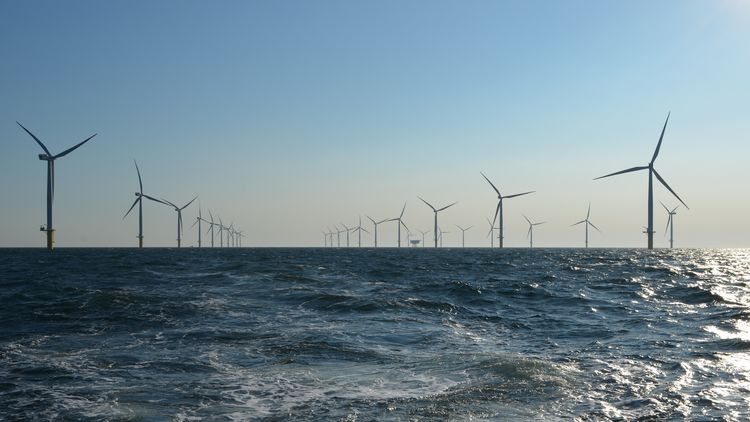
A vibrant, healthy and sustainable North Sea region is the vision of the eleven partners from six countries involved in the Norsaic project. In the face of climate change, the aim here is to bring together the various stakeholders who make intensive use of the North Sea marine space and to jointly build capacities for future cooperation in marine spatial planning. This includes, for example, further developing and adapting elements of spatial planning that address challenges such as multiple use or interactions between land and sea. In addition, processes are to be institutionalised in such a way that they can be implemented not only at local and regional level, but also at international level. In this way, the local and regional authorities involved will be able to co-operate better internationally than before.
Further topics: Hydrogen, light pollution and heat pumps
In addition to the two Interreg projects led by Oldenburg, Oldenburg researchers are also involved in three other recently approved European projects: The "Lihyp" project, in which the working group of business informatics specialist Prof. Dr Jorge Marx Gómez is involved, aims to harmonise and standardise infrastructures for the use of hydrogen across borders.
In the "Darker Sky" project, a working group led by physicist Prof. Dr Björn Poppe is working with various European partners to reduce light pollution in the North Sea region and thus contribute to the preservation of biodiversity and the creation of so-called dark ecological corridors.
In the "Aquacom" project, the participants are investigating the extent to which aquathermal technologies - i.e. the extraction of heat or cold from surface waters with the help of heat pumps - can contribute to the energy supply and, among other things, which regulatory requirements need to be created for this. An Oldenburg working group led by environmental scientist Dr Leena Karrasch is involved in this project.