
2006
2006
Physics Day 2006

This was the programme of the Day of Physics 2006.
| 09:15 | Guided tours through the research laboratories (approx. 40 minutes) | |
| 10:15 - 10:45 | Welcome and award ceremony for research papers | |
| 10:45 - 11:30 | Lecture from experimental physics: "World views in physics - observing and measuring the sky" Dr Falk Rieß | 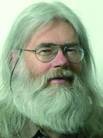 |
| 11:30 | Guided tours of the research laboratories (approx. 40 minutes) | |
| | and | |
| | Special event for teachers: "Physics in context - opportunities and ways of context-orientated physics teaching" |  |
| 12:15 | Guided tours of the research laboratories (approx. 40 minutes) | |
| 13:15 - 13:45 | Presentation of the physics degree programmes and research activities at the Institute of Physics | |
| 13:45 - 14:15 | Lecture from the Theoretical Physics Department "The universe from today's perspective" Prof Dr Jutta Kunz-Drolshagen |  |
| 14:15 - 14:45 | Diplom ... and then? Physics in academic appointments - graduates report | |
| 15:00 | Guided tours of the research laboratories (approx. 40 minutes) | |
| 17:15 | Celebratory colloquium
Since we do not fly through a wormhole at 90% of the speed of light to our workplace near a black hole every day, but live in a corner of the universe that is very well described by Newton's laws, we have unfortunately not been able to develop an intuitive approach to special and general relativistic space-time. However, thanks to fast computers and modern computer graphics, we can now simulate and visualise the relativistic effects. We may not "understand" them, but at least we can see them. The first part deals with the appearance of fast-moving objects, i.e. the effects of special relativity. Here, the interaction of Lorentz contraction and the finite speed of light results in surprising effects which, surprisingly, were only recognised and correctly described more than 50 years after Einstein's fundamental work of 1905. In the second part, the effects of gravitational light deflection are visualised. What would you see in the vicinity of neutron stars, black holes and wormholes? Internet link: | |
