Bultmann Conference 2026
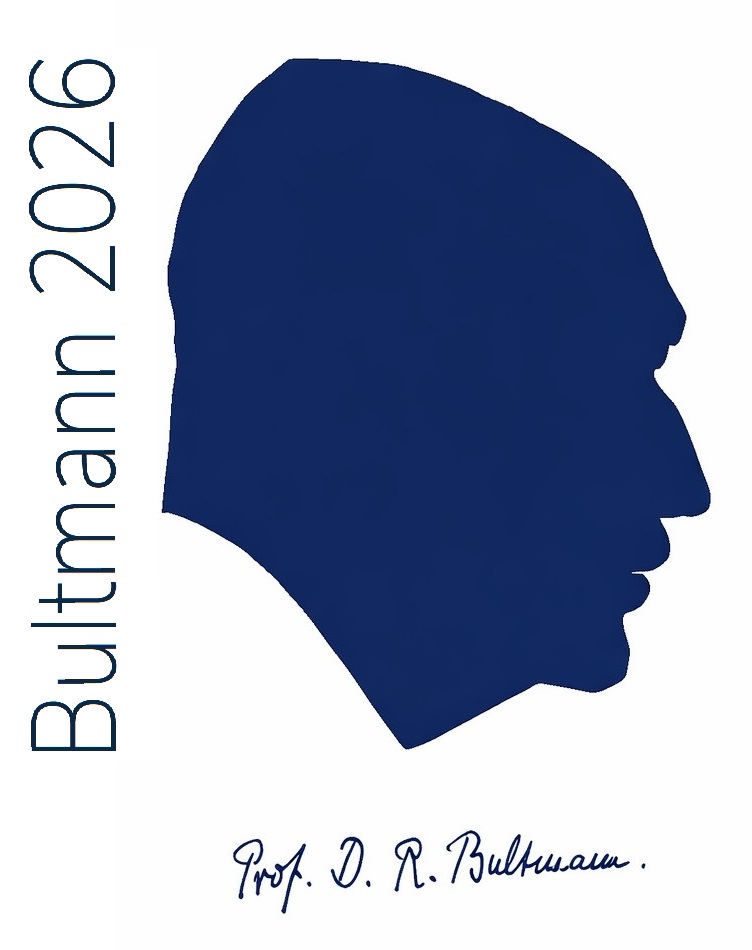
Bultmann Conference 2026
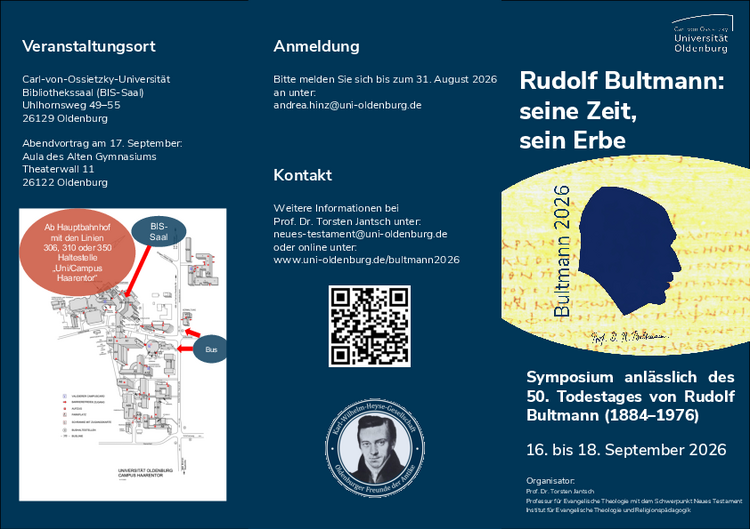
Rudolf Bultmann - his time, his legacy
Symposium on the occasion of the 50th anniversary of the death of Rudolf Bultmann (1884-1976)
University of Oldenburg, 16-18 September 2026
30 July 2026 marks the 50th anniversary of Rudolf Bultmann's death - an occasion to commemorate his work and achievements. The Oldenburg symposium is characterised by two aspects: The focus is on Rudolf Bultmann's "time" - i.e. biographical and historical aspects - and "his legacy" as an exegete and theologian.
Rudolf Bultmann was born on 20 August 1884 in Wiefelstede in the Grand Duchy of Oldenburg - around 20 kilometres from the city - and attended the Grand Ducal Grammar School (now the "Altes Gymnasium") in Oldenburg (1895-1903). His time in Oldenburg - the family lived there from 1897 - was deeply formative for the young Bultmann and laid the foundation for his departure from the "orthodox" church of his time. His father Arthur Kennedy Bultmann, pastor at St Lambert's Church in Oldenburg, had already increasingly turned away from his pietistic, biblical-positive tradition in favour of liberal theology. Rudolf Bultmann's view of Judaism was also shaped during his time in Oldenburg by his Jewish friend Leonhard Frank from Westerstede.
Building on this biographical background, the symposium will examine aspects of Bultmann's biography and place him in the context of his time. The larger focus of the symposium will also deal with Rudolf Bultmann's legacy. Rudolf Bultmann was one of the most influential theologians of the 20th century. New Testament research in the 20th and early 21st centuries developed in connection with and in opposition to Bultmann's theses. In addition to his hermeneutics of demythologisation and existential interpretation, Bultmann's numerous individual theses on many topics of New Testament exegesis influenced entire generations of New Testament scholars. Presentations at the Oldenburg symposium will situate the exegete Rudolf Bultmann in his time and discuss his legacy: What is the research-historical context of the positions advocated by Bultmann? What predecessors were there, what similar or opposing positions of others does Bultmann's respective thesis relate to? What impulses did Bultmann give to New Testament exegesis and theology in the following generations? Which of his questions and attempted solutions have influenced contemporary and subsequent researchers in "Anknüpfung und Widerspruch"? Which of the solutions proposed by Bultmann and which questions are relevant for contemporary New Testament research? What deserves reconsideration and renewed attention?
From these perspectives, the specialist lectures will examine topics of Bultmann's exegetical work, including in particular the history of form, the history of religion, the historical Jesus, the kerygma of earliest Christianity, Paul and Johannine literature. The continued impact and transformation of his existential hermeneutics and his programme of demythologisation in later theological and philosophical debates are also addressed. This will be supplemented by biographical and historical perspectives that contextualise Rudolf Bultmann's work historically.
In addition to the specialist lectures, a public evening lecture on 17 September 2026 will also be dedicated to this topic. It will take place at a historically significant location: today's Altes Gymnasium in Oldenburg, which Rudolf Bultmann attended as a pupil. Other places in Oldenburg that were formative for Bultmann's youth will also be included in the programme. Participants in the symposium will have the opportunity to take part in a guided tour of these "Bultmann sites" - places that exemplify the biography and the intellectual and religious influence of the young Rudolf Bultmann.
If you have any questions about the symposium, please contact Professor Dr Torsten Jantsch at Registrations are requested by 31 August 2026 to Ms Hinz, .