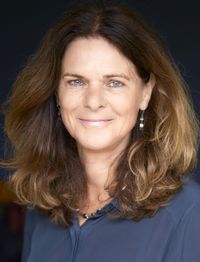
Prof Dr Dagmar Freist
Prof Dr Dagmar Freist
About the person
Academic CV:
Since October 2004 Professorship for Early Modern History, University of Oldenburg
WS 2003/04 and SoSe 2004 interim professorship Prof. Dr Ronald G. Asch, University of Osnabrück
November 2003 Appointment as senior assistant (C-2) at the University of Osnabrück
October 2003 Habilitation at the University of Osnabrück, Faculty 2; awarded the Venia legendi "Modern and Contemporary History"
1998-2003 Research Assistant, Modern History, University of Osnabrück (C-1)
1995-1998 Research Fellow at the German Historical Institute London
1992-1994 Research assistant in Department 1 (Bishop's Department) at the Evangelical Church Council, Karlsruhe, as head of the Women's Decade Centre
1992-1998 Freelancer at the Protestant Academy Baden, Bad Herrenalb
1992 Awarded a doctorate from the University of Cambridge
1991-92 Trainee teacher at the district grammar school in Gundelfingen/Freiburg i. Br.
1988-1991 Research and doctorate at the University of Cambridge, UK, on the topic "The Formation of Opinion and the Communication Network in London 1637-c. 1645"
1987 State Examination in English and History at the University of Freiburg
1981-1987 Studies at the Universities of Freiburg, Heidelberg and Cambridge
Scholarships:
1991 Research grants from the German Historical Institute, London, Archbishop Cranmer Fund, Cambridge and Prince Consort and Thirlwall Fund, Cambridge towards the completion of my PhD.
1984-90 Funding for my studies and doctorate from the Evangelische Studienwerk Villigst
Functions & Memberships
Speaker/leadership functions:
- Member of the Scientific Advisory Board of the German Maritime Museum (DSM), Leibniz Institute of History (since 2025)
- Head of the research project Wissenschaftsraum Provenienz- und Sammlungsforschung Digital(ProSaDi) funded by zukunft.niedersachsen (2024-2028)
- Head of the research project DiViAS (digitisation, visualisation and analysis of collection items) funded by zukunft.niedersachsen (2023-2026)
- (Chair of the jury for the Carl von Ossietzky Prize of the City of Oldenburg (academic appointment January 2022)
- Corresponding member of the Lower Saxony Academy of Sciences in Göttingen (since 2019)
- Chair of the Advisory Board of the German Historical Institute London of the Max Weber Foundation (November 2019 to May 2022)
- Head of the international research project Prize Papers (2018-2038) funded by the Akademieunion (Göttingen Academy of Sciences and Humanities)
- Dean of the FK IV (April 2019-March 2025)
- Deputy spokesperson of the DFG Research Training Group 1608/2 Self-Formations. Practices of subjectivation from a historical and interdisciplinary perspective (since 2011, second approval phase 2015-2021)
- Head of the BKM-funded project Freiheitsraum Reformation (2012-2017)
- Member and spokesperson of the Centre for University Didactics at the CvO University of Oldenburg (until 2012)
Academic appointments to academic and non-academic committees:
- Presidential Board of the German Protestant Church Congress (2015-2021)
- Advisory Board of the German Historical Institute London of the Max Weber Foundation (November 2014 to May 2022)
- Member of the committee of the Historical Commission of Lower Saxony (May 2013-May 2020)
- Jury of the Carl von Ossietzky Prize of the City of Oldenburg (since 2022)
- Advisory board of the Oldenburg State Library
- Corresponding member of the Göttingen Academy of Sciences and Humanities
Reviewer activity
- German Research Foundation (DFG)
- Alexander von Humboldt Foundation
- Swiss National Fund
University committees:
- Dean of School IV (April 2019-March 2025)
- Vice Dean in the Dean's Office of School IV (2011-2015 & 2017-2019)
- Director of the Institute of History (2013-2014 &2016-2017)
- Faculty Council of School IV (2005-2007 & 2013-2017)
Liaison lecturer:
The Evangelisches Studienwerk e.V. Villigst is the scholarship organisation of the Protestant churches in Germany. It currently supports around 1000 students and more than 250 doctoral candidates from all disciplines at universities and universities of applied sciences. They receive a monthly scholarship and access to a comprehensive educational programme.
A core element of the Villigst scholarship programme is the support and counselling of scholarship holders in study-related decisions or personal issues. Each scholarship holder is supervised by a director of studies from the Evangelisches Studienwerk.
At the universities, liaison lecturers offer counselling and support and are often in close contact with the conventions and the Protestant Academic Foundation.
This ensures that students receive individualised support.
As a liaison lecturer for the Studienwerk at the University of Oldenburg, I am the contact person for students who already have a scholarship from the Studienwerk and for anyone else who is interested. You are welcome to visit me during my office hours or make an appointment.
Research
Research focus:
Global microhistory, diasporas, practices of religious coexistence, state formation and legitimation of power, emergence of the public sphere, microhistory, historical praxeology, subjectivation research
Research projects:
Publications
Books:
- Governed by Opinion. Politics, Religion and the Dynamics of Communication in Stuart London 1637–1645, ed. by Dagmar Freist, Bloomsbury Academic, 2nd ed., London 2021.
- Transcultural Multiple Belongings as a Cultural-Historical Phenomenon. Spaces – Materialities – Memories, edited by Dagmar Freist, Sabine Kyora and Melanie Unseld. transcript, Bielefeld 2019 (Praktiken der Subjektivierung series, 13).
- Faith – Love – Discord. Interfaith and interdenominational marriages in Germany in the Early Modern Period. Oldenbourg Verlag: Munich 2017, (Bibliothek Altes Reich, 14)
- Connecting Worlds and People. Diasporas as Translocal Societies, ed. by Dagmar Freist and Susanne Lachenicht, Routledge 2017.
- Discourses – Bodies – Artefacts. Historical Praxeology in Early Modern Research, ed. by Dagmar Freist, transcript: Bielefeld: 2014 (Praktiken der Subjektivierung series)
- Beyond the Horizon 2: Distinction and Projection among Rural Upper Classes in Europe, 17th–19th Centuries, edited by Dagmar Freist and Frank Schmekel, Aschendorff Verlag: Münster 2013.
- Self-Formations: Social and Cultural Practices of Subjectivation, edited by Thomas Alkemeyer, Gunilla Budde and Dagmar Freist, transcript Verlag: Bielefeld 2013 (Praktiken der Subjektivierung series)
- Living with Religious Diversity in Early-modern Europe, ed. by Scott Dixon, Dagmar Freist, Mark Greengrass, Ashgate: Farnham 2009 ( = St. Andrews Studies in Reformation History)
- Flashes of Inspiration: Researchers, Inventors and Scholars in the Oldenburg Region, edited by Dagmar Freist and Wolfgang Erich Müller, Isensee Verlag: Oldenburg 2009.
- Absolutism. Controversies surrounding history, edited by Andreas Bauerkämper, Edgar Wolfrum and Peter Steinbach, Wissenschaftliche Buchgesellschaft, Darmstadt: Wissenschaftliche Buchgesellschaft 2008.
- History as a Science and as a Profession, edited by Gunilla Budde, Dagmar Freist and Hilke Günther-Arndt, Berlin: Akademie Verlag 2008
- Historical Sources. Building Bridges between Historical Research and History Education. Festschrift for Hilke Günther Arndt, edited by Gunilla Busse, Dagmar Freist and Dietmar von Reeken, Berlin 2008.
- State Formation as a Cultural Process. Structural Change and the Legitimation of Rule in the Early Modern Period, edited by Ronald G. Asch and Dagmar Freist, Böhlau Verlag: Cologne/Weimar/Vienna 2005, 442 pp.
- *Governed by Opinion: Politics, Religion and the Dynamics of Communication in Stuart London 1637–1645*, Tauris: London 1997, 383 pp.
- Snow White in a Glass Coffin? Women in the Museum, co-authored with Cornelia Brink et al., Geschichtswerkstatt 27 (1994)
- Jews: Insights into Past Lifestyles, co-authored with Peter Fäßler et al., Geschichtswerkstatt 15 (1988)
Articles:
- Microhistory in Germany: Emergence, Methods, Themes, Debates, in: Sigurður Gylfi Magnússon, Deivy Ferreira Carneiro and Thomas V. Cohen (eds.): The Bloomsbury Handbook of Microhistory: Origins, Present State and Prospects, London/New York/Dublin 2026, pp. 95–122.
- Co-authored with Lucas Haasis. “The Prize Papers: Product and Testimony of Global Confrontations, Colonialism and Interconnections in the Early Modern Period (1652–1815).” Globalgeschichte / Global History1 (2023): 77–106.
- The Prize Papers. Uncurated Histories of Global Scope, in: The Sea. Maritime Worlds in the Early Modern Period, ed. by Peter Burschel and Sünne Jutercenka. Bölau Verlag: Weimar/Cologne/Vienna 2021, 267–280.
- Afterword: memory practices and global Protestantism, in: Remembering the Reformation, ed. by Brian Cummings, Ceri Law, Karis Riley and Alexandra Walsham. Routledge: London / New York 2020, 286–299.
- The Prize Papers. Uncurated Histories of Global Scope, in: The Sea. Maritime Worlds in the Early Modern Period, edited by Peter Burschel and Sünne Jutercenka. Bölau Verlag: Weimar/Cologne/Vienna 2020 (to be published in August 2020).
- Expansion, space, and people, in: Interpreting Early Modern Europe, ed. C. Scott Dixon / Beat Kümin. Routledge: London / New York 2020, 268–296.
- Where were you born, and where have you lived? Multiple affiliations and self-localisation: the example of the Herrnhut World Community in the 18th century, in: Transcultural Multiple Affiliations as a Cultural-Historical Phenomenon. Spaces – Materialities – Memories, ed. by Dagmar Freist, Sabine Kyora, Melanie Unseld. transcript, Bielefeld 2019 (Praktiken der Subjektivierung series, 13), pp. 83–101.
- A Global Microhistory of the Early Modern Period. Social Sites and the Interconnectedness of Human Lives, in: QUADERNI STORICI 155 / vol. LII, no. 2, August 2017, pp. 537–555.
- A very warm Surinam kiss: Staying connected, getting engaged – interlacing social sites of the Moravian Diaspora, in: Connecting Worlds and People. Early modern Diasporas, ed. by Dagmar Freist, Susanne Lachenicht. Routledge: London 2017, pp. 62–80.
- Religion and Belief, in: A Cultural History of Dress and Fashion in the Age of Enlightenment, ed. by Peter McNeil. Bloomsbury: London 2017, pp. 87–104 (A Cultural History of Dress and Fashion, 6 vols. Ed. by Susan Vincent)
- ‘The Settlement of Trade at Harburg’. Visions of an 18th-century entrepreneur, in: *Ad laudem et gloriam*. Festschrift for Rudolf Holbach, ed. by Sarah Neumann et al. Verlag für Geschichte und Kultur: Trier 2016, pp. 17–32.
- Discourses – Bodies – Artefacts. Historical Praxeology in Early Modern Research – An Approach, in: Discourses – Bodies – Artefacts. Historical Praxeology in Early Modern Research, edited by Dagmar Freist. transcript: Bielefeld 2015 (series: Practices of Subjectivation, vol. 4), pp. 9–30.
- ‘I am sending you something foreign and unfamiliar’. Epistolary practices as a strategy of reassurance across space and time within the colonial structure of the early modern period, in: Discourses – Bodies – Artefacts. Historical Praxeology in Early Modern Research, edited by Dagmar Freist. transcript: Bielefeld 2015 (series: Practices of Subjectivation, vol. 4), pp. 373–404.
- Material Practices in the Early Modern Period – An Introduction, in: Practices of the Early Modern Period. Actors – Actions – Artefacts, edited by Arndt Brendecke. Böhlau: Weimar/Cologne/Vienna 2015, pp. 267–274.
- Historical Praxeology as Micro-History, in: Practices of the Early Modern Period. Actors–Actions–Artefacts, edited by Arndt Brendecke. Böhlau: Weimar/Cologne/Vienna 2015, pp. 62–77.
- Between Conscience and Coercion: Mixed Marriages, Church, Secular Authority, and Family, in: Mary Lindemann, David Luebke (eds.), Mixed Matches: Transgressive Unions in Early Modern Germany, New York/Oxford: Berghahn Books 2014, pp. 185–212.
- ‘I shall paint a picture of myself for you’ – Practices of self-formation caught between class-based norms and social dynamics. In: Alkemeyer, Thomas/Budde, Gunilla/Freist, Dagmar (eds.): Self-Formations. Social and Cultural Practices of Subjectivation. Bielefeld 2013, pp. 151–174.
- Introduction co-authored with Thomas Alkemeyer and Gunilla Budde, in: Alkemeyer, Thomas/Budde, Gunilla/Freist, Dagmar (eds.): Selbst-Bildungen. Social and Cultural Practices of Subjectivation. Bielefeld 2013, pp.
- Lost in time and space? Glocal memoryscapes in the early modern world, in: *Memory before modernity. Practices of memory in early modern Europe*, ed. Erika Kuijpers, Judith Pollmann, Johannes Müller and Jasper van der Steen, Brill Publishers: Leiden 2013, pp. 203–221
- Uneasy trust relations and cross-cultural encounters on trial – migrants in early modern Europe, in: Agents of Transculturation: Border-Crossers, Mediators, Go-Betweens. Ed. Sebastian Jobs and Gesa Mackenthun. Waxmann: Münster, 2013, p.
- Dress to impress: Fashion as a material practice of social distinction amongst the rural upper classes of north-western Germany, in: Beyond the Horizon 2: Distinction and Projection of Rural Upper Classes in Europe, 17th–19th Centuries, ed. by Dagmar Freist and Frank Schmekel, Aschendorff Verlag: Münster 201, pp. 91–103
- Introduction co-authored with Frank Schmekel, in: *Behind the Horizon 2: Distinction and Projection of Rural Upper Classes in Europe, 17th–19th Centuries*, edited by Dagmar Freist and Frank Schmekel, Aschendorff Verlag: Münster 2013, p.
- Freist, Dagmar: The ‘Dutch Century’, in: European History Online (EGO), edited by the Leibniz Institute for European History (IEG), Mainz 26 April 2012. URL: www.ieg-ego.eu/freistd-2012-de URN: urn:nbn:de:0159-2012042617 [YYYY-MM-DD].
- Freist, Dagmar: ‘The “Dutch Century”’, in: European History Online (EGO), ed. by the Leibniz Institute for European History (IEG), Mainz 17 October 2012. URL: www.ieg-ego.eu/freistd-2012-en URN: urn:nbn:de:0159-2012101701 [YYYY-MM-DD].
- Religious certainties and threats to ‘salvation’ – religious and political sensitivities in Electoral Saxony since Augustus the Strong’s conversion to Catholicism, in: Rosseaux, Ulrich/Poppe, Gerhard (eds.), Denomination and Conflict. Religious Pluralisation in Saxony in the 18th and 19th Centuries, Münster 2012. pp. 35–53
- Bertha Ramsauer and the Self-Education of the Individual, in: Oldenburg Yearbook
Volume 112, 2012, pp. 133–150. - Freist, Dagmar: ‘The Staple of News’. Spaces, Media and the Availability of Knowledge in Early Modern London, in: Gerd Schwerhoff (ed.): City and Public Sphere in the Early Modern Period, Cologne et al. 2011, pp. 97–123 ( = Urban Studies. Publications of the Institute for Comparative Urban History in Münster, ed. by Werner Freitag, vol. 83)
- Freist, Dagmar: Popery in Perfection: The Experience of Catholicism – Henrietta Maria between private practice and public discourse, in: Michael Braddick, David Smith (eds.), The Experience of Revolution in Stuart Britain: essays presented to John Morrill to mark his65th birthday, Cambridge C.U.P., 2011, pp. 33–51
- Freist, Dagmar: Southern Dutch Calvinist Refugees in Europe since the Early Modern Period, in: Klaus J. Bade, Pieter C. Emmer, Leo Lucassen and Jochen Oltmer (eds). *The Encyclopaedia of European Migration and Minorities. From the 17th Century to the Present*, Cambridge University Press, 2011, pp. 319–325
- Foundations of Modern Forms of Political Organisation in the Middle Ages and Early Modern Period. In: Ulrich Baumgärtner, Herbert Rogger, Wolf Weigand (eds.): Horizonte 12. History for Bavarian Grammar Schools, Braunschweig 2010, pp. 52–105.
- Crossing Religious Borders: The Experience of Religious Difference and its Impact on Mixed Marriages in Eighteenth-Century Germany. In: Scott Dixon, Dagmar Freist, Mark Greengrass (eds.): Living with Religious Diversity in Early Modern Europe, Farnham 2009, pp. 203–224.
- Networks and Cultural Transfer in the Early Modern Period, in: North, Michael (ed.): Cultural Exchange. A Review and Future Directions in Early Modern Research, Cologne/Weimar/Vienna 2009, pp. 291–296.
- Migration and Trade. Economic Interconnections in North-West Germany in the 17th and 18th Centuries, in: Lower Saxony Yearbook of History, Vol. 81, 2009, pp. 225–250
- Berta Ramsauer. In: Anne G. Kosfeld (ed.): From the Scholar’s Study to the Lecture Theatre – Female Scholars in Oldenburg through the Ages. Exhibition catalogue, Oldenburg 2009, pp. 126–171.
- Berta Ramsauer, in: Flashes of Inspiration. Researchers, Inventors and Scholars in the Oldenburg Region, ed. by Dagmar Freist and Wolfgang Erich Müller, Oldenburg 2009, pp. 92–97.
- With Gunilla Budde, ‘Procedures, Methods, Practices’. In: Gunilla Budde, Dagmar Freist, Hilke Günther-Arndt (eds.): History as a Science and as a Profession, Berlin 2008, pp. 158–177.
- A History of Historiography. In: Gunilla Budde, Dagmar Freist, Hilke Günther-Arndt (eds.): History as a Science and as a Profession, Berlin 2008, pp. 178–196.
- Age and Denomination. On the Problem of Maturity in Religious Matters. In: Arndt Brendecke, Ralf-Peter Fuchs, Edith Koller (eds.): The Authority of Time in the Early Modern Period. Münster etc. 2007 (Pluralisation and Authority in the Early Modern Period 8), pp. 47–70.
- Law and Legal Practice in the Age of Enlightenment: The Case of the Baptism of Jewish Children, in: Andreas Gotzmann, Stefan Wendehorst (eds.), Jews in Law. New Approaches to the Legal History of Jews in the Old Empire, ZHF Supplement 39 (2007), pp. 109–137
- Child Conversions in the Early Modern Period. In: Ute Lotz-Heumann, Jan-Friedrich Missfelder, Matthias Pohlig (eds.): Conversion and Denomination in the Early Modern Period ( = Schriften des Vereins für Reformationsgeschichte, 205), Gütersloh 2007, 393–429.
- Calvinist refugees from the Southern Netherlands in Europe since the Early Modern Period, in: Migration – Integration – Minorities since the 17th Century: A European Encyclopaedia, edited by Klaus Bade, Pieter C. Emmer, Leo Lucassen and Jochen Oltmer, Paderborn 2007, pp. 1019–1029.
- Representations and Appropriation of Religious Difference in a Biconfessional Territory in17th and18th-century Germany. In: Representing Religious Pluralisation in Early Modern Europe. Edited by Andreas Höfele, Enno Ruge and Gabriele Schmidt, Münster: LIT Verlag, 2007, pp. 143–161.
- Taverns as Centres of Early Modern Public Life: London in the 17th Century, in: Communication and Media in the Early Modern Period. Supplement to the *Historische Zeitschrift*, edited by Johannes Burkhardt, Munich 2005, pp. 201–224
- The Albini Case – Legal Disputes over Parental Authority in Mixed-Denomination Marriages, in: In Own Cause. Women before the Highest Courts of the Holy Roman Empire, edited by Siegrid Westphal. Cologne/Vienna 2005, pp. 245–270.
- Religious Violence in Early Modern Germany, in: Leidschrift, vol. 20, no. 1, April 2005, pp. 141–152.
- Introduction: State-building, local processes of rule and cultural change in the early modern period, in: State-building as a Cultural Process. Structural Change and the Legitimation of Rule in the Early Modern Period, edited by Ronald G. Asch and Dagmar Freist, Cologne/Weimar/Vienna 2005, pp. 1–47
- The Public Sphere and the Legitimation of Rule in the Early Modern Period: A Comparison of Germany and England, in: State Formation as a Cultural Process. Structural Change and the Legitimation of Rule in the Early Modern Period, ed. by Ronald G. Asch and Dagmar Freist, Cologne/Weimar/Vienna 2005, pp. 322–351
- Forced Conversion of Jewish Children in the Electoral Palatinate in the 18th Century – On the Question of Tolerance in the Age of Enlightenment, in: Horst Lademacher (ed.): Tolerance in German and Dutch Society, 16th–19th Centuries ( = Studies in the History and Culture of North-Western Europe, 2), Münster et al. 2004, pp. 400–421.
- Kilvert, Richard (c. 1588–1650), in: New DNB vol. 31, Oxford 2004, pp. 578–579.
- Abell, William (c. 1584–1655), in: New DNB vol. 1, Oxford 2004, pp. 71–72.
- One Body—Two Confessions: Mixed Marriages in Germany, in: Gender in Early Modern German History ( = Past and Present Publications), ed. by Ulinka Rublack, Cambridge 2002, pp. 275–305.
- Between Freedom of Religion and Compulsion of Conscience: Imperial Law and the Treatment of Mixed Marriages after 1648, in: Peace – Reconstructing a European Vision. 2 vols. Vol. 2: Peace and War in the Early Modern Period. The European State Order and the Non-European World, edited by Ronald G. Asch et al. Munich 2001, pp. 294–322.
- Gender History: Norms and Social Practice, in: Oldenbourg Textbook of History. Vol. 1: Early Modern Period, ed. by Anette Völker-Rasor. Munich 2000, pp. 183–202.
- Religious Difference and the Experience of Widowhood in Seventeenth- and Eighteenth-Century Germany, in: *Widowhood in Medieval and Early Modern Europe*, edited by Sandra Cavallo and Lyndan Warner, London 1999, pp. 164–178.
- Reform of the Mind – Reform of the Body Politic. Gender Relations and Reform Policies in late Twentieth-Century Britain, in: Political Reform in Britain, 1886–1996. Themes, Ideas, Policies, edited by Ulrike Jordan and Wolfram Kaiser, Bochum 1997 (German Association for the Study of British History and Politics, 37), pp. 151–167.
- Journals on Historical Women’s Studies. An International Comparison, in: Geschichte und Gesellschaft 22/1 (1996), pp. 97–117.
- ‘The King’s Crown is the Whore of Babylon’. Politics, Gender and Communication in Mid-Seventeenth-Century England, in: *Gender & History* 7/3 (1995), Special Issue: *Presentations of the Self in Early Modern England*, edited by Amy Louise Erickson and Ross Balzaretti, pp. 457–481.
- Everyday History of the Jews: In Search of New Approaches to Jewish History, in: German History 7/2 (1989), pp. 248–253.
Videos and podcasts
Freedom - with Dagmar Freist and Ute Frevert, Enzyklopädie der ganz großen Worte:
In this episode of our podcast "Enzyklopädie der ganz großen Worte" we look at the concept of freedom. Prof Dr Christoph Markschies, President of the Academies' Union, talks to his guests Prof Dr Dagmar Freist, Head of the Academies' Prize Papers project, and Prof Dr Ute Frevert, President of the Max Weber Foundation, about one of the most important foundations of our social cohesion.
In keeping with the Science Year 2024 - Freedom and the ever-increasing debates about the term and its appropriation by a wide variety of groups, this podcast episode discusses both the historical foundations and the current challenges for our liberal society.
Unopened letters from the past: a podcast with Prof Dr Dagmar Freist and Deutschlandfunk Kultur
Historian Dagmar Freist and her colleagues are allowed to evaluate and digitise 4000 boxes of material. The "Prize Papers", letters collected from captured ships, show life in the 17th and 18th centuries in unprecedented detail.
The following articles offer a deeper insight into Prof Dr Dagmar Freist's research: