
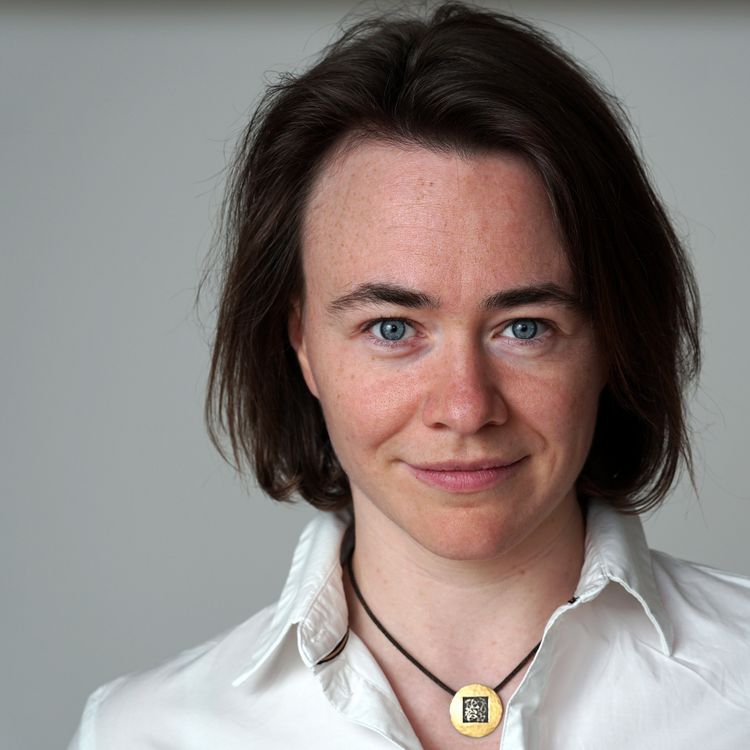
Dr Daniela Poppinga (32), former physics student and doctoral candidate in the "Medical Radiation Physics" department, spoke in the podcast "Meet your Future" of the Young German Physical Society (jDPG) about her physics studies at the University of Oldenburg, her academic appointment and her day-to-day work as a research scientist at a German medical technology company. Here is an extract from the interview:
Why did you study physics?
I had private contacts in the Acoustics Department of Medical Physics and Acoustics and was then a test subject in several hearing experiments. The insight into this research inspired me so much that I started studying physics in 2008.
What happened next at the University of Oldenburg?
I initially started my bachelor's thesis in the Department of Acoustics, but I realised that the subject didn't really suit me. I then dropped out and started again in 2011 in the Department of Medical Radiotherapy, which is based in the Clinic for Radiotherapy and Radiooncology at the Pius Hospital in Oldenburg. This change was a big step for me. Both professors, Prof Steven van de Par from Acoustics and Prof Dr Björn Poppe from Medical Radiation Physics, were very supportive. After my Bachelor's thesis, I also completed my Master's in Medical Radiation Physics.
What was the topic of your Master's thesis?
I looked at the effects of film dosimetry. There are various measurement techniques in radiation physics to measure the strength of radiation, for example electronic devices such as ionisation chambers or Geiger-Müller counters. And there are films or "images" - many people here are familiar with the old X-ray images that were developed on film. In my Master's thesis, I looked at how a special type of these films, radiochromic films, work and developed a new correction algorithm for analysing these films. That was a very specialised field of research. In the end, I published a scientific article in an American journal alongside my Master's thesis, and I was the first author. This publication was a great experience for me as a young researcher.
You also wrote your doctoral thesis in the department, why and what was it about?
After my Master's thesis, I was offered a PhD position in Prof Dr Björn Poppe 's Medical Radiation Physics working group. I didn't have to think twice and accepted. During my doctorate, I focussed on the field of small-field dosimetry. Modern radiotherapy can treat ever smaller volumes more and more precisely. A prerequisite for this is to know and measure the radiation precisely even in these very small spatial dimensions. A challenge for measurement technology! My doctorate was very experimentally orientated and so I was able to gain a lot of experience with medical irradiation equipment as well as experimental facilities at the Physikalisch-Technische Bundesanstalt in Braunschweig (PTB) and considered and carried out several larger experiments for my work. The PhD period was also very interesting and important for me and I felt very well supported in the working group.
What was your further academic appointment like?
Since starting my bachelor's thesis, I have always worked for a few hours on the side at the Department of Radiotherapy and Radiation Oncology. Initially as an assistant, but after completing my Master's degree, I completed further education to become a medical physics expert and then worked as a medical physicist in radiotherapy. That was an important and very instructive time - I particularly enjoyed the mix of hospital work and scientific work. At the beginning of 2018, I then switched from hospital life to the medical technology industry and decided to take up the position of Research Scientist at PTW in Freiburg. I still work closely with hospitals here. As a physicist, I can really help shape things, take responsibility and see directly how research helps other people.
What does a medical physicist actually do?
Just as medical students complete specialist training in a particular speciality after graduating, physics or medical physics students can follow further education to become medical physics experts. In radiotherapy, medical staff and medical physicists work as equals in the hospital - as a team. Physicists are ultimately responsible for implementing the prescribed medical therapy, i.e. the type, quantity and dose of radiotherapy. The medical physicists are also responsible for deciding how radiation is to be administered and with which equipment. Medical Physics is also responsible for the quality assurance of the equipment and computer systems.
What does your work as a medical physicist look like today?
In my current position as a Research Scientist, I conduct research with the devices developed by PTW. Among other things, I am in contact with the working groups in various hospitals, including my old team from Oldenburg. I also coordinate this research work. I also work with large research institutions such as the Physikalisch-Technische Bundesanstalt in Braunschweig (PTB) or CERN. On the whole, I get to know both everyday clinical life and the research working groups - that's what I find so exciting about the job.
Is there an opportunity for anyone interested to get a taste of this field?
The German Society for Medical Physics (DGMP) is a good point of contact for students interested in this field. There are also corresponding degree programmes at various universities in Germany where you can find out more about the course. Hospitals with radiotherapy departments, especially university hospitals, are also often open to internships.