
Publications
Publications
1. on the way to middle-class life. Kindheit und Erziehung in deutschen und englischen Bürgerfamilien, 1840-1914, Göttingen 1994 (Bürgertum. Beiträge zur europäischen Gesellschaftsgeschichte, vol. 6), 512 pp. (printed version of the dissertation).

2. women of the intelligentsia. Women Academics in the GDR, 1945 to 1975, Göttingen 2003, 430 pp. (printed version of the habilitation)

3. together with Mareike Witkowski: Beethoven unterm Hakenkreuz. The Oldenburg State Orchestra during National Socialism, Oldenburg 2007, 117 pp.


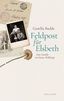


8th Childhood on the Hill - The Children of Gustav and Bertha Krupp von Bohlen und Halbach, Münster, 2025.
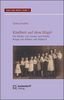
1 I was always awake in my dreams. Das Leben des Dienstmädchens Sophia von ihr selbst erzählt, 2nd ed., Bonn 1990, 120 pp.

2. together with Christoph Conrad, Oliver Janz, Ralph Jessen and Thomas Welskopp, Jürgen Kocka. Interventions. The historian in public responsibility. Jürgen Kocka on his 60th birthday, Göttingen 2001.

2. together with Oliver Janz and Sebastian Conrad (eds.): Transnationale Geschichte. Themen, Tendenzen und Theorien (Jürgen Kocka on his 65th birthday), Göttingen 2006.

3. together with Karen Hagemann and Sonya Michel (eds.): Civil Society and Gender Justice, Oxford and New York 2008

4. together with Dagmar Freist and Dietmar von Reeken (eds.): Geschichts-Quellen. Bridging the gap between historical studies and history didactics. Festschrift for Hilke Günther-Arndt, Berlin 2008.

5. together with Dagmar Freist and Hilke Günther-Arndt (eds.): Geschichte. Studium - Wissenschaft - Beruf, Berlin 2008.

6. together with Eckart Conze and Cornelia Rauh (eds.): Bürgertum nach dem bürgerlichen Zeitalter, Göttingen 2010.

7 (ed.): Capitalism. Historical Approaches, Göttingen 2011

8 (ed.), together with Thomas Alkemeyer and Dagmar Freist: Selbst-Bildungen. Soziale und kulturelle Praktiken der Subjektivierung, Bielefeld 2013.

IV. Articles in anthologies and journals
1. bourgeois and proletarian girls' education in the 19th century -- opportunities for participation?, in: Geschichtsdidaktik 4, 1987, pp. 371-386.
2 "My experiences". The memoirs of Sophia Lemitz, in: Gunilla-Friederike Budde (ed.), In Träumen war ich immer wach. Das Leben des Dienstmädchens Sophia von ihr selbst erzählt, 2nd ed., Bonn 1990, pp. 7-40.
3 "Propriety is to be highly valued!" Cleanliness ideals of the German Empire, in: In aller Munde. One hundred years of Odol, ed. by Martin Roth and others, Stuttgart 1993, pp. 100-105.
4 (together with Juliane Jacobi): Aus bürgerlichen Kinderstuben. Die Erziehung von Mädchen und Jungen in deutschen und englischen Bürgerfamilien des 19. Jahrhunderts, in: Forschung an der Universität Bielefeld 9, 1994, pp. 38-44.
5 Comparable experiences. German and English middle-class families as formative and mediating instances of "bourgeois culture" in a comparative perspective, in: Gesellschaften vergleichen, ed. by Armin Triebel, Berlin 1994 (Erträge des Gesellschaftsvergleichs 1), pp. 156-170.
6 Fresh air, nannies and sailor dresses. English influences on German education in 19th-century middle-class families, in: "Westfälische Forschungen" 44, 1994 (special issue: The "England" model in regional lifeworlds in the 18th and 19th centuries), pp. 311-328.
7 "Supports" of the civil society. Variants of the role of maids in 19th-century German and English middle-class families, in: Hartmut Berghoff and Dieter Ziegler (eds.), Pioneer and Laggard? Comparative Studies on the History of Great Britain and Germany in the Age of Industrialisation. FS. f. Sidney Pollard on his 70th birthday, Bochum 1995, pp. 259-280.
8. at the cradle of the bourgeoisie. Erziehungsgeschehen und -erleben in deutschen und englischen Bürgerfamilien im 19. und frühen 20. Jahrhundert, in: Jahrbuch für Historische Bildungsforschung, Vol. 2, ed. by the Historical Commission of the DGfE, Weinheim and Munich 1995, pp. 113-134.
9. l'autoformation et la sauvegarde des valeurs bourgeoises d'après les autobiographies allemandes et anglaises du XIXe et du début du XXe siècle, in: Histoire de L'Education 70, 1996, pp. 143-168.
10 Investigación sobre la Burguesía en Alemania: Tendencias, Resultados y Perspectivas, in: Historia Contemporánea 13/14, 1996, pp. 43-62.
11 The household's "most beautiful jewellery". The housewife as consumption expert of the German and English bourgeoisie in the 19th and early 20th centuries, in: Hannes Siegrist, Hartmut Kaelble and Jürgen Kocka (eds.): Europäische Konsumgeschichte. Zur Gesellschafts- und Kulturgeschichte des Konsums (18. bis 20. Jahrhundert), Frankfurt and New York 1997, pp. 411-440.
12 "Tüchtige Traktoristinnen" and "schicke Stenotypistinnen". Frauenbilder in den deutschen Nachkriegsgesellschaften -Tendenzen der "Sowjetisierung" und "Amerikanisierung", in: Konrad Jarausch and Hannes Siegrist (eds.): "Amerikanisierung" und "Sowjetisierung" in Deutschland 1945-1970, Frankfurt and New York 1997, pp. 243-273.
12a. Wrede traktoristkische i doterane stenodaktilografkische. Sklika tzschene u posleratnom druschtwu dwe nematschke drtzschave - trendowi "sowjetsazije" i "amerkanisazije", in: Annual of Social History 3, Belgrade 1997, pp. 51-71. (Serbo-Croatian translation slightly revised and shortened - from 12.
13 The Gender of History, in: Thomas Mergel and Thomas Welskopp (eds.): Geschichte zwischen Kultur und Gesellschaft. Beiträge zur historischen Theoriedebatte, Munich 1997, pp. 125-150.
13a. Pol Istorii, in: Elisabeth Cheauré and Karolin Haider (eds.): Pol Gender Kultura, Moscow 1999, pp. 131-154 (Russian, slightly abridged translation of 13)
14 Two worlds? Female employment in German-German comparisons, in: Gunilla-Friederike Budde (ed.): Frauen arbeiten. Weibliche Erwerbstätigkeit in Ost- und Westdeutschland nach 1945, Göttingen 1997, pp. 7-18.
15. parade women. Women academics in East and West Germany, in: Gunilla-Friederike Budde (ed.): Frauen arbeiten. Weibliche Erwerbstätigkeit in Ost- und Westdeutschland nach 1945, Göttingen 1997, pp. 183-211.
16 The bourgeoisie, in: Die Weltgeschichte, Vol. 4: Wege in die Moderne (1650-1850), edited by the Brockhaus-Redaktion, Leipzig and Mannheim 1998, pp. 376-383.
17. modest pioneers. Female students and lecturers of the "first hour" of Freie Universität Berlin, in: Selbstbewußt und frei. Women at Freie Universität Berlin 1948-1998, published by Freie Universität Berlin, Königswinter 1998, pp. 57-83.
18 How long did "Women's Finest Hour" last? German Women's Situation and Experiences between 1945 and 1995, in: Women and Political Change. Perspectives from East-Central Europe. Selected Papers from the Fifth World Congress of Central and East European Studies, Warsaw 1995, ed. by Sue Bridger, London 1999, pp. 43-59.
19 Das Dienstmädchen, in: Ute Frevert and Heinz-Gerhard Haupt (eds.): Der Mensch des 19. Jahrhunderts, Frankfurt and New York 1999, pp. 148-175.
19a. La domestica, in: Ute Frevert and Heinz-Gerhard Haupt (eds.): L`uomo dell`Ottocento, Rome 2000 (Italian translation of 19)
19b. La doméstica, in: Ute Frevert / Heinz-Gerhard Haupt (eds.): El hombre des siglo XIX, Madrid 2001 (Spanish translation of 19)
20 Heroines of Labour. Public representations of women workers in the GDR in the 1950s and 1960s, in: Peter Hübner and Klaus Tenfelde (eds.): Arbeiter in der SBZ-DDR, Essen 1999, pp. 849-866.
21 Between the stools. Die Frau von heute" and "Für Dich" in the fifties and sixties, in: Simone Barck et al. (eds.): Zwischen "Mosaik" und "Einheit". Magazines in the GDR, Berlin 1999, pp. 129-137.
22 Women`s Policies in the GDR in the 1960s and 1970s: Between State Control and Societal Reaction, in: Rolf Torstendahl (ed.): State Policy and Gender System in the Two German States and Sweden 1945-1989, Lund 1999, pp. 199-217.
23 "Times are getting worse for us too...". Coping with everyday life during the war with four children in the correspondence between a Westphalian doctor's wife and her officer husband, in: Beiträge zur Regional- und Landeskultur Sachsen-Anhalts 11, 1999, pp. 55-68.
24 Histoire des jardins d`enfants en Allemagne, in: Histoire de L'Eduation 82, 1999, pp. 43-71.
25. history of gender, in: Christoph Cornelissen (ed.): Geschichtswissenschaften. Eine Einführung, Frankfurt 2000, pp. 282-294 (4th edition).
26 Bürgerinnen in der Bürgergesellschaft, in: Peter Lundgreen (ed.): Sozial- und Kulturgeschichte der Bürgertums. Eine Bilanz des Bielefelder Sonderforschungsbereichs (1986-1997), Göttingen 2000, pp. 249-271.
27 The body of the socialist female personality. Ideas of femininity in the Soviet Occupation Zone/GDR, in: Geschichte und Gesellschaft 26, 2000, issue 4, pp. 602-628.
28 Mobilisation of the women's reserve. Kein strahlendes Ruhmesblatt: Die Lage der Akademikerinnen in der DDR, in: Frankfurter Rundschau 56, 19.9.2000, p. 28.
29 The Persisting Image versus the Economic and Demographic Changes: Europe - The Three-Generation House, in: Margrit Pernau et al. (eds.): Family and Gender. Changing Values in Germany and India, New Delhi 2003, pp. 64-83.
30: Successful conquest? Women at Universities in the 20th Century - A Research Overview, in: Feminist Studies 1, 2002, pp. 98-112.
31 The "capital" of the family. On the connection between family and business from a historical perspective, in: "Vetternwirtschaft". Family magazine Delius 44, issue 4, 2002, pp. 195-198.
32. successful change of elite? Female students in the GDR in the first three post-war decades, in: Die Hochschule 2, 2002, pp. 150-168.
33 Music in community centres, in: Hans Erich Bödeker, Patrice Veit and Michael Werner (eds.): Le concert et son public. Mutations de la vie musicale en Europe de 1780 à1914 (France, Allemagne, Angleterre), Paris 2002, pp. 427-457.
34 (with Jürgen Kocka): Konzept nemezkowo "osobowo puti": istoria, potential, granizi primenimosti. (The interpretation of the "German Sonderweg". History, impulses, limits), in: Ab Imperio. Theory and History of Nationalism and Empire in the Post-Soviet-Space 1, 2002, pp. 65-84.
35 "For our brotherly love shall guide him". On the connection between artistic existence and freemasonry in Wolfgang Amadeus Mozart, in: Historische Zeitschrift 275, Heft 3, 2002, pp. 625-650.
36 The public of the private. The family as a core institution of civil society, in: Arnd Bauerkämper (ed.): Die Praxis der Zivilgesellschaft. Akteure, Handeln und Strukturen im internationalen Vergleich, Frankfurt a.M. u. New York 2003, pp. 57-75.
37 Family trust - self-confidence - social trust. Pedagogical ideas and practice in the 19th century, in: Ute Frevert (ed.): Vertrauen: Historische Annäherungen, Göttingen 2003, pp. 152-184.
38 Everything remains different. The institution of the "family" between 1945 and 1975 in a German-German comparison, in: Maria Oppen and Dagmar Simon (eds.): Verharrender Wandel. Institutional change and gender relations, pp. 69-98, Berlin 2004.
39 Harriet and her sisters. Frauen und Zivilgesellschaft im 19. Jahrhundert, in: Ralph Jessen and Sven Reichardt (eds.): Zivilgesellschaft und historischer Wandel. Studien zum 19. und 20. Jahrhundert, Wiesbaden 2004, pp. 327-344.
40. competition for justice. Frauenförderung und Arbeiterkinder in den Hochschulreformdebatten in Ost und West, in: Ralph Jessen u. Jürgen John (eds.): Jahrbuch für Universitätsgeschichte, vol. 8, Stuttgart 2005, pp. 123-142.
41. together with Sebastian Conrad and Oliver Janz: Foreword, in: Gunilla Budde, Sebastian Conrad and Oliver Janz (eds.), Transnationale Geschichte. Themes, Tendencies and Theories. Jügen Kocka on the occasion of his 65th birthday, Göttingen 2006, pp. 11-14.
42. proxy wars. Politics with music of the German and English bourgeoisie in the early 19th century, in: Journal of Modern European History 5 (2007): Demarcation and Exchange. "National" Music in 19th Century Europe, ed. by Sven Oliver Müller and Lutz Raphael, pp. 95-119.
43. together with Mareike Witkowski: Musik unterm Hakenkreuz. Das Oldenburgische Staatsorchester während des Nationalsozialismus, in: Das Orchester 11, 2007, p. 34f.
44 Sources, sources, sources..., in: Gunilla Budde, Dagmar Freist and Hilke Günther-Arndt (eds.): Geschichte. Studium - Wissenschaft - Beruf, Berlin 2008, p. #-#.
45 The Family - A Core Institution of Civil Society. A Perspective on the Middle Classes in Imperial Germany, in: Gunilla Budde, Karen Hagemann and Sonya Michel (eds.): Civil Society and Gender Justice. Historical and Comparative Perspectives, New York and Oxford 2008 (Paperback 2011).
46. together with Dagmar Freist: Methoden, Verfahren, Praktiken, in: Gunilla Budde, Dagmar Freist u. Hilke Günther-Arndt (eds.): Geschichte. Studium - Wissenschaft - Beruf, Berlin 2008, p.
47. together with Dagmar Freist and Dietmar von Reeken: Foreword, in: dies. (ed.): Geschichts-Quellen. Bridging the gap between historical studies and historical didactics. Festschrift for Hilke Günther-Arndt, Berlin 2008, pp. 9-10.
48. global history in the doll's house. "Dingley Hall" and its little architects, in: Gunilla Budde et al. (eds.): Geschichts-Quellen. Bridging the gap between historical studies and history didactics. Festschrift for Hilke Günther-Arndt, Belrin 2008, pp. 21-31.
49 "A do-gooder is always good". What does the name "Carl von Ossietzky University" mean for students and teachers today?, in: Uni-Info der Carl von Ossietzky Universität 5, 35. vol. 2008, p. 6.
50 Change through rapprochement? Variations of gender relations in the history of the 19th and 20th centuries, in: Herbert Colla and Werner Faulstich (eds.): "Panta Rhei". Contributions to the Concept and Theory of History, Munich 2008, pp. 65-80.
51 The European doll's house "Dingley Hall", in: Clio online, Europaportal (2008)
www.europa.clio-online.de/2008/Article=305 and 306.
52 "A do-gooder is always good". What does the name University of Oldenburg mean for students and teachers today?, Oldenburger Universitätsreden 183, 2008, pp. 11-20.
53 The bourgeoisie and consumption: From representative modesty to "subtle differences", in: Heinz-Gerhard Haupt and Claudius Torp (eds.): Die Konsumgesellschaft in Deutschland 1890-1990. Ein Handbuch, Frankfurt a.M. and New York 2009, pp. 131-144.
54. art. "Huerkamp, Claudia", in: Hiram Kümper (ed.): Historikerinnen. Eine biobibliographische Spurensuche im deutschen Sprachraum, Kassel 2009, pp. 181-121.
55 Well-tempered desires. Bourgeois notions of love and passion around 1900, in: Ortrud Gutjahr (ed.): Theater und Universität im Gespräch: Reigen, Würzburg 2009, pp. 83-94.
56 The emancipated society. Gender equality between men and women, in: Thomas Großbölting (ed.): Friedensstaat, Leseland, Sportnation. GDR legends put to the test, Berlin 2009, pp. 92-112.
57 Why global history? Opportunities and limits of a 'fad' in historical scholarship, in: Kirchliche Zeitgeschichte 22, Heft 1 (2009), pp. 170-186.
58 Heyday of Bourgeois Life, in: Insights 50, 2009, pp. 4-7.
59 "A do-gooder is always good", in: Rainer Rheude: Kalter Krieg um Ossietzky. A name dispute in Oldenburg, Bremen 2009, pp. 137-147.
60 "In pre-suffragette days". Mädchenerziehung und Frauenleben im 19. Jahrhundert im deutsch-englischen Vergleich, in: Cornelia Bartsch, Rebecca Grotjahn u. Melanie Unseld (eds.): Felsensprengerin, Brückenbauerin, Wegbereiterin. The composer Ethel Smyth, Munich 2010, pp. 21-39.
61 Music - Power - Politics. Reflections on a history of relationships, in: Marion Gerards and Rebecca Grotjahn (eds.): Musik und Emanzipation. Feschrift für Freia Hoffmann zum 65. Geburtstag, Oldenburg 2010, pp. 199-206.
62 Travelling as educators in Europe. Gouvernanten, Governesses und gouvernantes, in: Europäische Geschichte online.
63. bourgeoisie and music in the "long 19th century". The example of Oldenburg, in: Niedersächsisches Jahrbuch 2010, pp. 701-714.
64 "Not a blue stocking - God forbid!" Or: Why Bertha von Suttner does not make it easy for women, in: Johann Georg Lughofer: Bertha von Suttner, Vienna 2010, pp. 99-113.
65 "Pièce de résistence" or "niche of resistance"? Families in East and West, in: Ariadne 58, 2010, pp. 6-10.
66 "Bielefeld School", in: Helmut Reinalter and Peter J. Brenner (eds.): Lexikon der Geisteswissenschaften. Sachbegriffe - Disziplinen - Personen, Vienna et al. 2011, pp. 58-66.
67 The changing capital of the family, in: dies. (ed.): Capitalism. Historical Approaches, Göttingen 2011, pp. 97-115.
68 Introduction, in: this. (ed.): Capitalism. Historical Approaches, Göttingen 2011, pp. 7-17.
69 From the "Zwergschule" to the Comprehensive School: German Elementary Schools in Imperial Germany and the Weimar Republic, 1870-1930, in: Laurence Brockliss/Nicola Sheldon (eds.): Mass Education and the Limits of State Building, 1870-1930, Macmillan 2012, pp. 95-117.
70 Self-confident dilettantes. Bourgeoisie and musical life in 19th century Oldenburg, in: Kulturland Oldenburg, No. 151, Issue 2, 2012, pp. 48-51.
71 Politics with feeling. Emotion as a subjectivising element of the political, in: this, Thomas Alkemeyer and Dagmar Freist (eds.): Selbst-Bildungen. Soziale und kulturelle Praktiken der Subjektivierung, Bielefeld 2013, pp. 197-225.
72 The everyday life of maids in the 19th century, in: damals 10, 2013.
73 Between Nationalism and Cosmpolitism: Female Opera Singers in Britain and Germany in the first Half of the Nineteenth Century, in: Oliver Janz and Daniel Schönpflug (eds.): Gender History in Transnational Perspective, New York and Oxford 2014, pp. 184-200.
74 Hannah Arendt (1906-1975), in: Winfried Böttcher (ed.): Classics of German Thought. Peace and European Ideas from 700 Years of European Cultural History, Baden-Baden 2014, pp. 640-647.
75 Bürger, Bürgertum, in: Archive für Begriffsgeschichte, Felix Meiner Verlag 2015, pp. 83-103.
76 Auf leisen Sohlen zur Gerechtigkeit (Isaiah 42, 1-4), in: Universitätspredigten 2014, published by the University of Oldenburg, Oldenburg 2015, pp. 8-13.
77 The development of bourgeois society. The bourgeoisie as the bearer of a new world view and as a new power factor, in: zur debatte. Topics of the Catholic Academy in Bavaria. Breaks and new beginnings. A walk through the long 19th century, 1, 2016.
78 Bürgerliche Subjektkonstruktionen an der Schwelle vom 19. zum 20. Jahrhundert, in: Wolfram Pyta and Carsten Kretschmann (eds.): Bürgerlichkeit. Spurensuche in Vergangenheit und Gegenwart, Stuttgart 2016, pp. 47-64 (Nassauer Gespräche, vol. 9).
79. development of power in the crisis. Family from a historical perspective, in: Forschung & Lehre 12, 2015, vol. 22, pp. 988-991.
80 Between the times - between the worlds. Burchard Christoph Count von Münnich (1683-1767). Oldenburg and European, in: Sarah Neumann, Iris Weber and David Weiss (eds.): Ad laudem et gloriam. Festschrift for Rudolf Holbach, Trier 2016, pp. 243-253.
81 Family in the focus of historical studies, in: Astrid Wonneberger et al. (eds.): Family Studies. Basis and overview, Wiesbaden 2018, pp. 149-174.
82. 100 Jahre Fauenwahlrecht in Deutschland, in: Ostfriesische Landschaft (ed.): Frauenleben in Ostfriesland, vol. 12, 2018, pp. 24-40. Diktatur und Geschlecht, in: Johannes Hürter u. Hermann Wentker (eds.): Diktaturen. Perspektiven der zeithistorischen Forschung, Berlin and Boston 2019, pp. 116-128.
83 Dictatorship and Gender, in: Johannes Hürter u . Hermann Wentker (eds.): Dictatorships. Perspektiven der zeithistorischen Forschung, Berlin and Boston 2019, pp. 116-128.
84 A district administrator builds. The idea and development of the Wittmund District Hall, in: Dagamar Freist, Johannes Birk and Wolfgang Henninger (eds.): ArchivGeschichten. Festschrift for Gerd Steinwascher, Stuttgart 2018, pp. 28-43.
85 Curriculum vitae and interview, in: UGO Jahrbuch 2019, Oldenburg 2019, pp. 118-138.
86 Gunilla Budde: Looking back to the future. Forecasts of the demise of the family since the 19th century, in: Thomas Alkemeyer, Nikolaus Buschmann and Thomas Etzemüller (eds.): Gegenwarts-Diagnosen. Cultural Forms of Social Self-Problematisation in the Modern Age, Bielefeld 2019, pp. 335-356.
87 Gunilla Budde: The Family in Imperial Germany, in: Lisa Pine (ed.): The Family in Modern Germany, London et al. 2020, pp. 27-58.
88 Gunilla Budde: Three Women in Male Domains in Three Centuries: Charlotte Sophie von Bentinck, Gertrude Bell and Jutta Limbach, in: Ingeborg Schnelling-Reinicke and Susanne Brockfeld (eds.): Careers in Prussia - Women in Male Domains, Berlin 2020, pp. 13-45.
89 Gunilla Budde: Der Brief als Forschungsfeld - Geschichtswissenschaft, in: Marie Isabel Matthews-Schlinzig/Jörg Schuster/Gesa Steinbrink and Jochen Strobel (eds.): Handbuch Brief. Von der Frühen Neuzeit bis zur Gegenwart, vol. 1: Interdisziplinarität - Systemastische Perspektiven - Briefgenres, Berlin/Boston 2020, pp. 61-80.
90 Gunila Budde: "Uns geht's ja noch gold". Consumption in a middle-class family between 1914 and 1924, in: Gleb J. Albert, Daniel Siemens and Frank Wolff (eds.): Entbehrung und Erfüllung. Practices of Labour, Body and Consumption in the History of Modern Societies, Bonn 2021, pp. 311-334.
91 Gunilla Budde: Bis dass der Tod uns scheidet, in: Daniel Deckers/Dominik Geppert (eds.): Einig Vaterland? 31 Essays on German-German History, Düsseldorf 2025, pp. 182-193.
V. DVD
1. children 100 years ago. The story of Sophia L.
(screenplay and director: Gunilla Budde; camera: Daniel Clören, Frank Hellwig, Wilhelm A. Bahlmann; editing & production: Daniel Clören; graphics: Axel Masemann: Production management: Axel Masemann; Organisation KinderUniversität Oldenburg), 2007
2. when the citizens became cheeky. The revolution of 1848 from a child's perspective.
(Screenplay and director: Gunilla Budde; camera: Daniel Clören, Frank Hellwig, Wilhelm A. Bahlmann; editing & production: Daniel Clören; graphics: Axel Masemann; Production management: Axel Masemann; Organisation KinderUniversität Oldenburg), 2009.
VI Series editions
1 Karin Hausen: Geschlechtergeschichte als Gesellschaftsgeschichte, Göttingen 2012 (Kritische Studien zur Geschichtswissenschaft, vol. 202, edited by Gunilla Budde, Dieter Gosewinkel, Jürgen Kocka, Paul Nolte, Alexander Nützenadel, Hans-Peter Ullmann).
2 Rudolf Kucera: Staat, Adel und Elitenwandel. Die Adelsverleihungen in Schlesien und Böhmen 1806-1871 im Vergleich, Göttingen 2012 (Kritische Studien, vol. 2005).
3 Dagmar Hilpert: Welfare state of the middle classes? Sozialpolitik und gesellschaftlicher Wandel in der Bundesrepublik Deutschland (1949-1975), Göttingen 2012 (Kritische Studien, vol. 208).
4 Agnes Arndt: Red Citizens. Eine Milieu- und Beziehungsgeschichte linker Dissidenz in Polen (1956-1976), Göttingen 2013 (Kritische Studien, vol. 209).
5 Joachim C. Häberlen: Trust and politics in everyday life. Die Arbeiterbewegung in Leipzig und Lyon im Moment der Krise 1929-1933/38, Göttingen 2013 (Kritische Studien, vol. 2010).
6 Noyan Dinckal: Sport Landscapes. Sport, Space and (Mass) Culture in Germany 1880-1930, Göttingen 2013 (Kritische Studien, vol. 2011).
7 Daniel Speick Chassé: The Invention of the Gross National Product. Globale Ungleichheit in der Wissensgeschichte der Ökonomie, Göttingen 2013 (Kritische Studien, vol. 212).
8 Gisela Bock: Gender histories of the modern era. Ideas, Politics, Practice, Göttingen 2014 (Kritische Studien, vol. 213).
9 Sandrine Kott: Sozialstaat und Gesellschaft. The German Empire in Europe, Göttingen 2014 (Kritische Studien, vol. 214).
10 Alexandra Ortmann: Powerful negotiations. Zur Kulturgeschichte der deutschen Strafjustiz 1879-1924, Göttingen 2014 (Kritische Studien, vol. 215).
11 Hans-Jürgen Puhle: Protest, parties, interventions. Staatliche Organisationspolitik und Demokratieprobleme im Wandel, Göttingen 2015 (Kritische Studien, vol. 216).
12 David Blackbourn: Landscapes of German History. Essays on the 19th and 20th Centuries, Göttingen 2016 (Kritische Studien, vol. 217).
13 Stefanie Coché: Psychiatry and history. Psychiatrische Einweisungspraxis im "Dritten Reich", in der DDR und der Bundesrepublik 1941-1963, Göttingen 2016 (Kritische Studien, vol. 218).
14 Christine G. Krüger: Service ethos, thirst for adventure, civic duty. Jugendfreiwilligendienste in Deutschland und Großbritannien im 20. Jahrhundert, Göttingen 2016 (Kritische Studien, vol. 2019).
15 Phillip Wagner: Urban planning for the world. Internationales Expertenwissen 1900-1960, Göttingen 2016 (Critical Studies, vol. 220).
16 Marcel Streng: Subsistence Politics in Transition. Die kommunale Ordnung des Brots- und Fleischmarktes in Frankreich 1846-1914, Göttingen 2017 (Kritische Studien, vol. 221).
17 Michael Homberg: Reporter-Streifzüge. Metropolitan News Cultures and the Perception of the World 1870-1918, Göttingen 2017 (Kritische Studien, vol. 223).
18 Robert Radu: Auguren des Geldes. A Cultural History of Financial Journalism in Germany 1850-1914, Göttingen 2017 (Kritische Studien, vol. 224).
19 Malte Thießen: Immunised society. Impfen in Deutschland im 19. und 20. Jahrhundert, Göttingen 2017 (Kritische Studien, vol. 225).
20 Christian Johann: Incentive, morality, merit. Die Mittelklassse im Wohlfahrtsstaat der USA von Großer Depression bis 1972, Göttingen 2017 (Kritische Studien, vol. 225)
21 Daniel Tödt: Elite formation and decolonisation. The Èvolués in the Belgian Congo 1944-1960, Göttingen 2018 (Critical Studies, vol. 226).
22 Lutz Raphael: Patterns of order and struggles of interpretation. Wissenspraktiken im Europa des 20. Jahrhunderts, Göttingen 2018 (Critical Studies, vol. 227).
23 Anne Kwalschik: The Reach for World Knowledge. On the Genealogy of Area Studies in the 19th and 20th Centuries, Göttingen 2018 (Kritische Studien, vol. 229).
24 Heinz-Gerhard Haupt: Classes in Social Space. Aufsätze zur europäischen Sozialgeschichte des 19. und 20. Jahrhunderts, Göttingen 2018 (Kritische Studien, vol. 230)
25, Thomas Handschuhmacher: "What should and can the state still achieve?" A Political History of Privatisation in the Federal Republic of Germany 1949 to 1989, Göttingen 2018 (Kritische Studien, vol. 231).
26 Sarah Ehlers: Europe and the sleeping sickness. Colonial Disease Control, European Identities and Modern Medicine 1890 to 1950, Göttingen 2019 (Kritische Studien, vol. 232).
27 Volker Barth: Wa(h)re Facts. Knowledge Production of Global News Agencies 1835 to 1939, Göttingen 2019 (Kritische Studien, vol. 233).
28 Christian Möller: Environment and Rule in the GDR. Politics, Protest and the Limits of Participation in the GDR, Göttingen 2019 (Kritische Studien, vol. 234).
29 Martin Rempe: Art, play, work. Musical Life in Germany, 1850 to 1960, Göttingen 2020 (Kritische Studien, vol. 235).
30 Hartmut Kaelble: A European Society? Contributions to the Social History of Europe from the 19th to the 21st Century, Göttingen 2020 (Kritische Studien, vol. 236).
31 Vanessa Conze: "I swear allegiance ...". Der politische Eid in Deutschland zwischen Kaiserreich und Bundesrepublik, Göttingen 2020 (Critical Studies, vol. 237).
32 Jakob Müller: The Imported Nation. Germany and the Emergence of Flemish Nationalism 1914 to 1945, Göttingen 2020 (Kritische Studien, vol. 238).
33 Veronika Settele: Revolution in the barn. Agricultural Animal Husbandry in Germany 1945 to 1990, Göttingen 2020 (Kritische Studien, vol. 239).
34 Felix Selgert: Power and Control in the Company. Die politische Ökonomie des Aktioneurschutzes im Deutschen Reich, 1870 bis 1945, Göttingen 2020 (Kritische Studien, vol. 240).
35 Alina Enzensberger: Transitional spaces. German military hospitals in the First World War, Göttingen 2021 (Kritische Studien, vol. 241).
36 Christiane Reinecke: The Inequality of Cities. Urbane Problemzonen im postkolonialen Frankreich und der Bundesrepublik, Göttingen 2021 (Kritische Studien, vol. 242).
37 Daniel Benedikt Stienen: Sold fatherland. Die moralische Ökonomie des Bodenmarktes im östlichen Preußen 1886-1914, Göttingen 2021 (Kritische Studien, vol. 243).
38 Ute Frevert. Emotions in History, Göttingen 2021 (Critical Studies, vol. 245)
VI Reviews
- Irene Hardach-Pinke, Die Gouvernante. Geschichte eines Frauenberufs, Frankfurt a.M. 1993, in: Werkstatt Geschichte 7, 1994, pp. 79-81.
- Anna Bergmann, Die verhütete Sexualität. Die Anfänge der modernen Geburtenkontrolle, Hamburg 1992, in: Werkstatt Geschichte 7, 1994, pp. 81-82.
- Karen Hagemann (ed.), A Women's Issue. Alltagsleben und Geburtenpolitik 1919-1933. Eine Ausstellungsdokumentation, Pfaffenweiler 1991, in: Werkstatt Geschichte 7, 1994, pp. 82-83.
- Klaus-Jörg Ruhl, Prescribed Subordination. Berufstätige Frauen zwischen Wirtschaftswachstum und konservativer Ideologie in der Nachkriegszeit (1945-1963), in: 1999. Zeitschrift für Sozialgeschichte des 20. und 21. Jahrhunderts 4, 1995, pp. 128-131.
- Ute Frevert, "Man and Woman, and Woman and Man". Gender Differences in the Modern Age, in: 1999. Zeitschrift für Sozialgeschichte des 20. und 21. Jahrhunderts 2, 1996, pp. 127-132.
- Albert Tanner, Industrious Patriots - Well-Dressed Ladies. Bürgertum und Bürgerlichkeit in der Schweiz 1830-1914, Zurich 1995, in: Werkstatt Geschichte 1996.
- Claudia Huerkamp, Bildungsbürgerinnen. Frauen im Studium und in akademischen Berufen 1900-1945, Göttingen 1996, in: Zeitschrift für Geschichtswissenschaft 9, 1997, pp. 860-862.
- Lothar Gall, Bürgertum, liberale Bewegung und Nation. Selected Essays, edited by Dieter Hein and others, Munich 1996, in: Das Historisch-Politische Buch 4, 1998, pp. 362-366
- Karin Schambach, Stadtbürgertum und industrieller Umbruch. Dortmund 1780-1870, Munich 1996, in: Das Historisch-Politische Buch 4, 1998, pp. 362-366
- Michael Maurer, The Biography of the Citizen. Lebensformen und Denkweisen in der formativen Phase des deutschen Bürgertums (1680-1815), Göttingen 1996, in: Das Historisch-Politische Buch 4, 1998, pp. 362-366.
- Andrea Feth, Hilde Benjamin - Eine Biographie, Berlin 1997, in: Werkstatt Geschichte 20, 1998, pp. 124-127.
- Marianne Brentzel, The Power Woman. Hilde Benjamin 1902-1989, Berlin 1997, in: Werkstatt Geschichte 29, 1998, pp. 124-127.
- Kühme, Dorothea, Citizens and Games. Gesellschaftsspiele im deutschen Bürgertum zwischen 1750 und 1850. (Historische Studien, Bd. 18), Frankfurt a.M. u. New York 1997, in: Das Historisch-Politische Buch 46, Heft 6, 1999, pp. 581-582.
- Heinz-Gerhard Haupt and Geoffrey Crossick, Die Kleinbürger. Eine europäische Sozialgeschichte des 19. Jahrhunderts, Munich 1998, in: Historische Zeitschrift 269, 1999, pp. 778-780.
- Christa Diemel, Aristocratic Women in the Bourgeois Century. Hofdamen, Stiftsdamen, Salondamen 1800-1870, Frankfurt a.M. 1998, in: ZfG 47, Heft 8, 1999, pp. 754-756.
- Elke Kleinau and Claudia Opitz (eds.), Geschichte der Mädchen- und Frauenbildung, 2 vols., Frankfurt a.M. 1996, in: Werkstatt Geschichte 24, 2000.
- Manfred Hettling, Politische Bürgerlichkeit, Göttingen 1999, in: H-Soz-u-Kult, 20 January 2000.
- Lukas Rölli-Alkemper, Family in Reconstruction. Katholizismus und bürgerliches Familienideal in der Bundesrepublik Deutschland 1945-1965, Paderborn et al. 2000, in: Das Historisch-Politische Buch 49, 2001, Heft 2, pp. 189-190.
- Hans-Werner Hahn et al. (eds.), Bürgertum in Thüringen. Lebenswelt und Lebenswege im frühen 19. Jahrhundert, in: Das Historisch-Politische Buch 49, 2001, Heft 6, pp. 603-604.
- Merith Niehuss, Familie, Frau und Gesellschaft, Göttingen 2001, in: neue politische literatur, vol. 47, 2002, p. 334.
- Insa Meinen, Wehrmacht und Prostitution im besetzten Frankreich, in: H-Soz-u-Kult, 14 June 2002.
- Bärbel Maul, Women academics in the post-war period. Ein Vergleich zwischen Bundesrepublik Deutschland und DDR, Frankfurt 2002, in: Das Historisch-Politische Buch, 2002, p. #.
- Nadja Stulz-Herrnstadt, Berliner Bürgertum im 18. Und 19. Jahrhundert, Berlin u. New York 2002, in: Das Historisch-Politische Buch
- Erhard Chvojka, Geschichte der Großelternrollen vom 16. bis zum 20. Jahrhundert, Vienna and others 2003, in: H-Soz-u-Kult, 20 August 2003.
- Anne Ortlepp, "Auf denn, Ihre Schwestern!" German-American Women's Associations in Milwaukee, Wisconsin, 1844-1914, Stuttgart 2004, in: Neue Politische Literatur 49, 2004, p. 498f.
- Karin Zachmann, Mobilisation of Women. Technik, Geschlecht und Kalter Krieg in der DDR, Frankfurt a.M. 2004, in: Vierteljahrschrfift für Sozial- und Wirtschaftsgeschichte 2006.
- Nancy Reagin, Sweeping the German Nation, in: H-Soz-u.Kult, 5 September 2007.
- Marlene Zinken (ed.): Der unverstellte Blick. Unsere Mütter (aus)gezeichnet durch die Zeit 1938 bis 1958. Töchter erinnern sich, Opladen u.a., Verlag Barbara Budrich 2007, in: www.querelles-net.de/2008-25/text25budde_zinken.shtml
- Manfred Hettling, Bürgertum. Balances, Perspectives, Concepts, Göttingen 2019, in: H-Soz-u.Kult, 19 February 2020.
- Ann-Katrin Fett: Biefe aus dem Krieg. die Feldpost als Quellen von 1914 bis 1918, Stuttgart 2021, in: Historische Zeitschrift 2021.
- Scientific advice on the cinema film "Der ganz große Traum des Konrad Koch" (2011), with Daniel Brühl, Burchart Klausner and Axel Prahl.
- Scientific advice and collaboration on the TV film "Lotte Ulbricht" (MDR, 2015).
- Scientific advice and collaboration on the TV film The X-Files, "Mythos Trümmerfrauen" (ARD 2016).
- Scientific advice and collaboration on the TV film "Terra X - 24 Stunden: Das Kaiserreich (ZDF, 18/12/2016)
- Collaboration on the NDR production: "Unser Schatz für NIedersachsen", (NDR, k8.10.2021, 20.15)
- Scientific advice and collaboration on the ZDF production "Milestones and Myths" (ZDF-INFO: 9 November 2021, from 20.15).