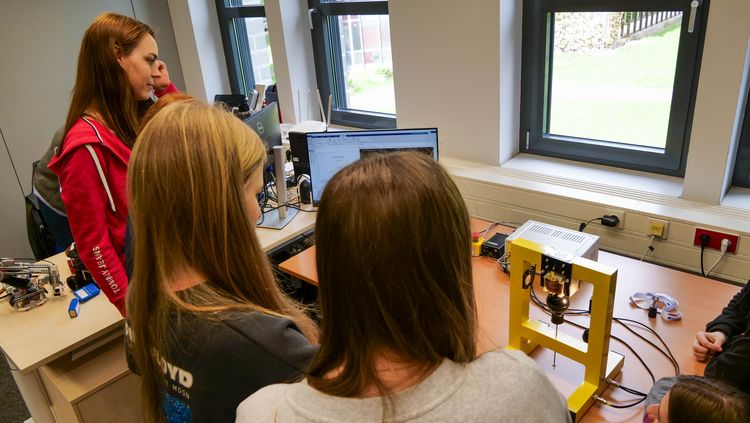
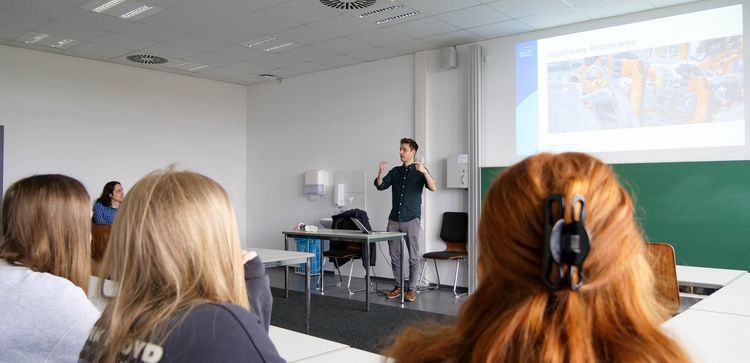
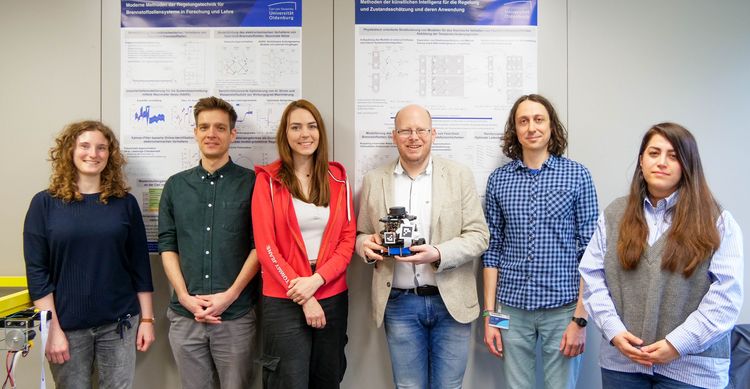
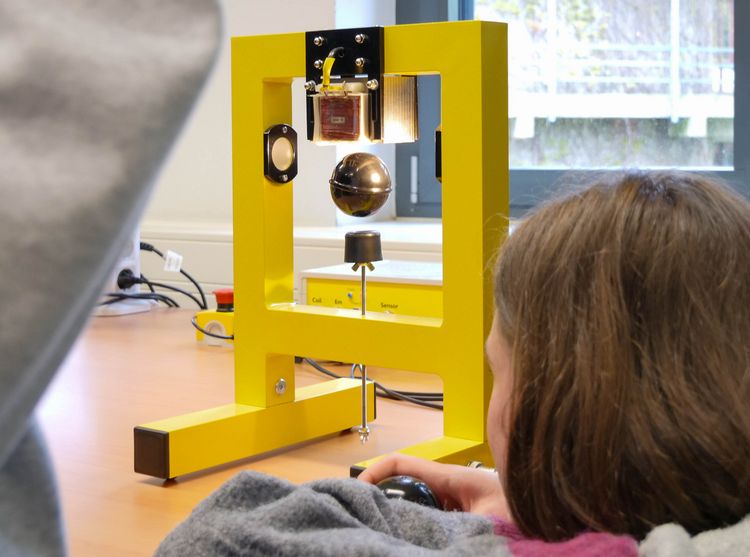
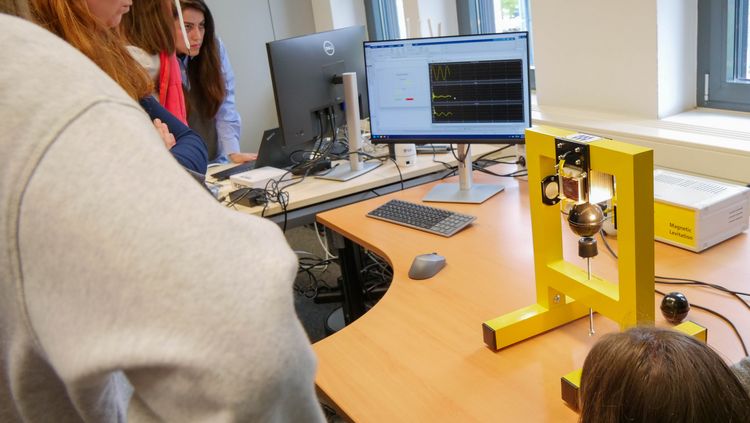
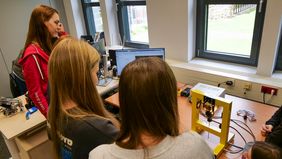
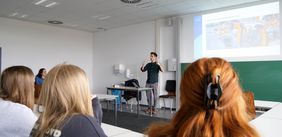
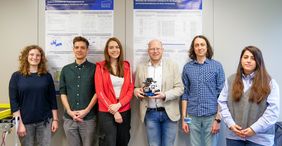
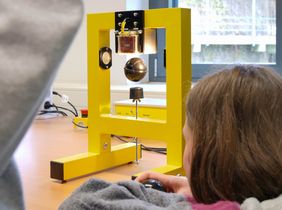
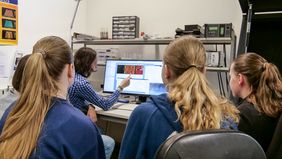
On 25 April 2024, it was that time of year again: the Departments of Distributed Control in Networked Systems and Microrobotics and Control Engineering (Department of Computing Science, Faculty of Computing Science II) and the Assistance Systems and Medical Technology departments (Department of Health Services Research, Faculty of Health Sciences VI) presented control engineering topics to schoolgirls in an interactive format as part of Future Day. After kicking off with the demonstration lecture ‘Why do autonomous robots never get lost, why are robots becoming a doctor’s best friend, and why does it all work right down to the smallest scale?’, around 20 schoolgirls visited our laboratories to take part in hands-on experiments entitled ‘Swinging, Levitating, Driving: We’ve Got It Covered!’ and ‘Observing Extremely Small Things with Special Microscopes’.
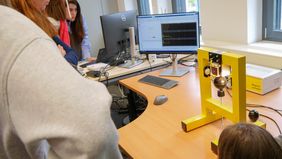
During these sessions, the pupils were able to discover for themselves how the interplay of actuators and sensors can be used to implement control loops designed, for example, to enable autonomous driving and the safe transport of loads by cranes. Using scale models, the pupils learnt how Computing Science acts as a link between the processing of measurement data and the targeted control of complex systems.
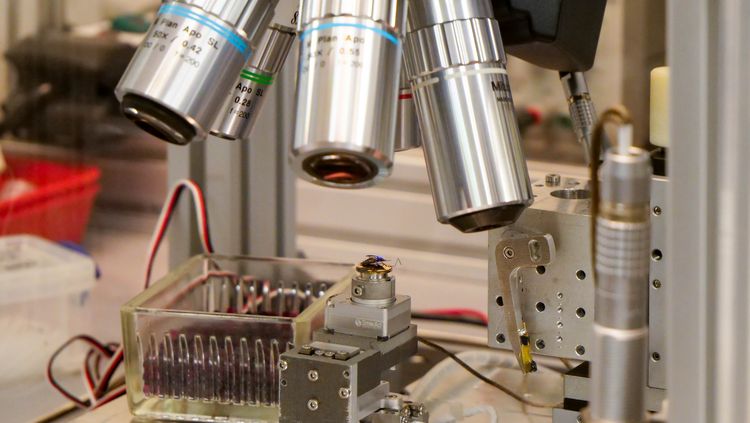
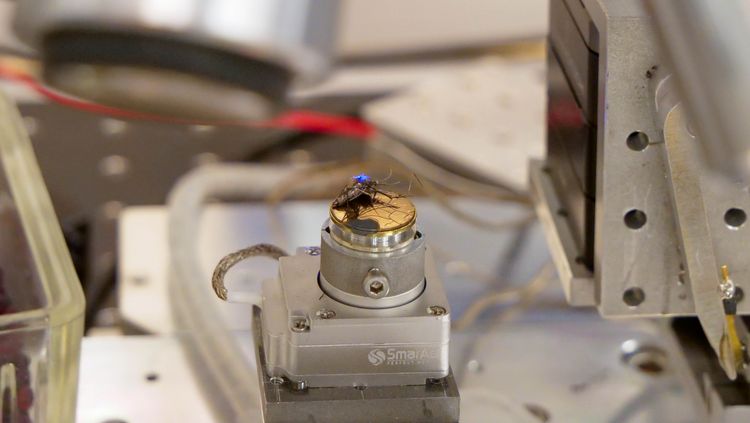
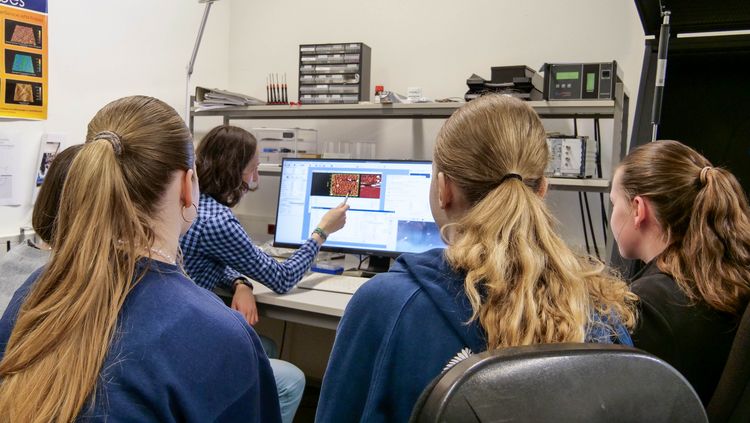
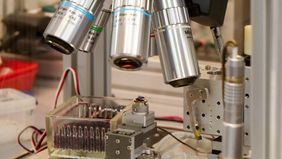
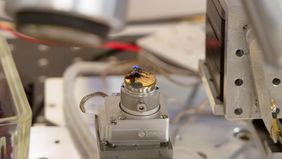
The pupils also saw light, electron and atomic force microscopes in action, used, for example, to visualise the detailed structures of insects as well as technical systems.
The joint programme organised by the three departments enabled the pupils to discover how control engineering acts as a link for a wide range of applications, spanning the transport sector, Industry 4.0, medical robotics and energy supply, right through to manufacturing technology.
We look forward to next year’s Future Day, when we will once again be able to welcome inquisitive schoolgirls to our university. For those who don’t want to wait that long: on 31 May and 1 June 2024, we’ll also be taking part in the Mathematics, Computing Science and Natural Sciences Discovery Days on the Wechloy campus!
On 25 April 2024, it was that time of year again: the Departments of Distributed Control in Networked Systems and Microrobotics and Control Engineering (Department of Computing Science, Faculty of Computing Science II) and the Assistance Systems and Medical Technology departments (Department of Health Services Research, Faculty of Health Sciences VI) presented control engineering topics to schoolgirls in an interactive format as part of Future Day. After kicking off with the demonstration lecture ‘Why do autonomous robots never get lost, why are robots becoming a doctor’s best friend, and why does it all work right down to the smallest scale?’, around 20 schoolgirls visited our laboratories to take part in hands-on experiments entitled ‘Swinging, Levitating, Driving: We’ve Got It Covered!’ and ‘Observing Extremely Small Things with Special Microscopes’.
During these sessions, the pupils were able to discover for themselves how the interplay of actuators and sensors can be used to implement control loops designed, for example, to enable autonomous driving and the safe transport of loads by cranes. Using scale models, the pupils learnt how Computing Science acts as a link between the processing of measurement data and the targeted control of complex systems.
The pupils also saw light, electron and atomic force microscopes in action, used, for example, to visualise the detailed structures of insects as well as technical systems.
The joint programme organised by the three departments enabled the pupils to discover how control engineering acts as a link for a wide range of applications, spanning the transport sector, Industry 4.0, medical robotics and energy supply, right through to manufacturing technology.
We look forward to next year’s Future Day, when we will once again be able to welcome inquisitive schoolgirls to our university. For those who don’t want to wait that long: on 31 May and 1 June 2024, we’ll also be taking part in the Mathematics, Computing Science and Natural Sciences Discovery Days on the Wechloy campus!