
Future Day 2023
Future Day 2023




Experience Computing Science up close
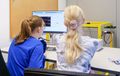
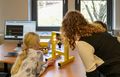
This year’s Future Day gave a total of just over 30 schoolgirls in Years 5–10 the opportunity to get a taste of Computing Science and its related applications through hands-on activities.
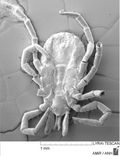
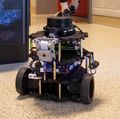
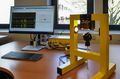
The programme included a demonstration lecture entitled ‘Why do autonomous robots never get lost? Why are robots becoming doctors’ best friends? And why does it all work, right down to the smallest scale?’, in which a wide variety of control engineering applications were illustrated using examples such as vehicle parking assistants, fully autonomous navigation, energy technology applications, and robotics in the context of manufacturing and medical assistance systems. This demonstration lecture, jointly organised by the departments Distributed Control in Networked Systems, Microrobotics and Control Engineering and Assistive Systems and Medical Technology (Research Group VI), led into the ‘Lab visits: Pendulum motion, levitation, driving – we’ve got it covered!’ and ‘Observing extremely small objects with specialised microscopes’. Here, hands-on experiments on positioning levitating spheres in magnetic fields, experiments on the damping of crane loads, obstacle detection for model-scale robots and electron microscopy experiments, to spark the pupils’ spirit of scientific enquiry and allow them to test for themselves the interplay between actuators and sensors in control engineering applications.
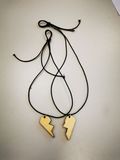
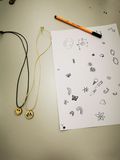
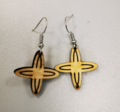
In addition, pupils in the Didactics of Computing Science to programme their own jewellery. Following a brief introduction to programming with Processing, the girls designed and programmed their own patterns. Using simple commands to draw lines, rectangles, circles or arcs, they transformed smiley faces, hearts and other patterns into earrings or pendants. The proud participants in this workshop were then able to cut out their designs using a laser cutter and can now wear their creations as jewellery themselves!
We are already looking forward to Future Day 2024 and would like to extend our special thanks to the students who actively supported us in running the workshop.