
Excellence Strategy: Cluster of excellence "Hearing4all" successful once again
Excellence Strategy: Cluster of excellence "Hearing4all" successful once again
Excellence Strategy: University of Oldenburg once again successful with "Hearing4all" cluster of excellence
Oldenburg scientists also involved in the "Ocean Floor" cluster of excellence
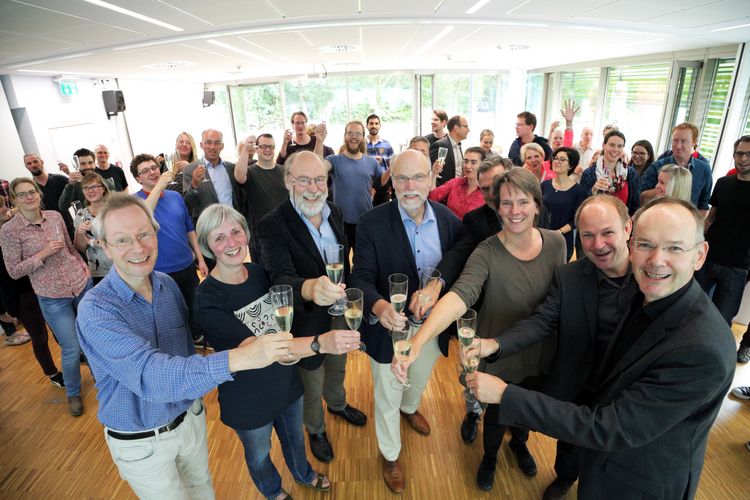
Oldenburg. Another great success for the University of Oldenburg: the cluster of excellence proposal "Hearing4all: Medicine, Basic Research and Engineering Solutions for Personalised Hearing Care" has scored highly in the federal and state governments' excellence strategy and will be funded for another seven years. The requested funding totalled 55 million euros. Based on the results of the previous cluster of excellence, the Oldenburg researchers once again developed their proposal together with hearing researchers from Hanover. A total of 57 out of 88 finalists across Germany were awarded funding in the "Cluster of Excellence" funding line.
"The renewed success of the 'Hearing4all' cluster is proof of the high standard of hearing research in Lower Saxony. The research network is continuing on the path towards personalised medicine with basic research and approaches for application. The researchers are thus improving the quality of life of a large number of patients," said Lower Saxony's Science Minister Björn Thümler after the announcement of the funded clusters.
"We are proud of our hearing research. The further funding is a great success for our university, our university medicine and our strong partners," said University President Prof Dr Dr Hans Michael Piper on the occasion of the decision. "The hearing researchers can now continue to work on their ambitious goals, building on their many years of experience and scientific expertise."
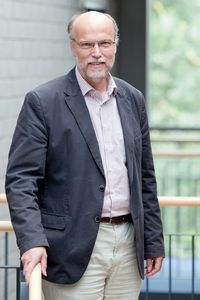
"Following the decision in 2012, we can once again count ourselves among the absolute top researchers in Germany," says the cluster's spokesperson, Oldenburg physicist and physician Prof Dr Dr Birger Kollmeier. "We will continue our work with all our might and develop solutions for all forms of hearing loss that are specially tailored to the needs of those affected. Our goal is modern, data-driven science and precision medicine of a high standard." The clinical spokesperson for the new cluster is Prof Dr Thomas Lenarz, Clinic Director of the Ear, Nose and Throat Clinic at Hannover Medical School. "The commitment to continue our hearing research as part of the excellence funding is, on the one hand, recognition of the research we have carried out and, on the other hand, we are happy to accept the mandate to continue our research into the fundamentals of hearing and to develop new forms of therapy with and around cochlear implants," emphasises Lenarz.
Hearing loss is the most common chronic disease of the human senses, affecting more and more people in an ageing society. Hearing impairment significantly limits those affected and can even lead to social isolation. For many years now, the Oldenburg researchers have been working with their scientific partners to continuously develop technical hearing aids and treatment options for the hearing impaired - from mild hearing loss to deafness. In recent years, the Hearing4all researchers have developed important components for better diagnostics, hearing systems and assistive technologies: These include, for example, multilingual speech tests, implants in the part of the midbrain that processes auditory signals and the possibility of using machine learning to predict the gain from a hearing aid.
In the new cluster of excellence, the scientists are now bundling their research into four strands: These represent the development chain from basic research to hearing technology on the one hand and the severity of hearing loss on the other. In the first strand, the scientists use modern neuroscientific methods to investigate the complex interplay between hearing, perception and processing in the brain over a person's lifetime, thereby contributing to an even better understanding. The second strand involves IT-based research with the aim of establishing a virtual multilingual hearing clinic. In the third strand, researchers are developing individually targeted diagnostic and treatment procedures for patients with moderate to severe impairments and complete deafness. Based on the scientific and technical findings, a fundamentally new system technology for the hearing aids of the future is being developed in the fourth strand.
The new cluster of excellence involves 25 neuroscientists, physicians, psychologists, linguists, physicists and engineers from the University of Oldenburg, Leibniz Universität Hannover and Hannover Medical School. The Jade University of Applied Sciences, HörTech gGmbH, the hearing centres in Oldenburg and Hanover, the Fraunhofer IDMT Institute for Hearing, Speech and Audio Technology, the Fraunhofer ITEM and the Hanse-Wissenschaftskolleg (HWK) in Delmenhorst are also project partners.
"Hearing4all" is one of the world's leading centres for medical technology, hearing research, audiology, medical diagnostics and therapy. Around 80 per cent of all hearing aids worldwide contain know-how from Oldenburg. The cluster of excellence, which is still ongoing, has been funded with almost 30 million euros since 2012. The Lower Saxony Ministry of Science and the Volkswagen Foundation are also supporting the cluster, which will be completed at the end of 2018, with one million euros.
In addition to the hearing researchers, other Oldenburg scientists are among the winners of the current grants: Geochemist Prof Dr Thorsten Dittmar and marine ecologist Prof Dr Helmut Hillebrand from the Institute of Chemistry and Biology of the Marine Environment at the University of Oldenburg are co-applicants in the cluster of excellence "The Ocean Floor - Earth's Unexplored Interface", which is based at the University of Bremen and is also receiving funding. Dittmar's topic - together with partners - is the research focus "Ocean Floor as Receiver". The researchers want to analyse various processes that regulate the flow of substances from the sea surface into the deep sea. In the context of climate change, this includes the so-called biological carbon pump - the process by which carbon in the form of carbon dioxide is extracted from the atmosphere by algae, reaches the deep sea and is thus removed from active cycles. Biodiversity expert Hillebrand is involved in the "Ocean Floor as Recorder" research programme. The scientists' aim here is to compare changes in biodiversity in the present day with changes over geological time scales. To this end, they want to analyse data representing periods ranging from thousands to millions of years.
About the Excellence Strategy:
With the Excellence Strategy, the federal and state governments want to continue and further develop the projects they have started, particularly with the Excellence Initiative (running from 2005 to 2017), to strengthen universities. Specifically, the aim is to promote scientific excellence, profile building and co-operation in the science system in order to strengthen Germany as a centre of science. There are two funding lines: clusters of excellence and universities of excellence. Funding for clusters of excellence begins on 1 January 2019 and runs for seven years.